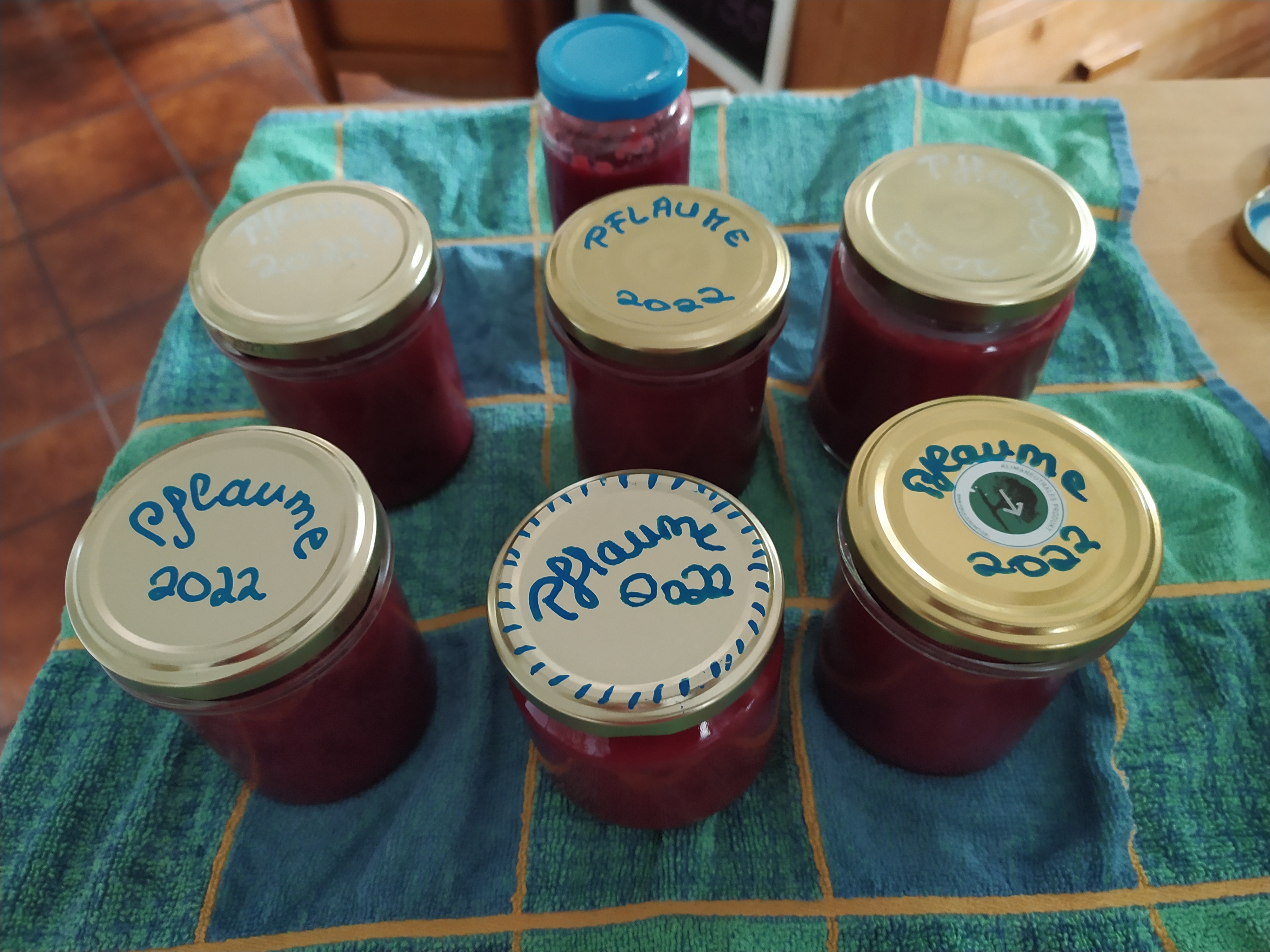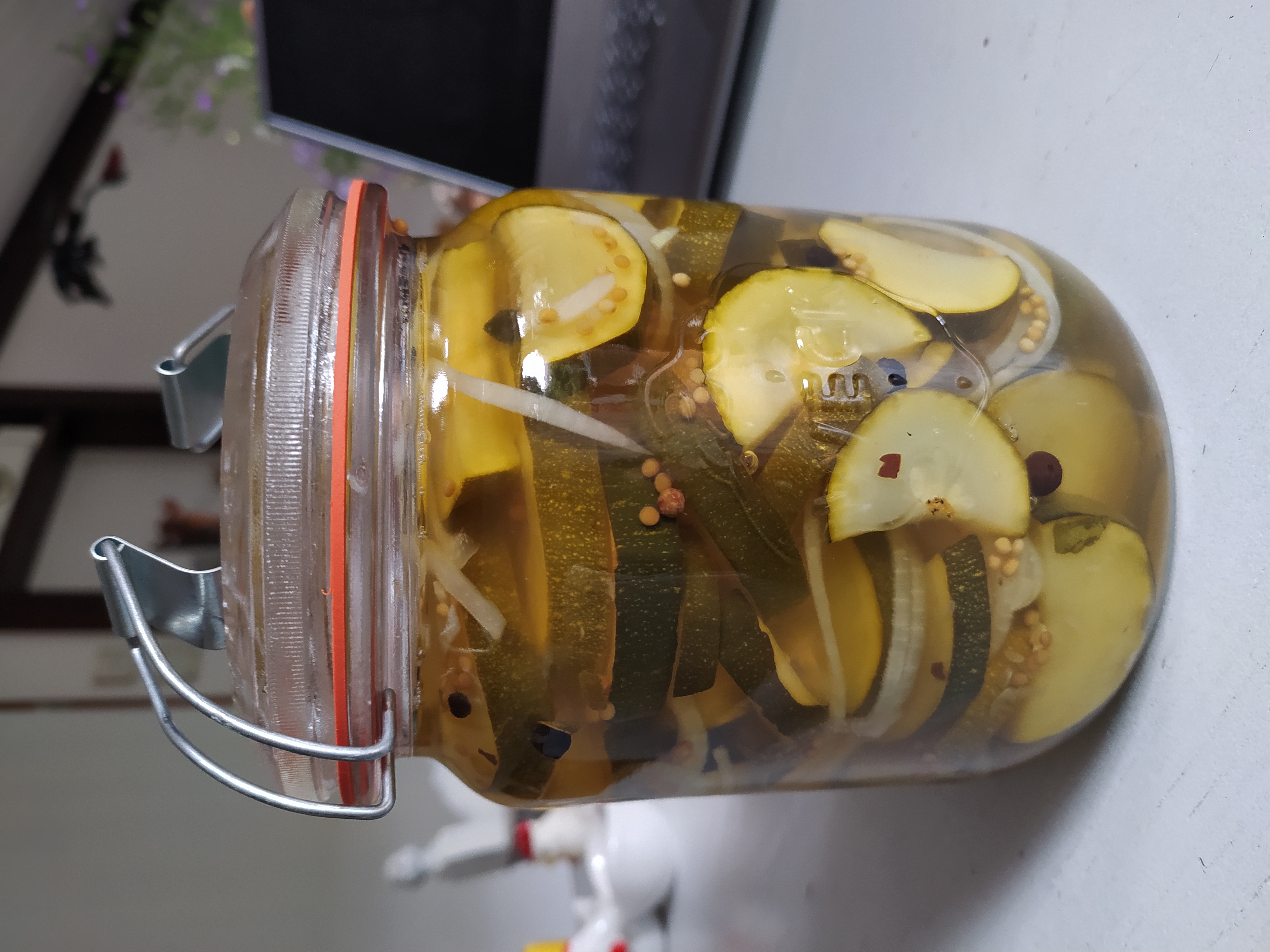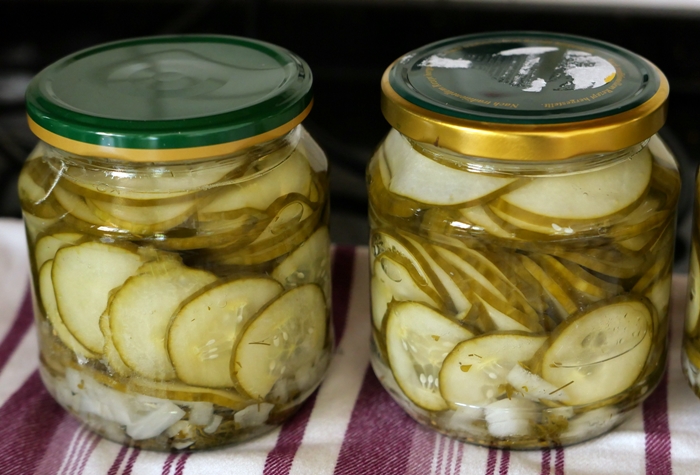
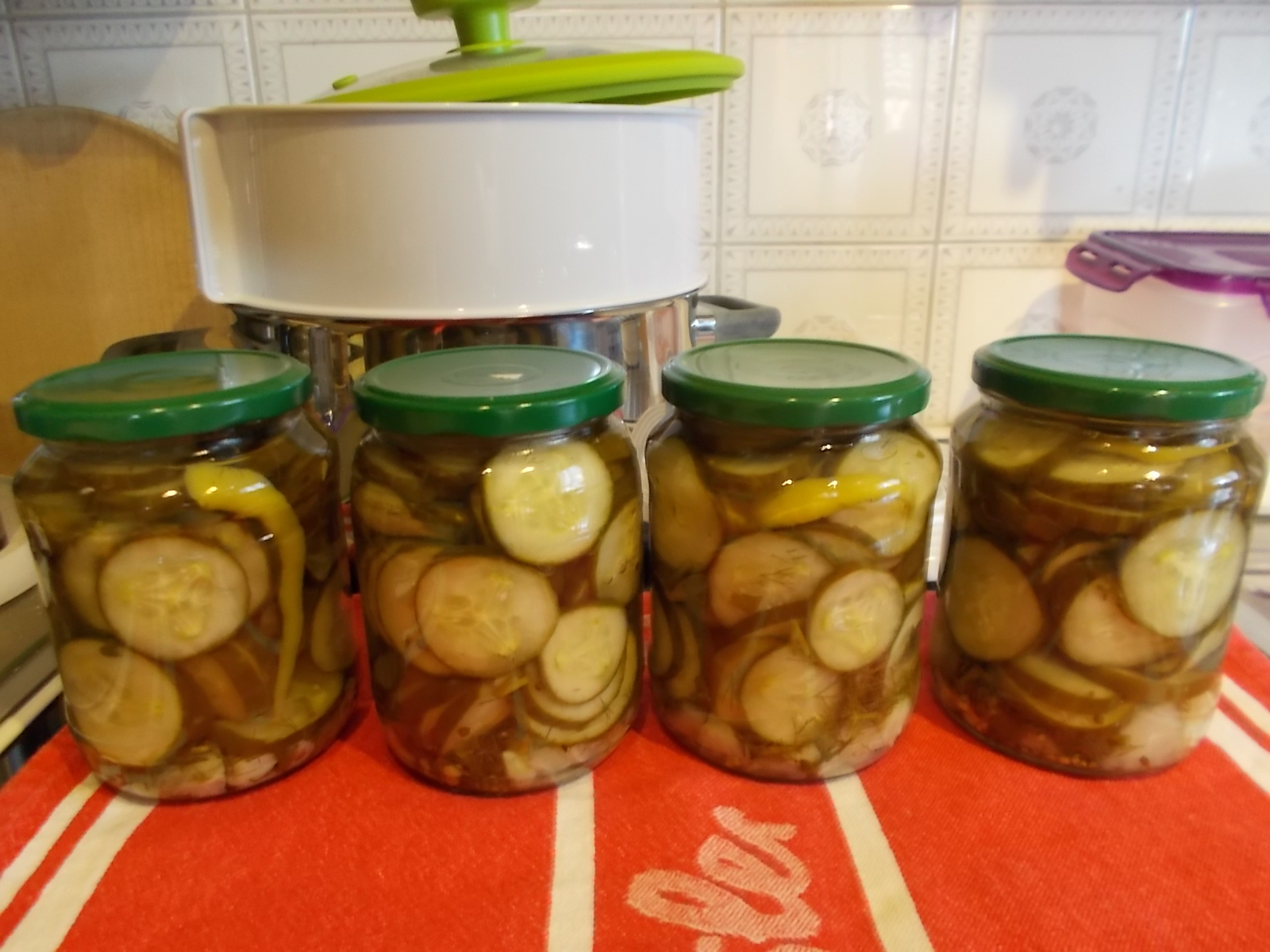
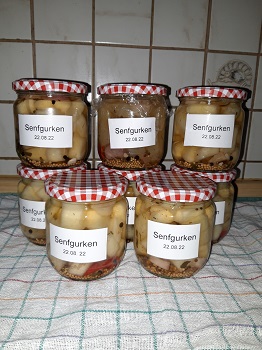
Mmm, delicious, right? These are homemade sweet-and-sour pickles with dill and onions. And canning for the winter doesn’t have to be complicated!
Here is the new thread
Canning for the Modern Homemaker, Part 2.
Hello, dear friends,
Since many hardworking homemakers are probably reading along here, today I have a related post with a practical angle. I also like trying out new things. And if I really like something, I’m happy to recommend it.
I have a garden where lots of fruit and vegetables grow. In times like these, you know, people put away more supplies than usual. So I decided to do a lot of canning this year. Freezing would work too, but then it uses electricity continuously.
I own one of those old-fashioned big brown canning pots with a tap for draining the water and a thermostat control. I always had to use this large canning pot outside. I never really liked that, because it was bulky and awkward. And far too big for my two-person household. Besides, I always had to carry everything from the kitchen outside, and so on and so forth.
My new discovery (for about 30 euros) is now a
canning set from Tescoma.
The key part is basically a
lid with a thermometer inside, which you place on a completely normal 24 cm saucepan on your completely normal stove. So, for example, you prepare your cucumbers as usual: clean twist-off jars + lids, onions, fresh dill, parsley, mustard seeds, a little garlic and horseradish (if you like), cucumber slices, and then you pour the strongly seasoned sweet-and-sour brine over them.
A supplied silicone trivet goes into the saucepan so the jars don’t stand on the hot bottom of the pot. Then add 1 liter of water (at the same temperature as the contents of the jars). Then place the jars in the saucepan. You could also put them in two layers, because the delivery also includes a sturdy ring that you could place on the saucepan.
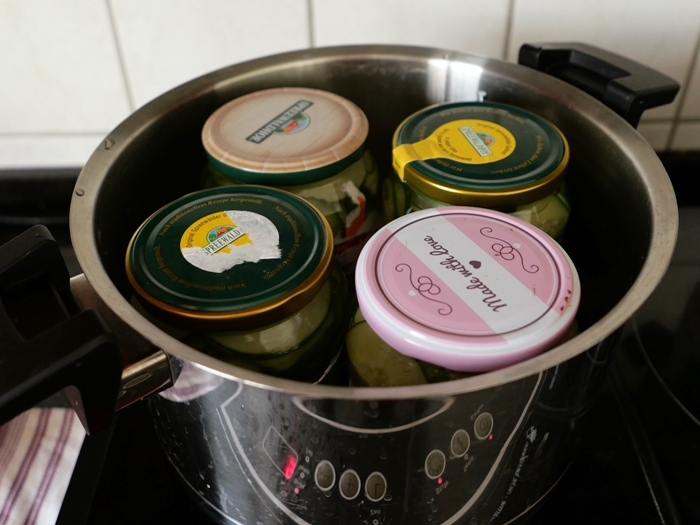
Then put the lid on and turn on the stove as usual—the way you would quickly heat anything else.
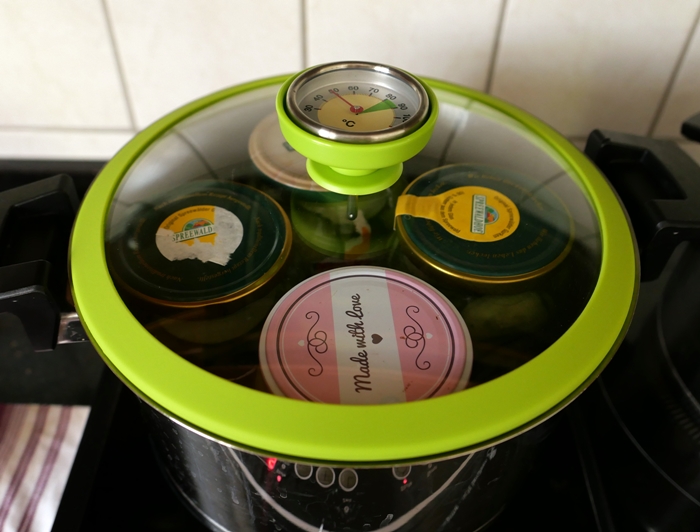
The contents of the pot are not yet at canning temperature, but the red pointer is working its way toward the green canning range.
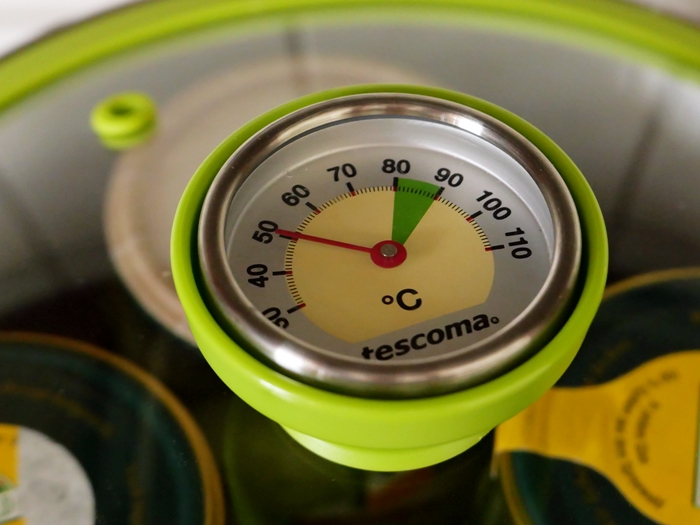
Then look at the thermometer: when the pointer is between
80 and 90 degrees, the canning temperature has been reached in the pot. This standard canning temperature applies to fruit and vegetables. You must not lift the lid under any circumstances, because then the steam would cool down again. But the transparent lid shows you what is happening in the pot. In this case, the droplets of steam are hanging on the inside of the lid.
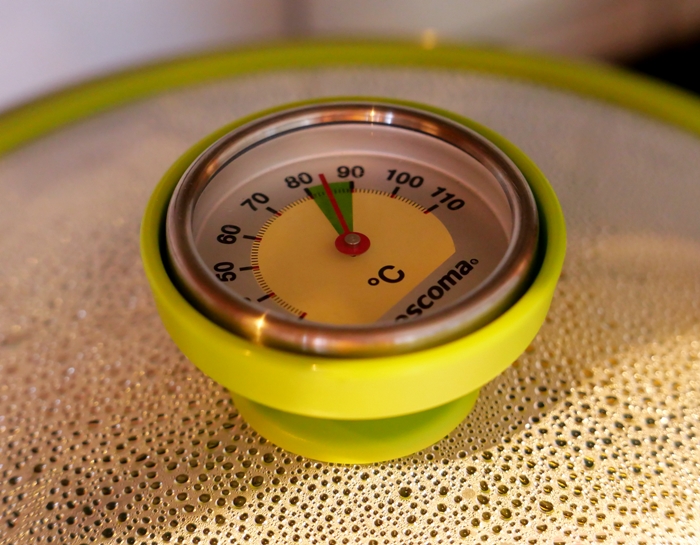
I then set a timer for 20 minutes for my pickles. And then the whole thing cans away—in a completely normal saucepan on my stove. No awkward draining water outside and no inaccurate thermostat. Depending on the stove, you then have to adjust it so that the pointer stays in the range between 80 and 90 degrees. .
After that, take out the jars and be happy. Without the attachment, 4 jars (up to the height of the saucepan) fit in the pot; with the attachment there would be more, because you can stack them too. For my two-person household, I prefer to use smaller jars.

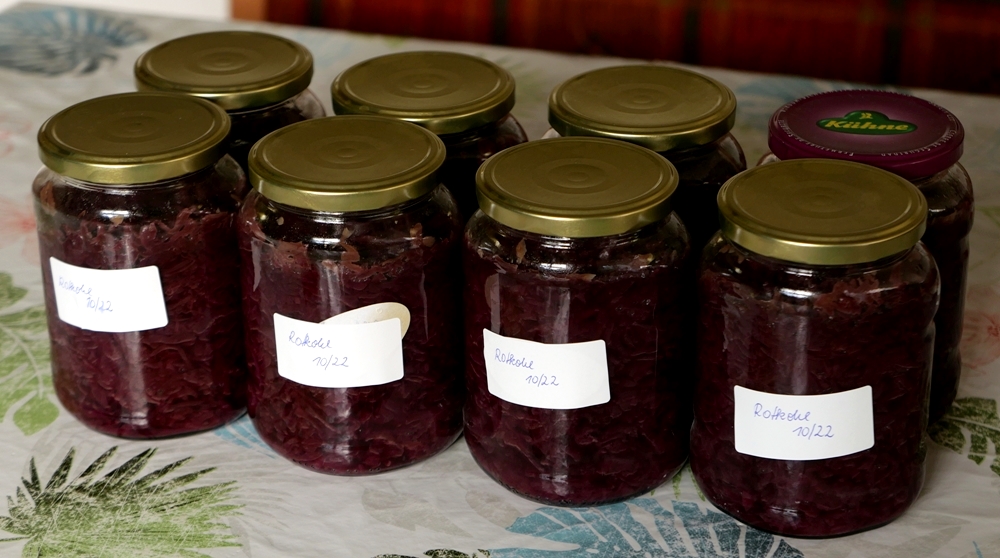
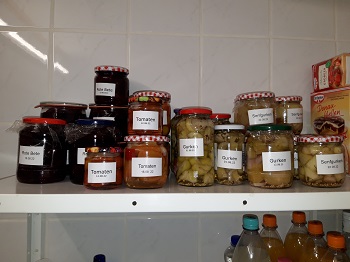
I always harvest cherries or cucumbers or something else in turn, which I then can. With this new method, canning fruit and vegetables for a small household is much easier and more convenient, I think. Today it was the cucumbers’ turn ... 8 jars will go into the cellar tomorrow—cooled and labeled.
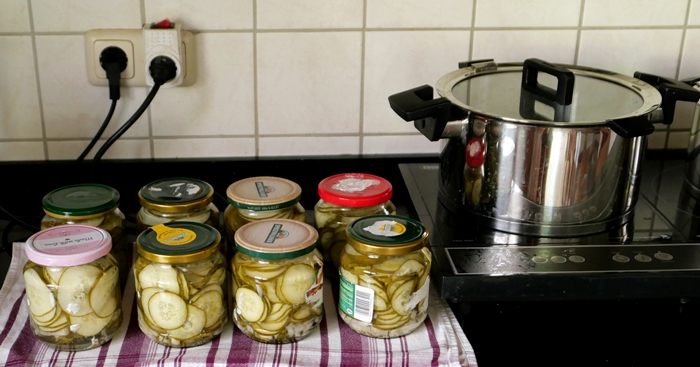
So, enough storytelling. Maybe one or another of you has also gotten in the mood for preserving. In winter you’ll be glad you did ;-) Tomorrow it’s sweet cherries again. We can’t possibly eat that many cherries fresh, so into the jar they go. I preserve them in their own juice. First pit them, then add sugar and let them draw out their juice. Then into the jar and into the saucepan in the kitchen to be canned as described.
Best wishes, and Ina wishes you a relaxing Sunday afternoon
Ina
PS. No, I’m not an advertising ambassador for the company Tescoma, just an enthusiastic user.






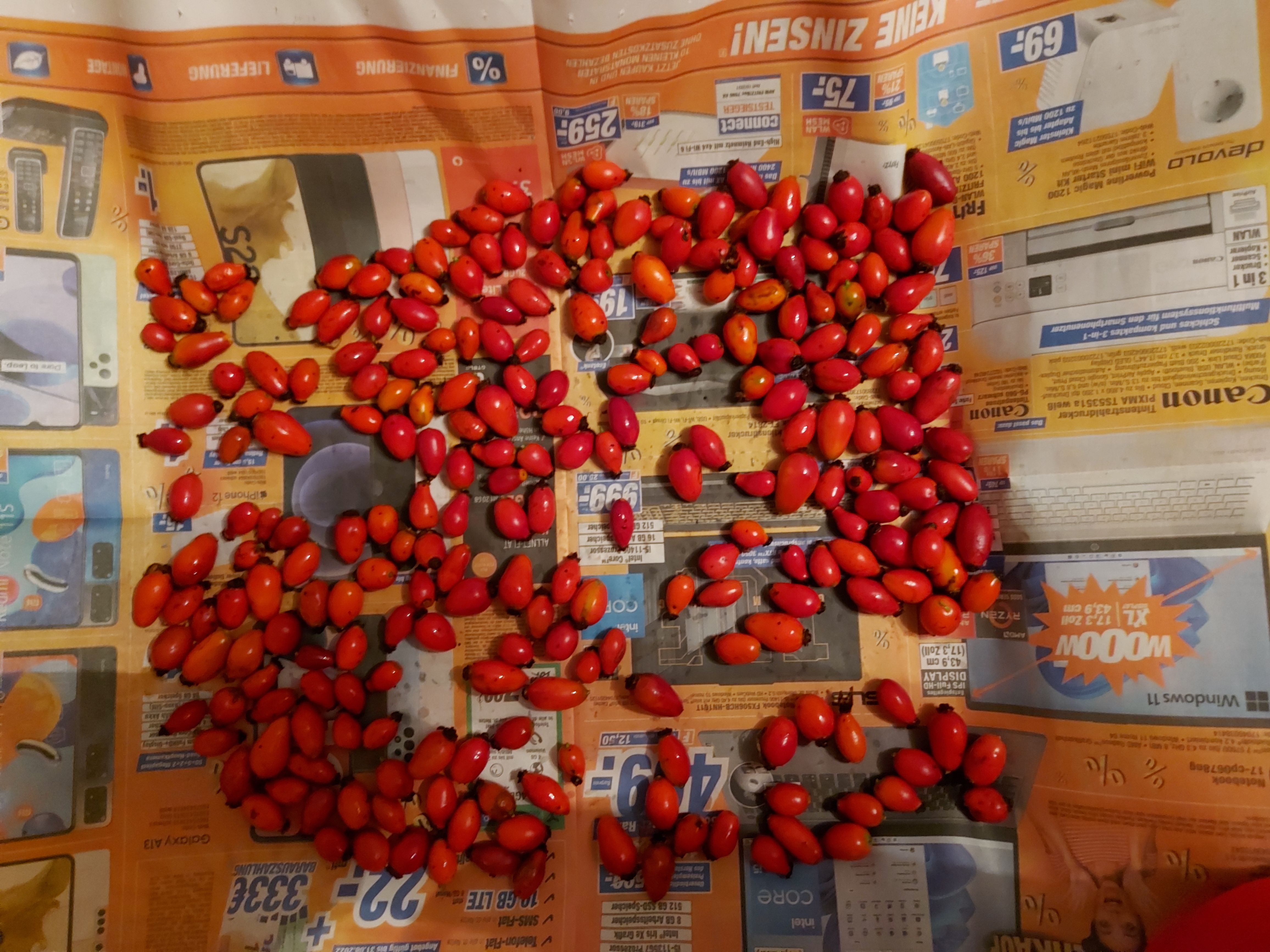 A few days ago, I collected rose hips in and around the woods and spread them out to dry.