Quick to Target
Browse Categories
Community & Help

Rectangular Shawl Knitting Patterns

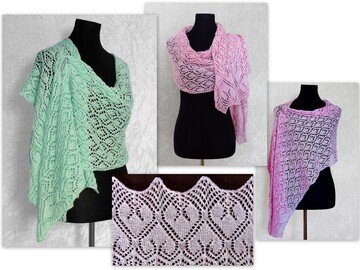
A long, flowing rectangular shawl pulls any outfit together in seconds. Show more
A long, flowing rectangular shawl pulls any outfit together in seconds. Browse PDF knitting patterns for elegant wraps and scarves – from simple styles to airy lace. Explore the designs and start your next favorite make.

Knitting Rectangular Shawls: Elegant Stoles & Scarves for Every Occasion

In patterns, rectangular shawls are often called a stole or a scarf; the English terms stole and scarf also appear occasionally. Whether for a special occasion, everyday wear or warmth, the dimensions, yarn weight and pattern (solid or airy lace) determine how the piece feels and looks. If you’re exploring shawls and scarves in general, you’ll find many options here, from simple rectangles to detailed combinations of patterns.

Quick choice
  • ✓Dimensions: Check the length and width to decide whether your rectangular shawl is better suited to being worn as a scarf or a stole.
  • ✓Pattern effect: Lace is usually open and lightweight, while garter stitch or stockinette stitch looks denser and warmer.
  • ✓Style & occasion: From simple to elegant, subtle textures or eye-catching openwork patterns can complement your outfit.
  • ✓Alternatives: If you’re looking for other shapes, take a look at triangle shawls or lace shawls too.
What to look out for
  • Difficulty level: “Intermediate” usually means you should be comfortable with pattern repeats and increases and decreases.
  • Yarn over: This extra stitch in an openwork pattern must be paired with the appropriate decrease to keep the stitch count the same in each repeat.
  • Knitting stitches together: Check whether you need to knit stitches together or work a slip-stitch decrease – this affects the direction of the decrease and therefore the appearance of the pattern.
  • Edge treatment: Check for edge stitches or an I-cord edge – a neat edge prevents curling and gives lace stability.
Common pitfalls
  • ✓Yarn over: If you forget one or work it twice, the stitch count will be off and the pattern will shift.
  • ✓Swapped decreases: The lace will appear to lean the wrong way, even if the stitch count is correct.
  • ✓Knitting lace too tightly: The pattern won’t open up as well – proper blocking after washing often helps considerably.
  • ✓Unclear materials: If you’re unsure about fiber types or yarn lengths, the guide Choosing Wool and Yarn for Crochet and Knitting can help you better understand the recommendations in patterns.

Frequently Asked Questions

It’s the English term for a medium difficulty level. It usually assumes you’re familiar with pattern repeats, yarn overs, and increases and decreases.

A yarn over wraps the yarn around the needle and creates an extra stitch. In lace patterns, this creates a hole; a decrease is usually worked elsewhere to keep the stitch count the same.

It means working two (or more) stitches into one stitch. Depending on how it’s worked, the decrease leans to the right or left – important for a symmetrical pattern.

Stockinette stitch naturally curls because of its structure. Edge patterns (garter stitch, ribbing, I-cord) or a sufficiently wide border can help.

Generally, yes: After washing, it’s pulled into shape and secured so that the openwork pattern becomes clear and the dimensions are more stable.