Quick to Target
Browse Categories
Community & Help

Knit Pillow & Cushion Cover Patterns

More comfort in just a few rows: knitted pillows add texture, color, and cozy vibes to any sofa. Show more
More comfort in just a few rows: knitted pillows add texture, color, and cozy vibes to any sofa. Browse PDF patterns for pillows, cushion covers, bolster pillows, and motif pillows – from classic 16" × 16" squares to bold statement shapes. Pick your next home decor project and start knitting today.

Sunrise Cushion

(6)
Free pattern

Peru Cushion

(9)
Free pattern

Argentina Cushion

(3)
Free pattern

Faroe Cushion

Free pattern

Scotland Cushion

(7)
Free pattern

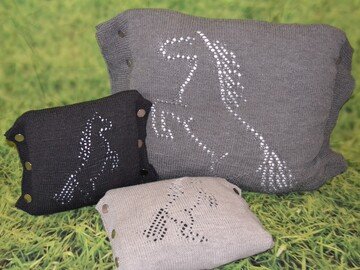
Guitar Cushion Cover Knitting Pattern

from US $5.53

Knitting pillows: Ideas for every home

Knitted pillows bring texture to your home, from understated stockinette stitch to raised patterns. Discover patterns for pillows, pillow covers, neck pillows and cuddly pillows, as well as decorative shapes like stars and hearts. If you’re looking for more home projects, you’ll find more knitting ideas under Blankets & Covers.

Quick choice
  • ✓Project type: A pillow cover slips over an existing insert; a pillow usually includes a front and back to be filled.
  • ✓Shape & purpose: Choose from a classic square, an elongated neck roll, or an eye-catching decorative pillow for the sofa or a child’s room.
  • ✓Pattern effect: Cables and ribbing emphasize texture, while stockinette stitch has a calm, modern look.
  • ✓Size: Check the finished measurements (e.g., 40 × 40 cm) and whether the cover is designed to be slightly smaller for a snug fit.
  • ✓More inspiration: For more home accessories, take a look at Baskets & Organizers.
What to look out for
  • ✓Gauge swatch: This determines whether your pillow will be the right size; also check whether the swatch is specified in the pattern stitch or in stockinette stitch.
  • ✓Techniques: Knit and purl stitches are often combined; textured patterns may also involve cables or twisted stitches.
  • ✓Materials: Follow the suggested yarn weight and recommended amount; for covers, durable, easy-care yarns are often more practical than very fluffy ones.
  • ✓Construction: Check whether the piece is knitted in rows and seamed or worked in the round; also note whether an edging (e.g., I-cord or ribbing) is included.
Common pitfalls
  • ✓Uneven tension: It’s more noticeable in textured patterns, so it pays to work slowly and evenly.
  • ✓Distorted edges: Binding off too loosely can create wavy edges, while binding off too tightly can distort the cover.
  • ✓Measurement differences: They add up, so measure before you work the back or the closure.
  • ✓Underestimating yarn choice: If the fabric is too loose or too fuzzy, the guidance in Choosing wool and yarn for crochet and knitting can help you assess feel and durability.
  • ✓Finding a pattern: Use filters and search terms strategically; you’ll find tips in Finding patterns made easy.

Frequently Asked Questions

A pillow cover slips over a ready-made insert. In a pattern, a “pillow” often means knitting the front and back and then filling it.

Use the insert and the finished measurements in the pattern as your guide. Many covers are designed to be slightly smaller so the pillow fits snugly.

Use the yarn recommended in the pattern. For everyday use, durable, easily washable yarns (such as cotton or blends) are often practical.

Depending on the design, it may have a button band, an envelope closure, or a zipper. Check beforehand whether notions such as buttons or a zipper are required.

Often, yes, but only if you take the pattern repeat and gauge swatch into account. For cables and ribbing, the stitch count must fit the pattern; if in doubt, knit a small swatch first.