Quick to Target
Browse Categories
Community & Help

Heart, Star & Shape Embroidery Files

For clean edges and smooth curves, the stitch types in your embroidery file matter: use a contour/running stitch for fine lines, satin stitch for crisp, covered edges and filled areas, and add appliqué if you like. Show more
For clean edges and smooth curves, the stitch types in your embroidery file matter: use a contour/running stitch for fine lines, satin stitch for crisp, covered edges and filled areas, and add appliqué if you like. Many designs come in multiple sizes – filter by hoop size and choose the right download for your machine and embroidery hoop.

Christian Cross embroidery design

from US $2.32

Christian Cross embroidery design

from US $1.85

Anchor Machine embroidery designs

from US $1.57

Machine embroidery design lace heart

from US $2.04

Machine embroidery design valentine heart

from US $1.87

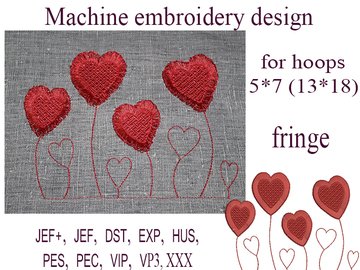
Machine embroidery design heart fringe

from US $2.33

Embroidery Pattern Folded Boat with Heart

from US $6.17

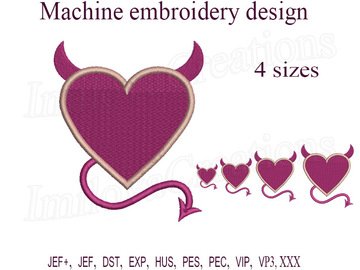
Devil Heart Machine Embroidery Design

from US $1.78

I love you to the moon and back (2 Sizes)

from US $5.17

Embroidery Pattern Christmas Star Mandala

from US $7.21

Machine embroidery designs valentine heart

from US $1.78

Egg embroidery design

from US $1.58

Moon embroidery design

from US $1.85

Balloon heart embroidery design

from US $1.85

Embroidery Pattern Steamboat neon Heart II

from US $6.17

Embroidery Pattern Steamboat with Heart I

Free pattern

Embroidery Pattern Snowflake Mandala

from US $7.21

Embroidering hearts: Ideas for every project and every hoop

Heart designs are wonderfully versatile: whether you choose a delicate outline, a playful doodle or a solid fill, the stitch type and density instantly change the look. From simple hearts to graphic designs for labels, patches or decorations, you’ll find motifs in different sizes and styles to suit your project.

Quick choice
  • ✓Design style: From simple to graphic (e.g., as a button or label) – choose a style to suit its use, such as decoration, a patch or gift wrapping.
  • ✓Stitch appearance: Satin stitch creates a solid, filled look, while backstitch draws fine outlines and makes imperfections more noticeable.
  • ✓Combining themes: To combine hearts with lettering or numbers, take a look at Sayings & Lettering and Letters & Numbers.
  • ✓Size: Check the stated embroidery area or hoop size to make sure the design fits your hoop.
  • ✓Compatibility: Check whether the right file format for your machine is available.
What to look out for
  • Smooth curves: For densely filled areas, check the stitch density and underlay (if specified) to help keep the edges stable.
  • Color changes: Multiple color changes increase stitching time and the amount of handling at the machine – allow for this with multicolored hearts.
  • Difficulty level: The rating (easy to difficult) helps you gauge how much control, trimming and finishing work is needed.
  • Material & stabilizing: Thin, stretchy or napped fabrics usually need suitable embroidery stabilizer and a test stitch-out before you embroider the final design.
Common pitfalls
  • Overlooking appliqué: If a file includes appliqué steps, hearts can look incomplete without the placement, tack-down and covering stitches.
  • Overly dense fills: On soft fabric, these can cause rippling or distorted edges – stabilizer, a suitable needle and a test piece are essential.
  • Major size changes: Resizing a design significantly changes stitch density and outlines; it’s better to choose a file in the right size.
  • Handling files: If you have trouble opening or unzipping files, Downloading & Unzipping can help; for targeted searches, see Finding Tutorials – It’s That Easy.

Frequently Asked Questions

The embroidery area stated in the product description is what matters. It must fit within one of the hoops available for your machine.

A piece of fabric is placed on the project and incorporated into the design using special stitch lines for placement, tack-down and covering. It’s more than “just” embroidery.

Satin stitch is suitable for solid fills and clean edges. Backstitch is typically used for outlines and fine lines.

Only to a limited extent: the more you resize it, the more likely the stitch density and proportions are to be affected. If possible, use a file that has already been digitized for the desired size.