Quick to Target
Browse Categories
Community & Help

Knit Tops & Tunics Patterns

Want constructions that feel technically spot-on and let you try on as you go? Discover PDF knitting patterns for tops and tunics with top-down raglan, circular yokes, seamless transitions, and targeted increases for a great fit. Show more
Want constructions that feel technically spot-on and let you try on as you go? Discover PDF knitting patterns for tops and tunics with top-down raglan, circular yokes, seamless transitions, and targeted increases for a great fit. Compare details like armhole depth, A-line shaping, and stitch patterns – then start your next project.

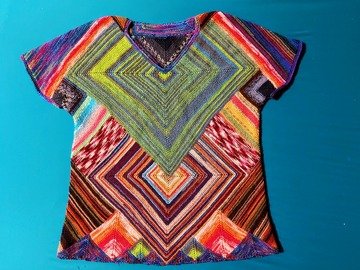
"Karl" the sleeveless V-neck-tunic

(39)
from US $4.07

Karl No.4 Figure flatterer in A-line

(29)
from US $4.69

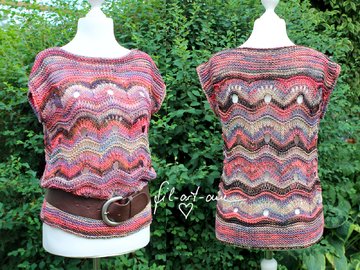
Shirt IMGA - knitted summer top - No. 271E

(4)
from US $4.69

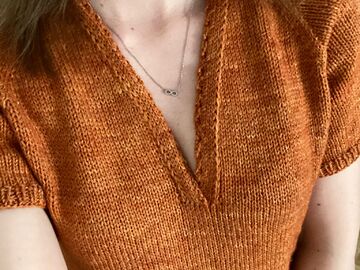
Knitting Pattern: Slipover Amy

(12)
from US $5.74

Kulturschock

(10)
from US $5.15
-20% Raglan Shirt with Perfect Fit and Video Tutorial for Beginners

Raglan Shirt with Perfect Fit and Video Tutorial for Beginners

(1)
from US $6.62 US $8.72*

Sommerkarl No. 8

from US $4.69

Tee "One Week Tee" Knitting Pattern

(5)
from US $4.69

Knitting Pattern: Rosy Tee Adult

from US $5.74

Knitted semicircular tunic size L

from US $4.49

Hortos Shirt Knitting Pattern (XS-6XL)

from US $6.78

Knitting pattern "Shirt Summervibes"

from US $5.15

Pattern Birdie-Shirt

(1)
from US $5.20

Knitting Pattern Shirt "Sweetheart"

from US $4.17

Knitting pattern Shirt "frog prince"

from US $5.21

Knit women's shirts & tunics: styles that really fit

Whether you want an airy summer shirt or a warm tunic for cooler days, the right knitting pattern will help you create a top that fits just as you imagined. Choose from short, hip-length shirts to longer tunics, with styles ranging from simple to sophisticated and loose to fitted.

Quick choice
  • ✓Length: Tunics often extend past the hips or bottom, while shirts usually end at the waistband. Use the measurements in centimeters on the schematic as a guide.
  • ✓Shape: An A-line shape (wider at the hem) skims the hips, a boxy cut looks modern and casual, and waist shaping emphasizes your figure.
  • ✓Alternative project ideas: If you want a little less coverage, take a look at tops; for a longer silhouette, consider dresses for your next project.
What to look out for
  • Gauge swatch: Essential for close-fitting garments. If your gauge differs from the pattern, the width and length will change significantly.
  • Construction: A top-down design lets you try it on as you go; when working in separate pieces (front and back), you close the seams at the end.
  • Choosing a size: Use your bust measurement and the size chart as a guide, rather than your ready-to-wear size (S/M/L).
  • Materials: Cotton/linen often has a heavier drape and feels pleasantly cool in summer, while wool/alpaca is warm and often drapes more lightly. For tips on choosing materials, see Choosing wool and yarn for crochet and knitting.
Common pitfalls
  • Stretching in length: Long tunics in particular, when made from cotton/viscose, often become longer and narrower under their own weight when worn. Allow for this when planning your desired length.
  • Hips too tight: Because tunics are longer, they need to be wide enough at the hips. Check the size chart against your measurement at the widest point of your hips.
  • Armholes too deep: With raglan or boxy cuts, make sure the armholes don't reach your waist, or your underwear may show.
  • Misunderstanding a yarn over (U): A yarn over can create lace eyelets or serve as an increase. If you're unsure, read the explanation in Finding patterns – it's that easy to help you make sense of symbols and additional information in the pattern more quickly.

Frequently Asked Questions

A shirt is usually hip-length, while a tunic is generally longer (often extending past the hips) and is frequently worn casually over leggings or slim pants. The exact length is given in the pattern measurements.

A yarn over (U) is a technique in which you bring the yarn over the needle. Depending on the context, it creates a lace pattern or serves as an increase.

The required needle size is listed in the materials section of the pattern and depends on the recommended yarn and the gauge swatch.

Even small differences in gauge can significantly change the width and length. A gauge swatch helps you achieve the stated size or calculate adjustments correctly.