Quick to Target
Browse Categories
Community & Help

Sew Animal Plush Patterns

Round shapes, tiny ears, and a face that instantly makes you smile – you’re in the right place. Show more
Round shapes, tiny ears, and a face that instantly makes you smile – you’re in the right place. Discover PDF patterns and sewing templates for cuddly plush animals, from small to oversized, packed with sweet details. Choose your favorite animal and start sewing right away.

Easter Bunny Finchen and Tom

from US $4.08

Cuddle Set Animals Frog

from US $6.16

Cuddle Set Animals Fox

from US $6.16

Cuddle Set Animals Cow

from US $6.16

Cuddle Set Animals Duck

from US $6.16

Cuddle Set Girl

from US $6.16

Cuddle Set Boy

from US $6.16

Cuddle Set Animals Elephant

from US $6.16

Birthday Pig Elli

from US $6.16

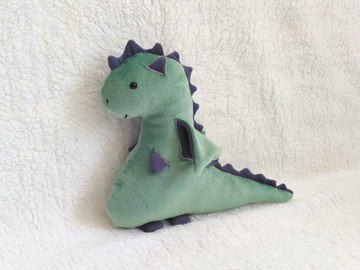
Sewing Pattern Plush Toy Dragon

(1)
Free pattern

gift bunny Harry

from US $6.16

Sewing Amigurumi Animals: Stuffed Animal Ideas

Soft stuffed animals in the amigurumi style stand out with their simple shapes, cute proportions, and carefully crafted details. From small charms to larger cuddly companions, you'll find patterns here in a range of sizes, skill levels, and sewing methods, so the techniques, materials, and steps suit your project.

Quick choice
  • ✓Skill level: Use “easy,” “intermediate,” or “advanced” as a guide and check what prior skills are required.
  • ✓Project type: Alongside stuffed animals, you'll find animal-themed sewing ideas in the toys category and in related collections.
  • ✓Size & detail: Check the finished size and whether the pattern includes very small pieces—these usually require more detailed work.
  • ✓Sewing method: Check whether the pattern is designed for machine sewing, hand sewing, or both.
  • ✓Sorting: To compare, you can sort the feed by “Popular” or “Best Rating.”
What to look out for
  • Stitch choice: A straight stitch is often enough for the seams; depending on the fabric, the edges may also need finishing (e.g., with a zigzag stitch).
  • Closing the turning opening: Openings used for turning and stuffing are often closed by hand, e.g., with mattress stitch (also called ladder stitch).
  • Fabric behavior: Woven fabrics hold a defined shape, while stretchy fabrics often need more control during sewing and stuffing to prevent rippling or stretching out.
  • Projects for children: Check the pattern's age recommendation; embroidered or securely sewn-on details are generally sturdier than loose small parts.
  • Alternatives: If you're looking for other kinds of animals, take a look at aquatic creatures or teddy bears.
Common pitfalls
  • Uneven gathering: The shape can quickly become distorted—use markings and pull the threads evenly.
  • Sewing too close to the edge of the seam allowance: Seams can come apart during turning or stuffing; sew neatly within the seam allowance and reinforce areas under heavy stress.
  • Stuffing too firmly or too loosely: This can lead to dents, visible seams, or an unstable shape; add stuffing in small portions and shape as you go.
  • Details not marked symmetrically: Ears or the muzzle can end up crooked—use notches/markings and check before sewing them on permanently.
  • Not making the most of the instructions: If you're stuck on a step or a download, the guide Finding patterns made easy can often help you right away.

Frequently Asked Questions

A machine straight stitch and an edge-finishing stitch are usually used. To close turning openings invisibly, mattress stitch (ladder stitch) is often worked by hand.

Many seams can be sewn easily by machine. Tight curves, very small pieces, and neatly closing the turning opening are often done by hand.

Clues include many small pattern pieces, tight curves, precise placement of appliqués, and shaping steps such as gathering or multiple darts.

That depends on the materials and details. Check the pattern's age recommendation and make sure eyes, buttons, or other small parts cannot easily be pulled off.

Sew with even stitches, work curves carefully, and add stuffing in small portions. In many patterns, markings/notches help you align the pieces correctly.