Quick to Target
Browse Categories
Community & Help

Crochet Patterns for Kids’ Shoes

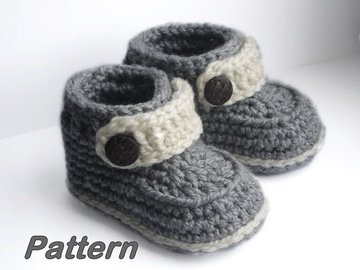
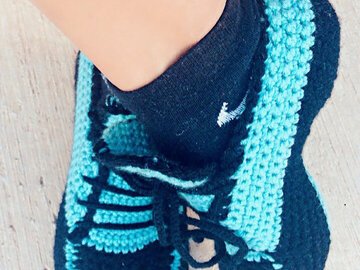
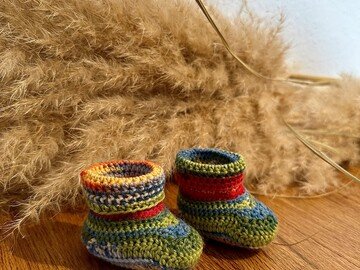
Soft baby booties, warm slippers, or a cool sneaker look – find crochet patterns as PDF downloads that fit everyday life and stay on little feet. Show more
Soft baby booties, warm slippers, or a cool sneaker look – find crochet patterns as PDF downloads that fit everyday life and stay on little feet. Pick the right size using foot-length measurements and start your favorite design right away. Browse lots of styles for babies through kids.

Crochet Kids' Shoes: Comfortable Styles for Little Feet

Crocheted kids' shoes fit best when the shape, sole and skill level are well matched. From baby shoes to larger children's sizes, you'll find patterns for booties, house shoes, sneaker-inspired styles and more – so your project is practical for everyday wear and stays on the foot.

Quick choice
  • ✓Intended use: House shoes and booties are typical choices for indoor wear; slippers often have a lighter fit and a simpler look.
  • ✓Look: Terms like sneaker-inspired or Oxford-style can help if the look matters more to you than a classic bootie shape.
  • ✓Sizing information: Check the sizing information (such as foot length in centimeters) and whether the pattern covers multiple sizes.
  • ✓More ideas: If you're looking for alternatives, browse socks & leg warmers or accessories for kids.
  • ✓Sorting: To get started, try sorting by “Currently popular” or “Best rated”.
What to look out for
  • Yarn recommendation & gauge swatch: Check the yarn recommendation and gauge swatch; even small differences in tension can change the shoe size.
  • Yarn length & quantity: Check the stated yarn length and quantity required, for example a yarn length of approx. 140 m, so you can better plan how much material you need and whether to buy more.
  • Sole: The sole determines fit and durability; some patterns use double layers, single crochet or reinforced soles.
  • Grip: Non-slip solutions (such as non-slip coating) are sometimes suggested for better grip – test beforehand whether they work on your floor.
  • Fastening: Check whether a fastening (tie, button or strap) is included; this can improve the fit on narrow feet.
Common pitfalls
  • Sole and upper: If the sole and upper are crocheted at different tensions, the shoe can easily become distorted or create pressure points – keep your tension as consistent as possible.
  • Start of the round: When working in rounds, the starting point can easily shift; use a marker at the start of the round to keep seams and edges neat.
  • Sneaker-inspired look: Uneven edges are especially noticeable in sneaker-inspired styles; markers, accurate counting and a neat slip stitch join at the end of the round can help.
  • Gauge swatch: Don't skip the gauge swatch if you want to match a specific foot length – especially with baby shoes, a few millimeters can make a big difference.

Frequently Asked Questions

House shoes and booties are often more enclosed and warmer. Slippers have a lighter look, often have a lower opening and are quicker to put on and take off.

Use the stated foot length (in centimeters) as a guide and check whether a gauge swatch is specified. If you're between two sizes, a little extra room is often more practical than a fit that's too snug.

If the pattern combines several techniques or requires a lot of shaping (sole, heel, opening), it is usually intermediate level. Before you start, read the material list and all the steps for the sole.

Easy-care yarns such as cotton or cotton blends and durable acrylic blends are common – choose one that suits the hook size recommended in the pattern. Gauge, durability and washability according to the yarn label are the key factors.