Quick to Target
Browse Categories
Community & Help

Sewing Patterns for Shirts & Tunics

A handmade shirt or tunic fits exactly the way you like it – from fitted to oversized. Show more
A handmade shirt or tunic fits exactly the way you like it – from fitted to oversized. Browse PDF sewing patterns for everyday basics, statement sleeves, and different lengths. Discover styles for casual wear, the office, or easy layering, and start your next sewing project today.

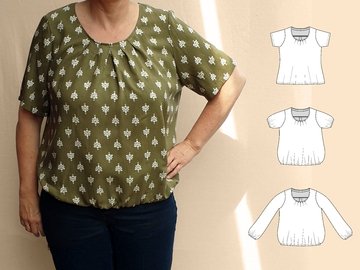
Varda Patchwork Sewing Pattern

(1)
from US $10.34
-25% BlouseFleurine Gr. 34-54 Pattern

BlouseFleurine Gr. 34-54 Pattern

(2)
from US $6.66 US $9.34*
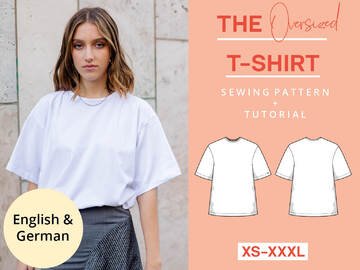
-25% Crop Shirt | Hoodie | T-Shirt - sewing pattern for sewing machine

Crop Shirt | Hoodie | T-Shirt - sewing pattern for sewing machine

(1)
from US $6.19 US $8.68*

Sewing Shirts & Tunics: Ideas for Every Skill Level

A handmade women's top fits just the way you like it – from a basic T-shirt to a tunic or blouse. You'll find patterns in different lengths, with sleeve variations (such as raglan or tulip sleeves) and neckline shapes – to suit your style and your wardrobe.

Quick choice
  • ✓Skill level: Start with “beginner-friendly” if you want a quick project; for more detail, options with seam lines, yokes or zippers are ideal.
  • ✓Silhouette: Choose a fitted, loose or oversized style – and look for features such as a back yoke, hem band or asymmetrical hem.
  • ✓Occasion & styling: Are you looking for a piece to wear on its own or for layering? For complete outfits, add pants, skirts or dresses, for example.
  • ✓Finding your way: Sort by “Best rated” and use filters such as price or discount to find particularly easy-to-follow instructions faster.
What to look out for
  • Fabric type: Check whether jersey or woven fabric is recommended – this determines the stretch, drape and appropriate seam finish.
  • Machine & stitches: Depending on the pattern, finishing the edges, a zigzag stitch or a straight stitch may be recommended for neat edges; follow the instructions and work with your sewing machine.
  • Serger (optional): If a serger is recommended, the order in which you sew and finish the seams is usually important.
  • Binding: It pays to read all the steps in advance and mark carefully, especially around the neckline.
  • Pressing: Press consistently between steps – this visibly improves the fit and appearance of the seams, especially at the neckline, shoulders and hem.
Common pitfalls
  • Untidy binding: Uneven edges are often caused by too few markings or by pulling the binding unevenly.
  • Wavy seams: Insufficient pressing or skipping it altogether can keep edges from lying flat; feeding the fabric smoothly and using the right stitch length also help.
  • Twisted sleeves: Setting in sleeves without enough matching marks can quickly lead to drag lines – check the markings and pin in stages.
  • Wrong size: Measure your bust, waist and hips and compare them with the measurement chart; if you're unsure, a test garment made from similar fabric can help.
  • Downloads & files: If you have trouble opening or unzipping files, use the help pages on downloading & unzipping or finding instructions.

Frequently Asked Questions

The terms are used differently depending on the instructions. Typical differences include length (tunics are often longer), fabric type (blouses are often made from woven fabric) and details such as a collar, button placket or hem band.

No. Many projects can be sewn with a regular sewing machine. If a serger is recommended or required, this will be stated in the instructions or product details.

In the product details or the materials and techniques list in the instructions, you'll find terms such as straight stitch, zigzag stitch or finishing edges.

Measure your bust, waist and hips and use the measurement chart for the instructions. For stretchy fabrics, the ease allowed in the pattern also plays a role.

For many patterns, yes: lengthening or shortening the hem is usually straightforward. For sleeve variations (short, long, cut-on), it depends on whether the instructions describe alternatives or adjustment steps.