Quick to Target
Browse Categories
Community & Help

Skirt Sewing Patterns

Sew a skirt that fits your waist and hips perfectly and matches your style – from mini to maxi, from sleek to swishy. Show more
Sew a skirt that fits your waist and hips perfectly and matches your style – from mini to maxi, from sleek to swishy. Browse women’s skirt PDF patterns and downloads, including wrap skirts, reversible skirts, and pleated skirts. Choose your dream project and start sewing today.

Sewing Women's Skirts: Ideas for Every Style and Skill Level

A handmade skirt fits just the way you like it – from mini to midi and maxi, from slim to swishy. The selection ranges from quick projects to patterns with details such as pockets, pleats or zippers. The descriptions usually include information on fit, required measurements and difficulty level.

Quick choice
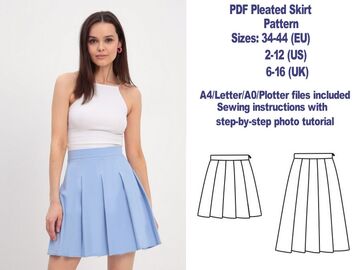
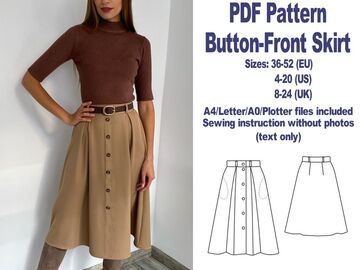
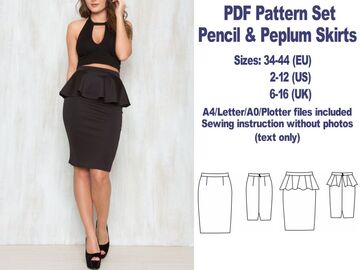
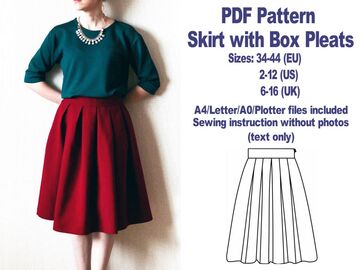
  • ✓Skirt shape: Choose from straight cuts (e.g. pencil skirts), flared styles (A-line), wrap and reversible skirts, pleated skirts or circle skirts.
  • ✓Length & occasion: Mini, knee-length, midi or maxi – your desired length determines the look and how much fabric you need.
  • ✓Difficulty level: For beginners, styles with an elastic or simple waistband are often easier than those with a zipper, darts or a contoured waistband.
  • ✓Related categories: If you want to complete your outfit, you can find more projects in Shirts & Tunics or Dresses.
What to look out for
  • Take accurate measurements: Your waist and hip measurements are key for skirts; for fitted styles, the desired skirt length is also important.
  • Sizes & measurement charts: Always use measurement charts; depending on the pattern, figures such as “width × height” may refer to body measurements, cut pieces or file formats.
  • Grainline and cutting: Following the correct grainline helps the skirt drape neatly and prevents it from twisting later.
  • Check seam allowances: Before cutting, check whether seam allowances are included or need to be added – this affects all pieces.
  • Finishing & pressing: Woven fabric often frays and should be finished (e.g. with a zigzag stitch or serger). Pressing as you go shapes edges and flattens seams.
Common pitfalls
  • Inaccurate measurements: Measure your waist and hips directly on your body and compare them with the chart – this helps prevent tightness at the hips or waist.
  • Distorted cuts: A skewed grainline can cause the fabric to pull diagonally and the hem to “twist”; secure fabric layers carefully and check the markings.
  • Skipping edge finishing: Unfinished edges fray more quickly, especially with frequent wear and washing.
  • Handling files: If a pattern is available as a download, Finding patterns – it's easy and Downloading & unpacking can help you get started.

Frequently Asked Questions

Yes, depending on availability, you can also find miniskirt patterns and accompanying sewing instructions.

You generally need your waist and hip measurements and the desired skirt length. For close-fitting skirts, additional body measurements may be useful if the pattern calls for them.

No. Many skirts can be sewn with a regular sewing machine. A serger is especially useful for quickly finishing edges or working with stretch fabrics.

Typical signs include a zipper, pockets, darts, pleats or a contoured waistband. The description often also states a difficulty level or recommends a level of sewing experience.