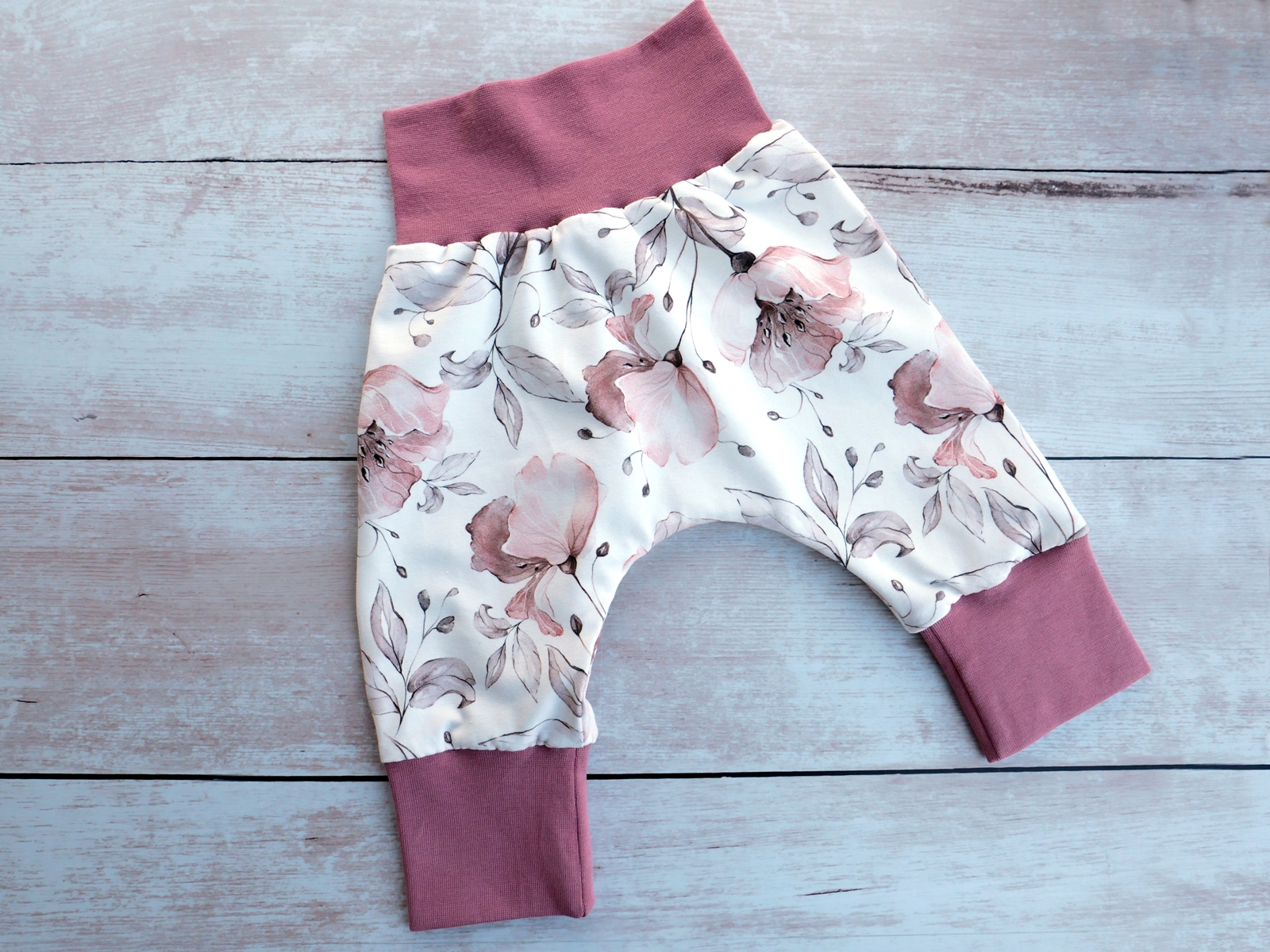
It really depends on the garment. With pants, you have to keep in mind that cuffs can also visually “shorten” the legs. Sometimes that’s the intended effect. Think, for example, of harem pants: very wide legs, a slim waist, and cuffs at the ankles. And of course, the cuff fabric must contain spandex; otherwise, it won’t conform to the waistband, arm, or leg. The cuff is supposed to fit snugly, not hang loosely.
And with
sewn baby pants, for example (harem pants) the waistband can certainly be wider. Then you can pull the waistband over the baby’s tummy, much like a belly band. This provides extra warmth and nothing presses. The seams from sewing it together—as my daughter-in-law prefers—should always be on the sides.
 Knitted sweaters or cardigans
 need cuffs so they fit more closely around the slender wrist. Wool sweaters or cardigans do tend to stretch out over time, and then there would be a draft up the sleeve. The cuff prevents that. Depending on the style, however, a cardigan with sleeves without cuffs—perhaps sleeves that flare toward the bottom—can also look very good. This visually elongates the arm and looks more elegant.
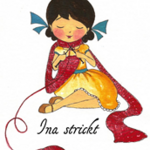
For knitted cuffs, my favorite variation is: [1 twisted knit stitch, 1 purl stitch]. This creates a firm cuff, but it only looks nice on one side. I also like to use this “cuff pattern” for my doll clothes, which are very dainty and whose garments are also meant to fit snugly. In the photo, the skirt of the dress is knitted this way.
.JPG)
And I also like to use this technique for the rolled cuff on my felted shoes.

But ultimately, anything goes—as long as you like it. Over time, everyone develops their own favorite variations.
Best regards, Ina