Forum Categories
Quick to Target
Browse Categories
Community & Help

How do you trace a sewing pattern from an existing garment?

23084 Posts Recent Started
Wednesday, December 21, 2022 at 12:32 PM
Dear users, dear authors,
How do you trace a sewing pattern from an existing garment? Do you have to take the garment apart to do this? How much seam allowance do you need?

23084 Posts Recent Started
Tuesday, December 27, 2022 at 4:16 PM
I’m bumping this up again. 

178 Posts Recent Started
Tuesday, December 27, 2022 at 4:43 PM
There’s no one-size-fits-all answer—it depends on the garment and how detailed it is.

Unpicking or cutting open the existing garment and then tracing the pieces may be the easiest way.

It can also be done without damaging the garment, for example:
a) by folding the garment so that each pattern piece can be traced—for example, a T-shirt: front, back, sleeves.
b) by measuring the garment and using those measurements to draw new pattern pieces.
c) by tracing the garment onto tracing paper and creating new pattern pieces from it.

The “correct” seam allowance is, on the one hand, a matter of personal preference and, on the other hand, also depends on the desired method of finishing the edges.

5 Posts Recent Started
Thursday, December 29, 2022 at 9:48 PM
I did this recently, too. I found the Burda tracing paper really helpful—it even comes with a special felt-tip pen. I laid the garment on the table so that one pattern piece was lying flat, then placed the tracing paper on top and traced the outline. Then I did all the pattern pieces one by one. Through the tracing paper, you can also see and mark details like darts or zipper lines. I then taped the tracing pieces together, tried them on, and made adjustments. For example, I’d stick a strip of tracing paper on if it was too tight, fold a piece over and tape it down if it was too loose, reposition darts, and so on, until it fit.
Good luck! 

5090 Posts Recent Started
Thursday, December 29, 2022 at 10:27 PM
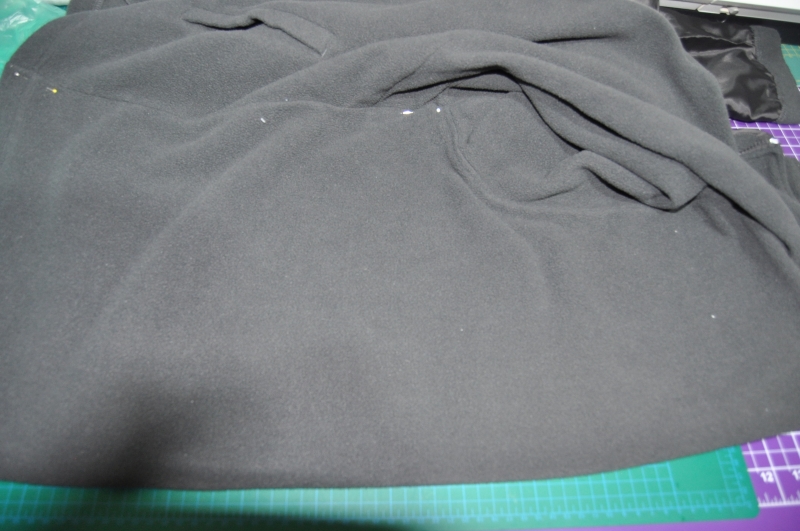
Lay the garment piece you want to trace as flat as possible on the table; in my case, it’s a fleece jacket that I traced.
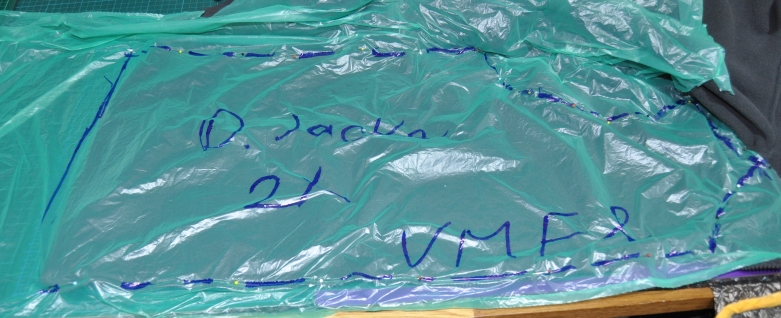
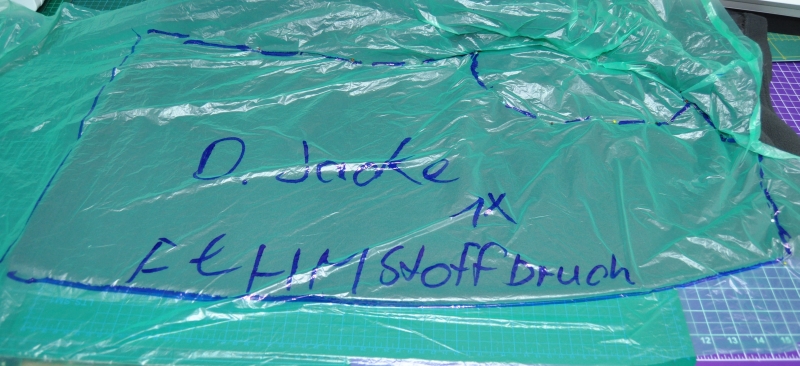
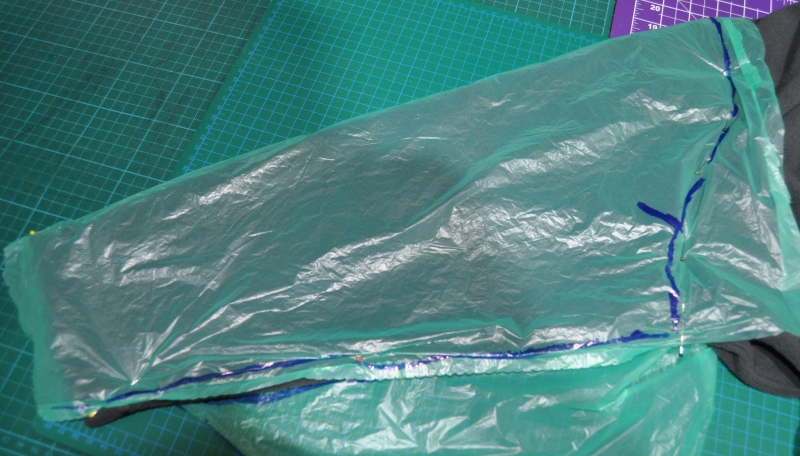
I use plastic sheeting for my pattern; here I even cut open a large trash bag for the pattern, and it works really well. It’s important to me that I can see what’s going on underneath the pattern paper, because while you can feel wrinkles, you can’t see them with thick paper, and just feeling them is, well, okay for some people, but not for me.
I pin the plastic sheet securely along the side seams. In picture 2, you can see how I trace the front piece; I also pin it down along the front, because if it slips, it’s no good anymore and can’t be used since it will be crooked.
For the back, I fold the jacket so that the side seams line up exactly on top of each other and pin them securely so nothing can slip. Any curves can then be adjusted when cutting out. I also always label each piece as soon as I trace it, so I know right away what is what. It’s also important to know where to add notches; they are very helpful when sewing.
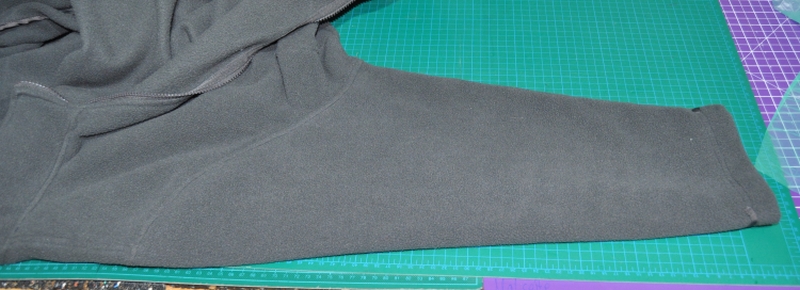
The sleeve is also laid out flat so that the sleeve seam lies straight. I place the plastic sheet around the sleeve and pin it securely too. Don’t forget the notch on the front sleeve under any circumstances: trace it, carefully turn the sleeve over, and trace the back of the sleeve as well. This gives you the armhole for the front sleeve and for the back sleeve. Anyone who has sewn a few times knows that the armhole at the back of the sleeve is a little flatter than at the front; you need that for freedom of movement.
Now you already have the most important pieces for a jacket. You can measure the collar in height and width; this works best once the front pieces and back are sewn together. Don’t forget the seam allowances, unless you cut so generously that they are included. Pockets are also a matter of preference; you can easily measure them and add them. 
Hope this is clear, and if you have any questions, ask away; I’ll answer.

Best regards, Inge
I’ve done this many times, tracing a pattern from a finished garment.
Let me show you using a jacket as an example.


5953 Posts Recent Started
Tuesday, January 10, 2023 at 4:50 PM
As a beginner at sewing, I unfortunately wasn’t able to do this. You really need a bit more experience for this, and you also need a “cooperative” garment. I thought I could sew a new version of my beloved and well-worn jersey summer garden dress.

Since the fabric already had holes in a few places, there was nothing I could salvage. So I unpicked all the seams and laid the individual pieces out flat. But because of the fabric’s elasticity, or rather because it was stretched out, I couldn’t manage to trace a usable sewing pattern from it.

In the end, I found it easier to look for a new pattern and sew that instead. That’s what I’m working on right now. But even that has its challenges.

Best regards, Ina

Write Reply

Please register or Log in!

Latest comments

93 actual comments last by SabinesFadenspiel
53 actual comments last by Silvia1967
5 actual comments last by Operator
92 actual comments last by Moderator
19 actual comments last by Libelle11
2 actual comments last by veronika-t15
3 actual comments last by veronika-t15
21 actual comments last by Libelle11
68 actual comments last by Moderator
87 actual comments last by Moderator

Popular patterns

Top patterns from Natalija from the Crochet category!
Top patterns from Millionbells from the Crochet category!
Top patterns from stricken-im-trend from the Crochet category!
Top patterns from MorbenDesign from the Crochet category!
Top patterns from stricken-im-trend from the Knitting category!
Top patterns from made-by-anja from the Crochet category!
Top patterns from elke-eder from the Crochet category!
Top patterns from Melknits from the Knitting category!
Top patterns from stricken-im-trend from the Crochet category!
More top patterns

Free patterns

Top patterns from MorbenDesign from the category!
Top patterns from jennysideenreich from the category!
Top patterns from MorbenDesign from the category!
Top patterns from Hobbii from the category!
Top patterns from MorbenDesign from the category!
Top patterns from Hobbii from the category!
Top patterns from Miralay from the category!
Top patterns from Hobbii from the category!
Top patterns from MorbenDesign from the category!
Top patterns from Dianas-kleiner-Haekelshop from the category!
Top patterns from Hobbii from the category!
Top patterns from NataliSkill from the category!
Top patterns from KuemaTutorials from the category!
Top patterns from Hobbii from the category!
Top patterns from christina-lemberger from the category!
Top patterns from ternuraamigurumi from the category!
Top patterns from Hobbii from the category!
Top patterns from ternuraamigurumi from the category!
Top patterns from martina-supova from the category!
Top patterns from Hobbii from the category!
Top patterns from KleinesFeines from the category!
Top patterns from MorbenDesign from the category!
More free patterns

Win shopping credit every month!

42 prizes / total value €300: 30×€5, 10×€10, 2×€25 – simply activate the newsletter. No purchase necessary. Unsubscribe at any time. Prizes are awarded as Crazypatterns shopping credit. Learn more