You should always make sure the pattern matches the fabric, because you can’t use a blouse pattern for a T-shirt unless it’s specifically designed for that purpose. A blouse is made from non-stretch fabric 99.9% of the time, whereas a T-shirt is made from jersey, which, as we all know, is stretchy. The finished patterns always include what’s called the “ease allowance,” and this is why some patterns can’t be used for every fabric.
This “ease” is the amount of width that allows the garment to fit well and comfortably; depending on the type of garment, it ranges from 2 cm to 3–4 cm, not including the seam allowance, which is added separately and is typically between 0.75 cm and 1 cm.
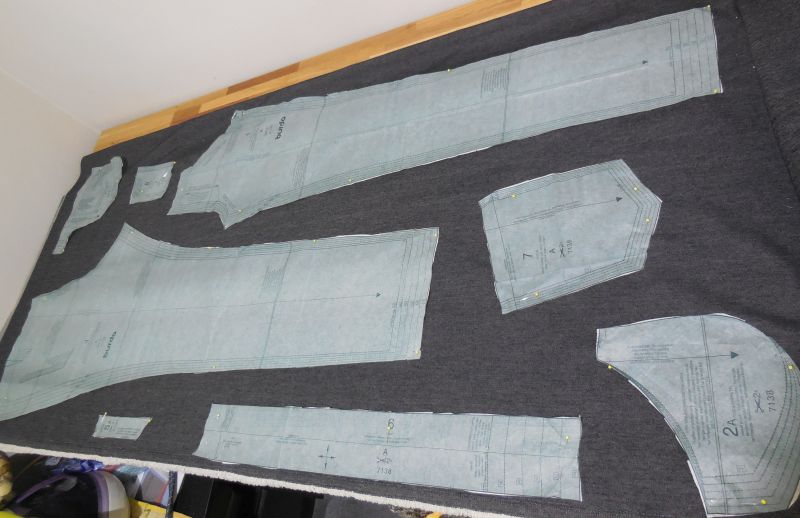
A pattern should always be placed along the grainline, as shown here, because the pattern features long lines with an arrow indicating the direction in which the pattern must be placed—namely, along the grainline. You can determine the grainline by laying the fabric lengthwise on the table, selvedge to selvedge. When cutting, I would place the right side of the fabric facing inward so that the wrong side of the fabric is facing up. This way, you can easily mark your placement marks, etc., without ruining the *beautiful right side* of the fabric.
Best regards, Inge