
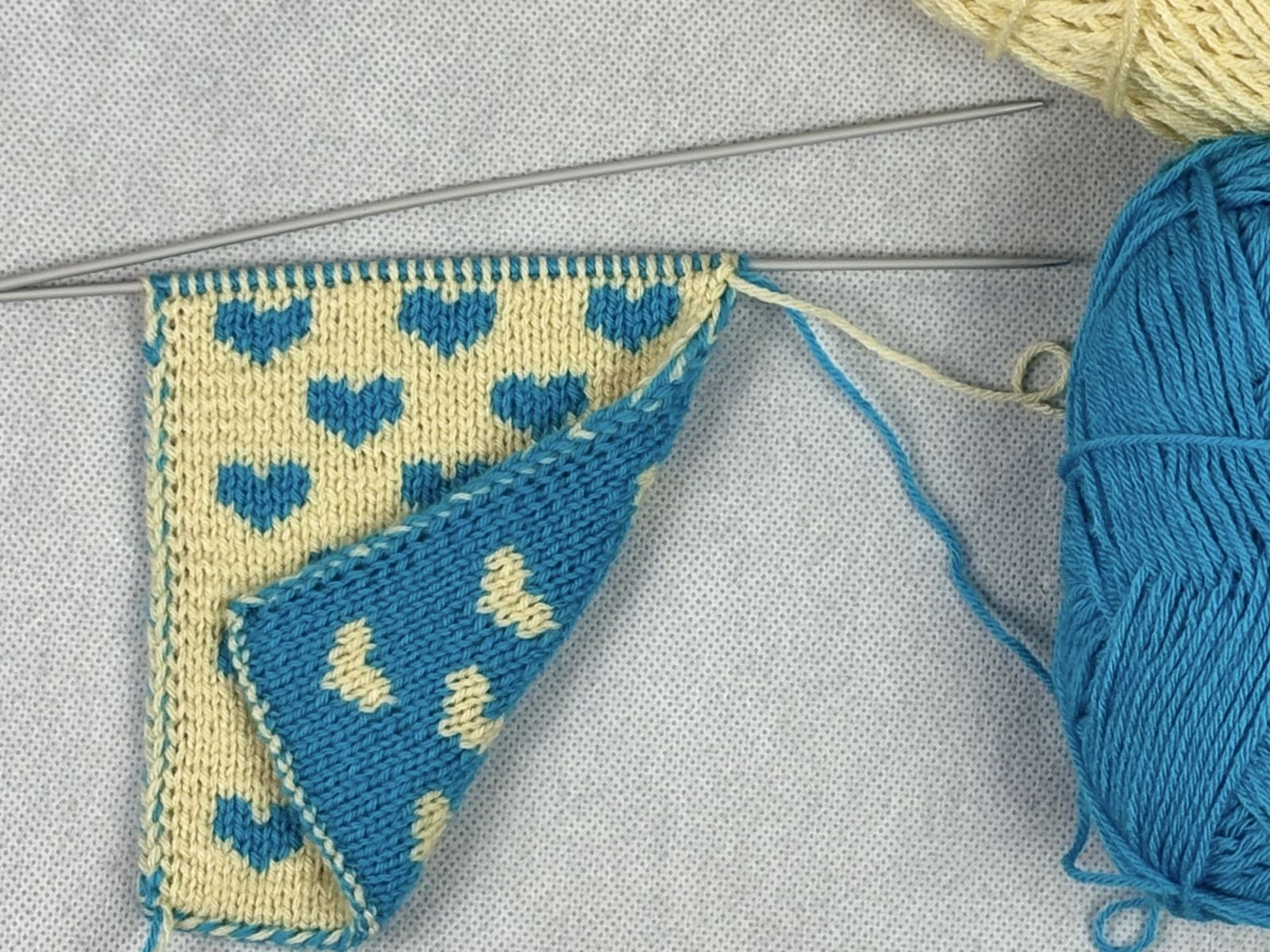
Double-faced knitting is a fascinating technique where you knit two colors and two sides of the fabric at the same time. But that’s exactly what makes this technique prone to mistakes: even small oversights in yarn handling, tension, or stitch control can significantly affect the finished look.
In this article, I’ll show you the most common mistakes in double-faced knitting—and how you can specifically avoid them or correct them step by step without having to rip everything out right away.
An overview of the Most Common Mistakes in Double-Faced Knitting

When knitting double-faced fabric, most mistakes occur because you’re working with two strands and two sides of the fabric at the same time. The most common mistakes are:
- Twisted strands
These result from inconsistent yarn handling and lead to an uneven stitch pattern. - Holes at color changes
Occur when the yarns are not pulled evenly during color changes. - Pattern errors
Wrong colors or reversed right and wrong sides cause the pattern to “tip.” - Reversed stitches (knit/purl)
Alter the structure and make the knitted fabric appear uneven. - Uneven tension
One side becomes too loose, the other too tight. - Rough or wavy edges
Caused by unevenly knitted edge stitches.
Avoiding and Correcting Twisted Strands in Double-Faced Knitting
Twisted threads cause stitches to be “pulled” or “squeezed,” making the fabric look uneven.
Here's how to stay in control:
European Thread Guidance:
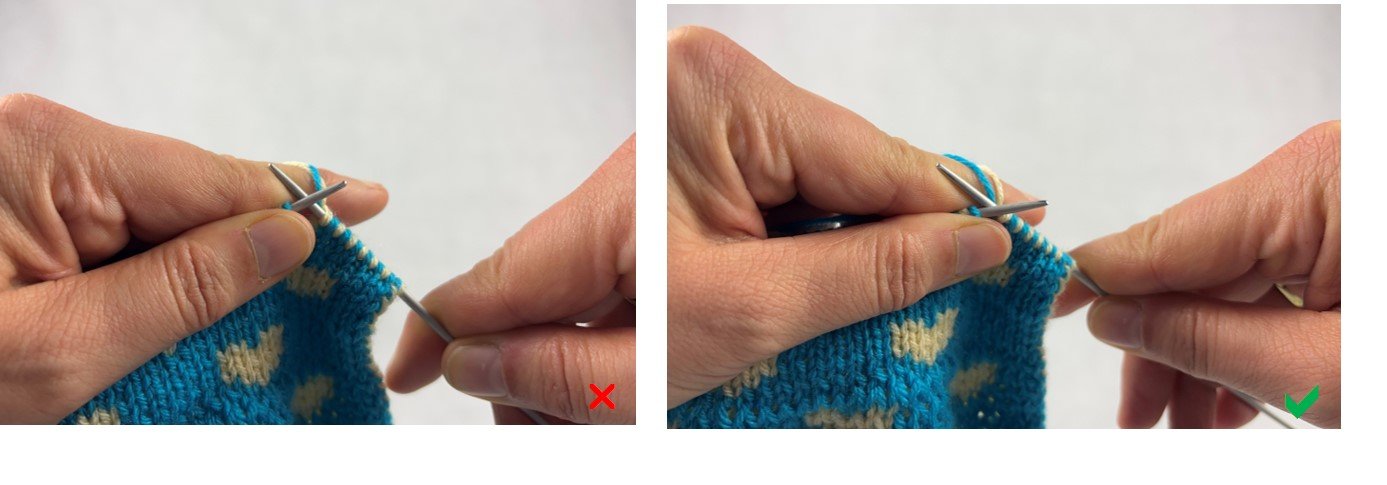
- Decide on a fixed position for both threads. For example, place one thread over your index finger and the other over your middle finger, or position one thread closer to the needle and the other slightly further back.
- Consistently stick to this order.
- Untangle the threads regularly (ideally at the start of each row).
English Thread Guidance:
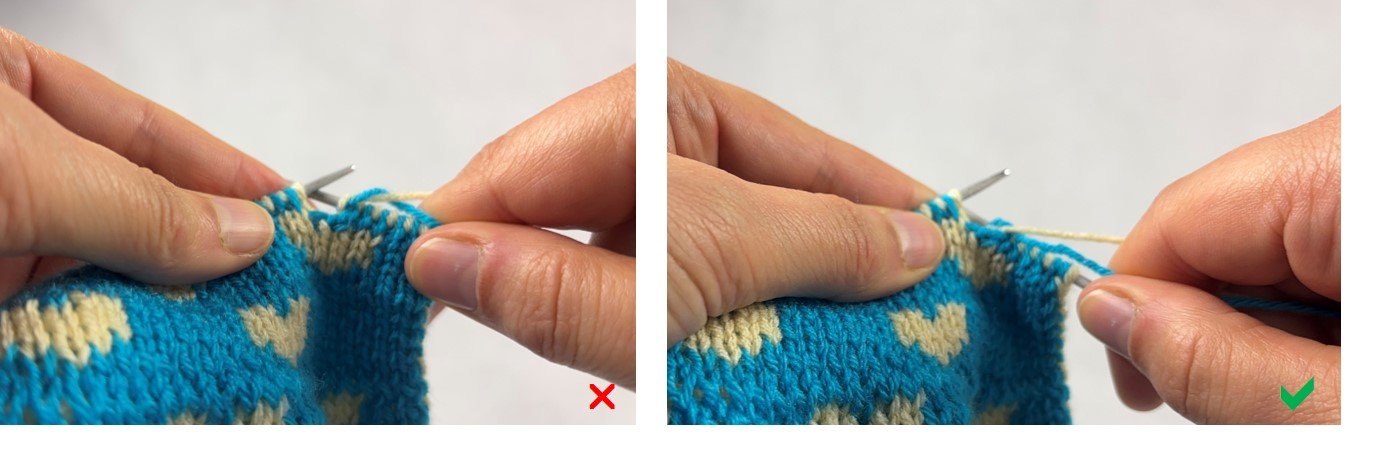
- Always keep the yarn for the knit stitch on the side of your finger facing you
- The second yarn is on the opposite side.
- Untangle the yarns regularly (e.g., at every color change and at the beginning of each row).
👉 Tip: Many people deliberately keep one thread on the left and one on the right—this automatically keeps things neat.
Prevent Holes in Double-Faced Knitted Garments
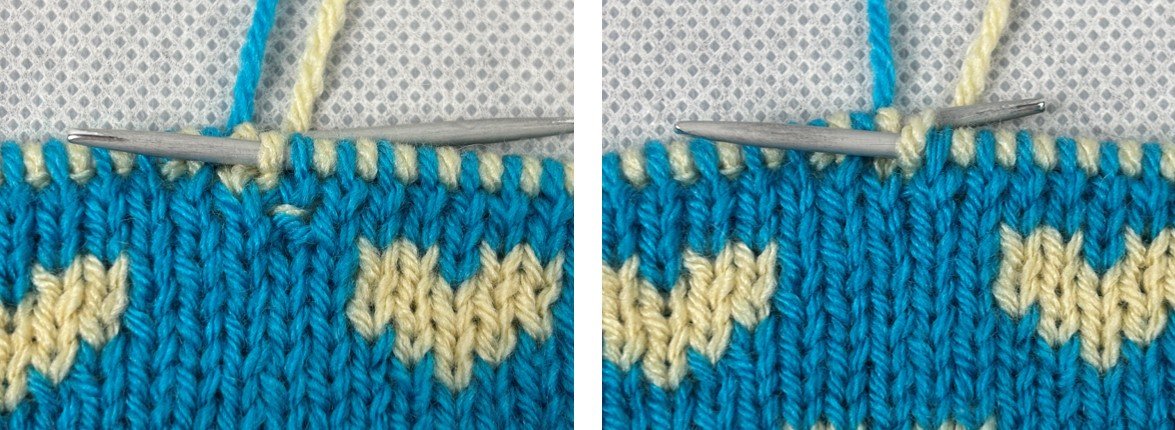
Small holes form between color changes if the threads are not pulled tight evenly during the color change.
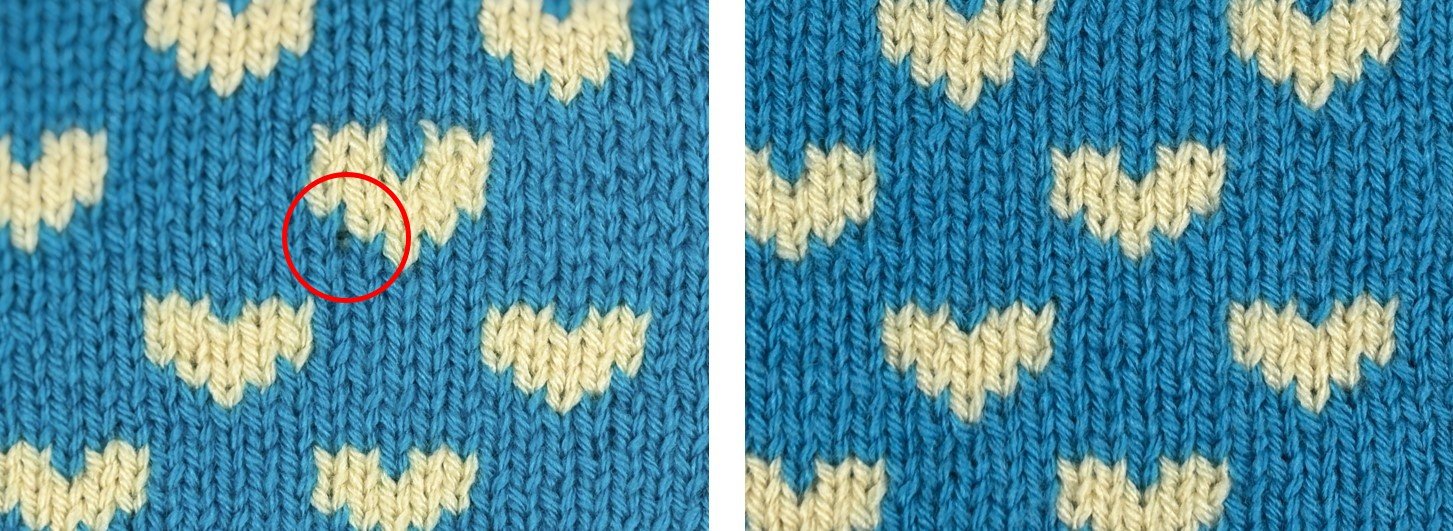
How to Avoid Holes:
- Pull both threads all the way through to the other side of the work
- Make sure no small loop is left behind
- Gently tighten the new thread before knitting the next stitch
- Knit evenly—not too tightly
Correcting Pattern Errors in Double-Faced Knitting
A pattern error occurs when a stitch is knitted with the wrong color or when the right side and wrong side are reversed.
Correcting Swapped Front and Back Stitches
Here, the colors of a double stitch were swapped.
Tools: crochet hook, knitting needle, safety pin
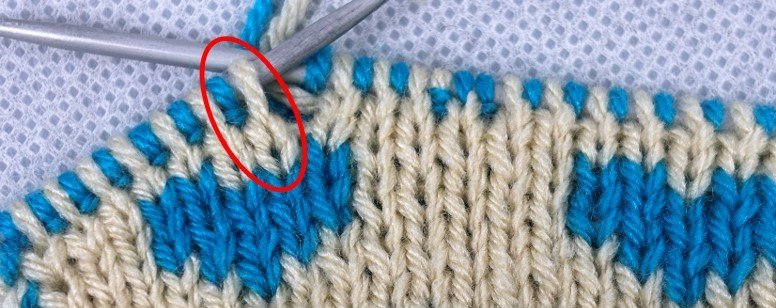
- Pinpoint the problem
Find the incorrect double stitch and the double stitch directly above it on the needle (on the same vertical line)
- Slip the stitches
Carefully slide the stitches in the vertical row above the mistake off the needle one by one until you reach the mistake. Secure the last correct stitch below the mistake with the crochet hook.
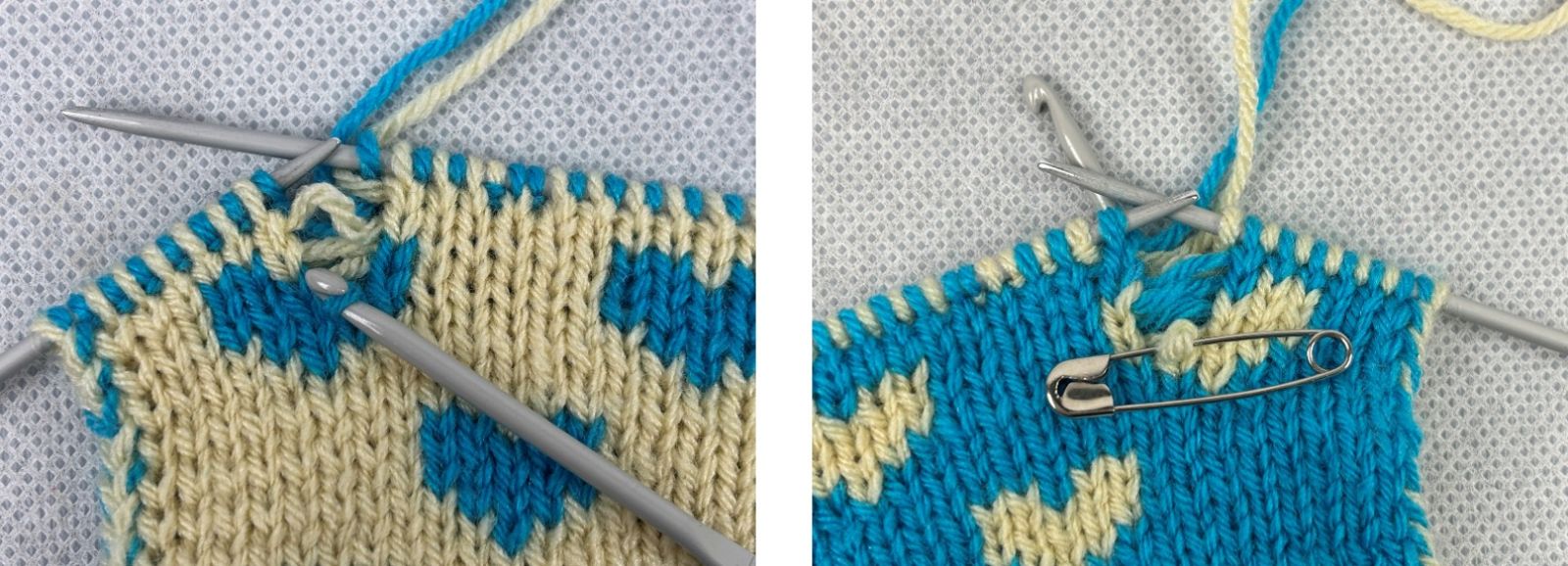 Important:
ᴏ Work on both sides separately
ᴏ Secure the side you are not working on with a safety pin - Match colors correctly
Use the crochet hook to pull the thread of the correct color through (separately on both sides)
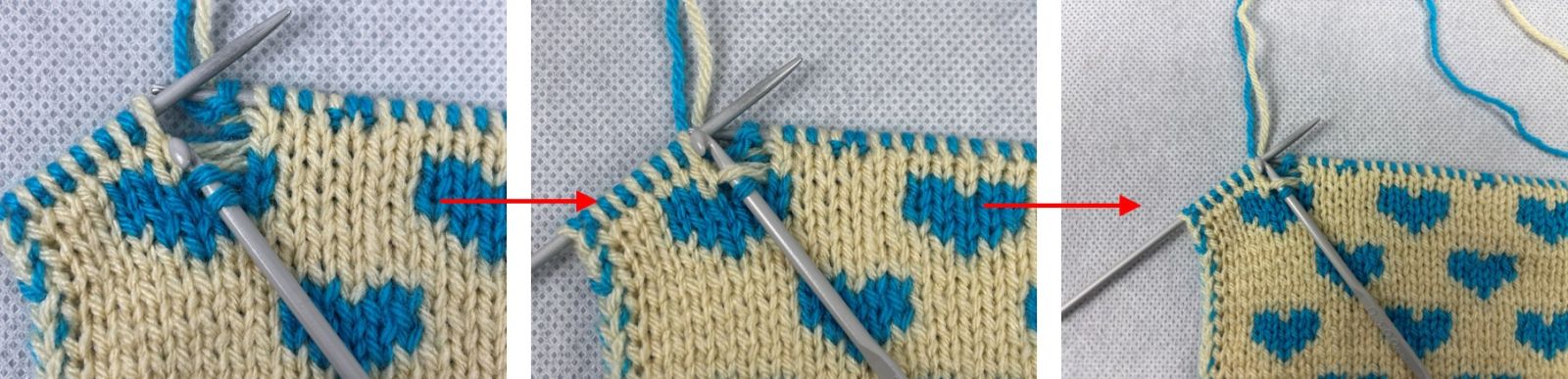
- Crochet the stitches back up
Crochet the stitches back up from the bottom to the top (working each side separately) - Continue knitting
Place the double stitch correctly on the needle and continue knitting as usual
Repairing Specific Stitches
The repair is possible, but a bit tricky:
The original thread remains after the correction, which can cause the tension to become uneven at that point.
👉 Recommendation:
- If the mistake is only a few rows back → it’s better to rip it out
- If it’s further down → cover it with a slip stitch
Quick Guide: Correcting a Single Stitch
- Let the stitches drop down to the point where the mistake occurred
- Pull a thread of the correct color through with the crochet hook (this must be carefully sewn in later)
- Crochet the stitches back up
- Continue knitting
👉 Tip: You can correct several adjacent stitches one by one.
Duplicate Stitch: Simply Cover Up any Mistakes
If the mistake happened a long time ago, the duplicate stitch is often the best solution.
Here’s how it works:
- Thread the needle with a matching color
- Insert the needle from back to front
- Trace the stitch pattern exactly
- Adjust the tension
- Weave in the ends
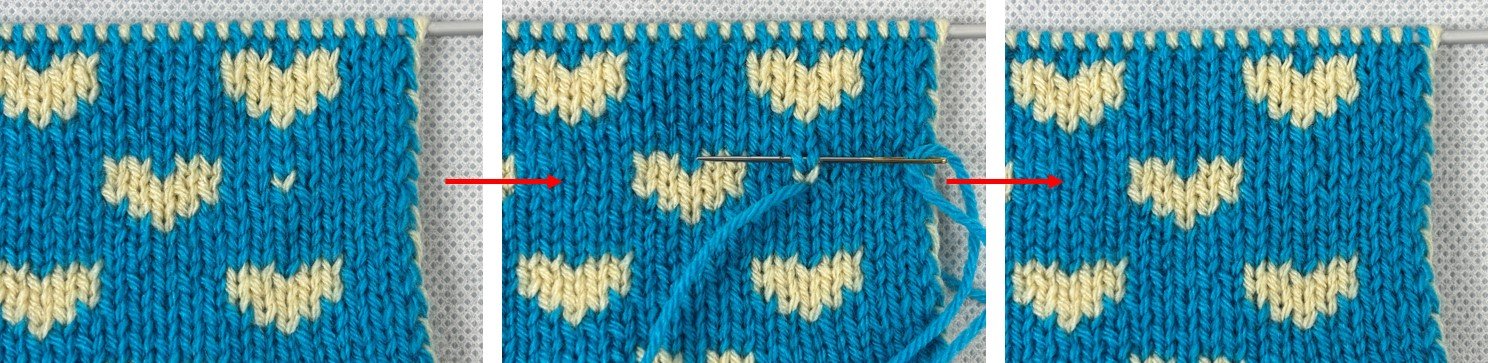
👉 Important: Leave enough thread so you can sew it neatly later.
Correcting Knit and Purl Stitches in Double-Faced Knitting
If a stitch was knitted instead of purled (or vice versa), the wrong side will be on the outside.
Solution:
- Let the stitches drop down to the point where the mistake occurred
- Re-crochet the stitches correctly
- Make sure to follow the correct direction of insertion (so the smooth side faces out)
Even Stitch Pattern in Double-Faced Knitting
An uneven stitch pattern is almost always caused by uneven tension.
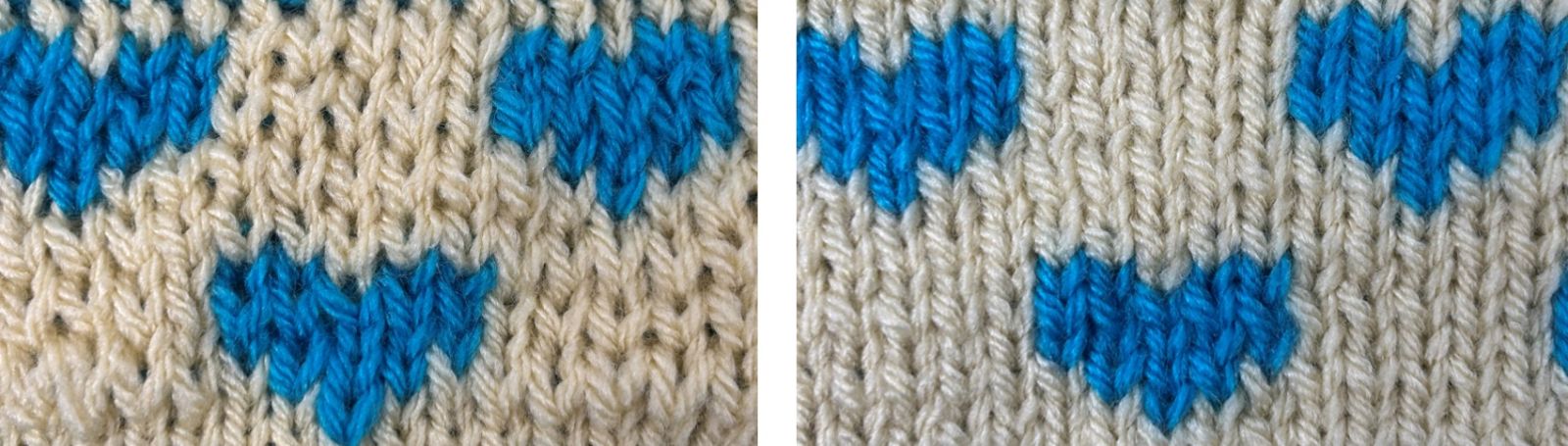
That helps:
- Keep your hands steady
- Check both sides regularly
- It’s better to knit a little loosely and block it later
You’ll only get a neat knit if:
- both strands are clearly separated
- the tension is even
- every stitch is worked correctly
Neat Edges in Double-Faced Knitting
Rough edges are caused by uneven edge stitches.
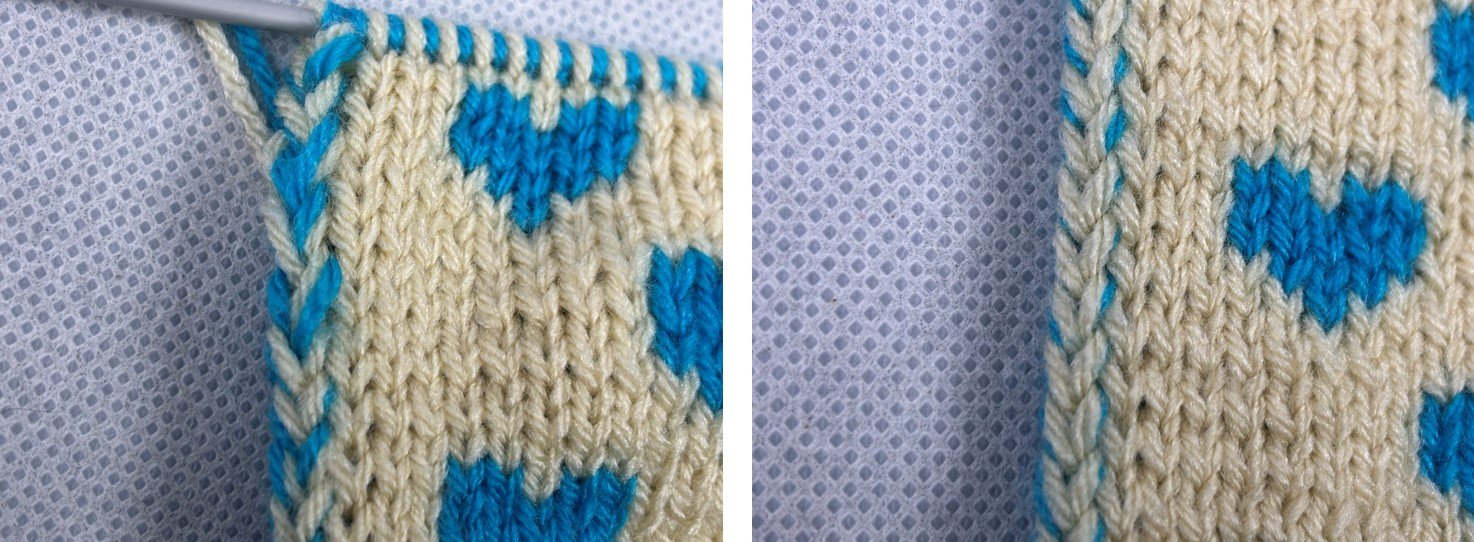
Tipps:
- Always use the same edge stitch
- Do not knit the edge stitches too loosely
- Consciously control the tension
And if You Ever Do Have to Rip it Out
Sometimes there is no other way to correct a mistake—in that case, rippling is the best solution. To make sure nothing goes wrong, a lifeline comes in handy.
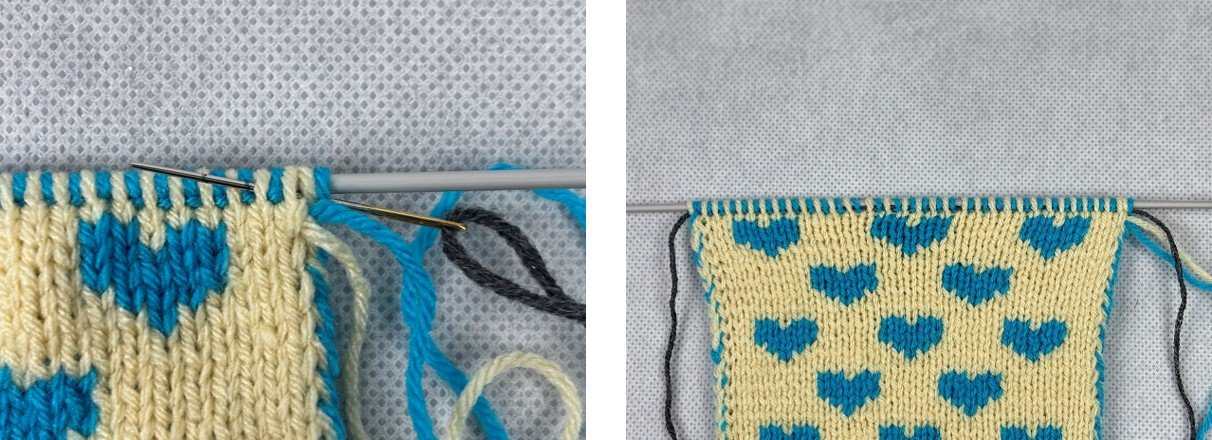
It’s best to insert the lifeline into the row currently on your needle. Use a thin but strong thread in a highly visible contrasting color. Using an embroidery or darning needle with a blunt tip, pull the thread through all the stitches on the needle from below.
Then continue knitting as usual, taking care not to knit the lifeline into the fabric.
If you need to rip out your work later, you can easily pull your knitting back to this secured row. The stitches remain on the thread and can be easily picked up onto the knitting needle again.
Especially with more complex patterns, it’s worth inserting a lifeline regularly. This way, you secure your work and can correct mistakes at any time without stress.
Conclusion: How to Easily Handle Mistakes in Double-Faced Knitting
If you don’t catch a mistake until later, fixing it can often be a hassle. Now, the only thing that helps is an honest decision:
Do you want to rip it out?
Is a slip stitch enough?
Or can you just leave the mistake as is?
Because let’s be honest: a small imperfection is often what makes your knitted piece unique and full of character.


