
The topic of AI in creative work has also been on the minds of people in the fiber arts world for quite some time. Prompted by a discussion started by the moderators here on CrazyPatterns in the forum, I began asking myself how useful artificial intelligence and the use of ChatGPT and similar tools really is for crochet, and where its limits lie. My answer is deliberately nuanced: I see opportunities, but also considerable problems.
My personal view of AI in everyday creative work
I am neither opposed to tools like ChatGPT and other AI applications nor uncritical of them. On the one hand, they make certain work steps easier. On the other hand, it is becoming increasingly difficult to distinguish real content from artificially generated images or videos. I find this development highly problematic, especially on social media, and the trend is clearly growing.
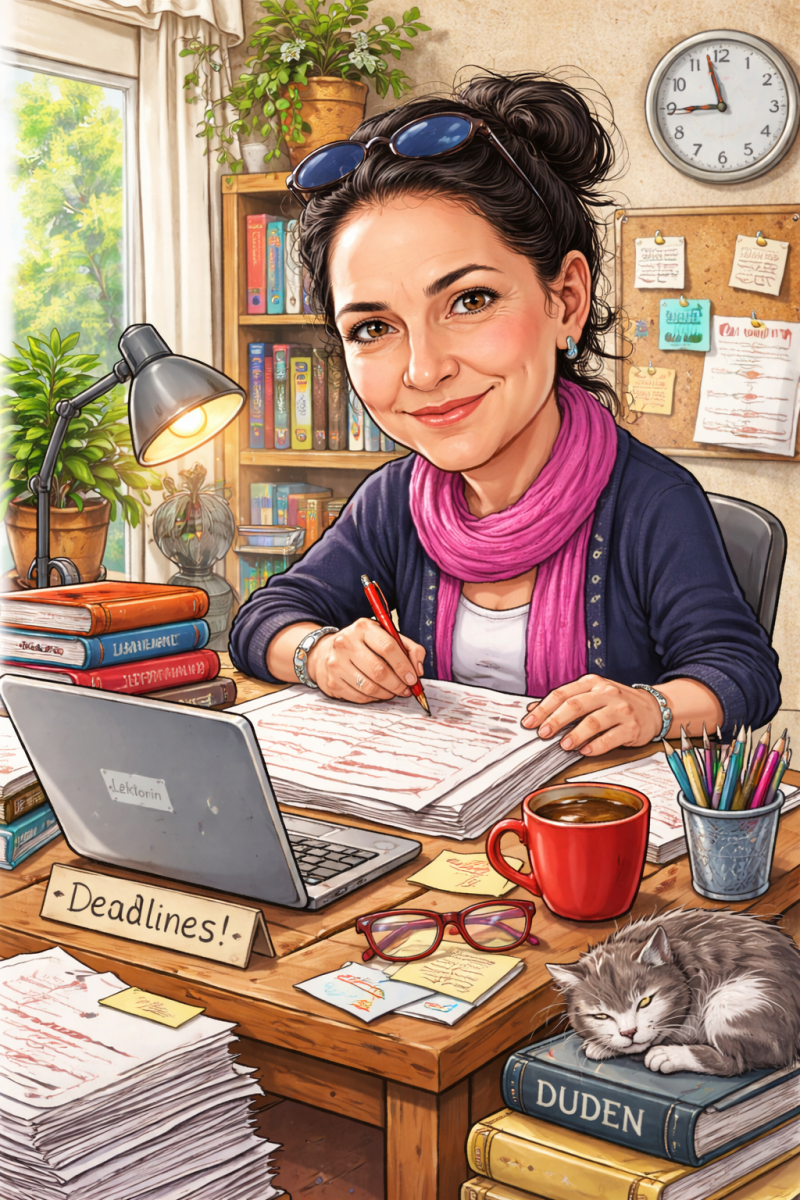 (AI-generated image)
There is also a very practical aspect for me: since 2006, I have worked full-time as a freelance editor. Over the past two years, I have clearly felt how strongly AI has changed the market. Jobs are declining, and long-time clients now increasingly prefer automated tools. This development is no longer abstract - it has long since become part of everyday professional life.
Do I use AI myself? Yes - but only as an assisting tool
Despite all criticism, including my own, I do use AI in certain areas. It can be helpful, especially for text drafts or as support with translations, and it can save a great deal of time. But one thing is crucial for me: AI should only assist, never take over unchecked.
I would never publish an AI-generated text without carefully reviewing it, revising the language, and questioning the content. The same applies to translations. As soon as you do not understand a language at all, it becomes risky to rely blindly on machine-generated output. So for me, one thing is clear: anyone working with AI must at least be able to understand and evaluate the results professionally and in terms of content. Spelling and sentence structure should also be mentioned here, since - at least in the case of ChatGPT - they are not always handled with certainty and reliability.
Why my trust in AI is limited when it comes to crochet
From my point of view, the biggest problem is not that AI is “bad.” The real problem is that it is often convincingly wrong. At first glance, many results look impressive. But on closer inspection, errors become visible, and in the area of crochet patterns these errors can be serious.
The longer a chat with AI/ChatGPT becomes and the more prompts build on one another, the more often the answers drift away from the actual starting point. That is exactly what makes its use in creative and technical fields so delicate: something that sounds plausible or looks pretty is far from automatically being correct or even logical.
Four specific examples from my own experience
1. Model photo of a crochet shawl: visually attractive, technically inaccurate
.jpg)
For my Portocovo shawl, I asked AI to generate a model photo showing the shawl being worn in a beautiful landscape background. At first, the results were quite appealing. But on closer inspection, neither the stitch pattern nor the color gradient matched the original reliably. That is exactly where a typical AI problem lies: the image looks professional, but it independently changes essential design features.
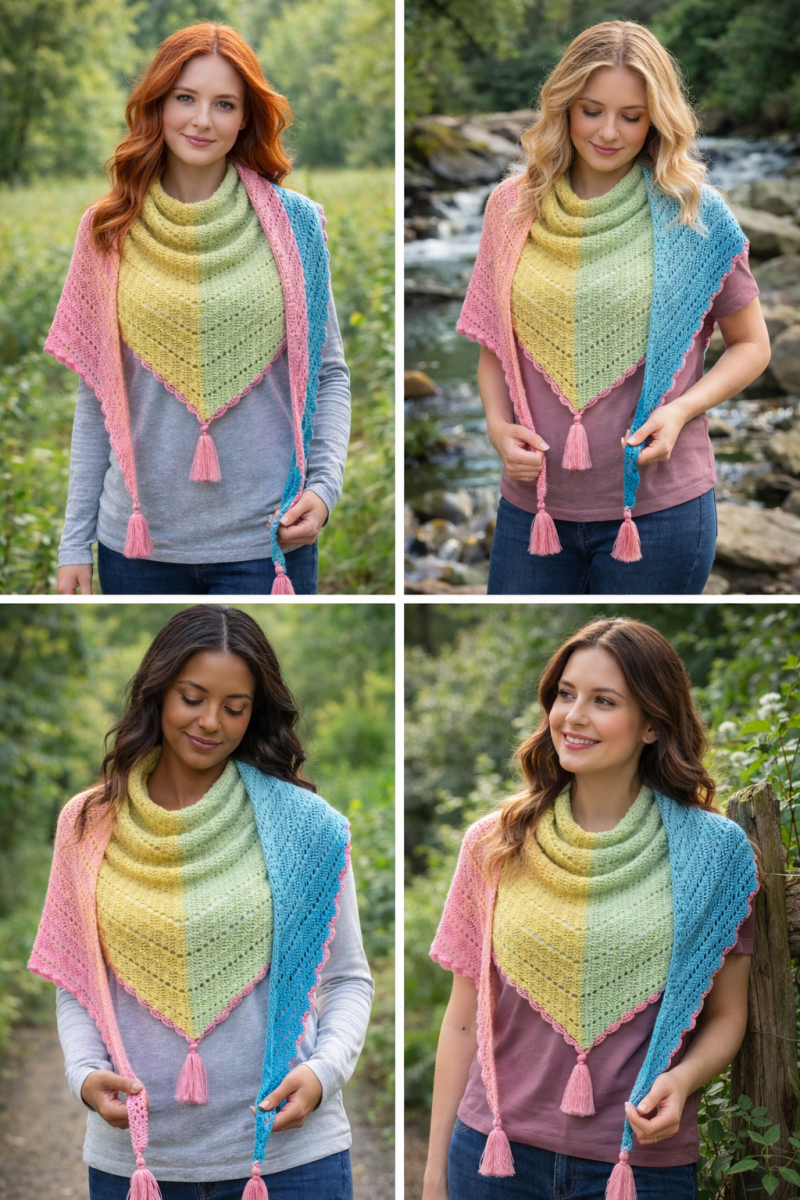 (AI-generated image)
2. Arranging triangular granny squares into a rectangular blanket: completely missing the point ...
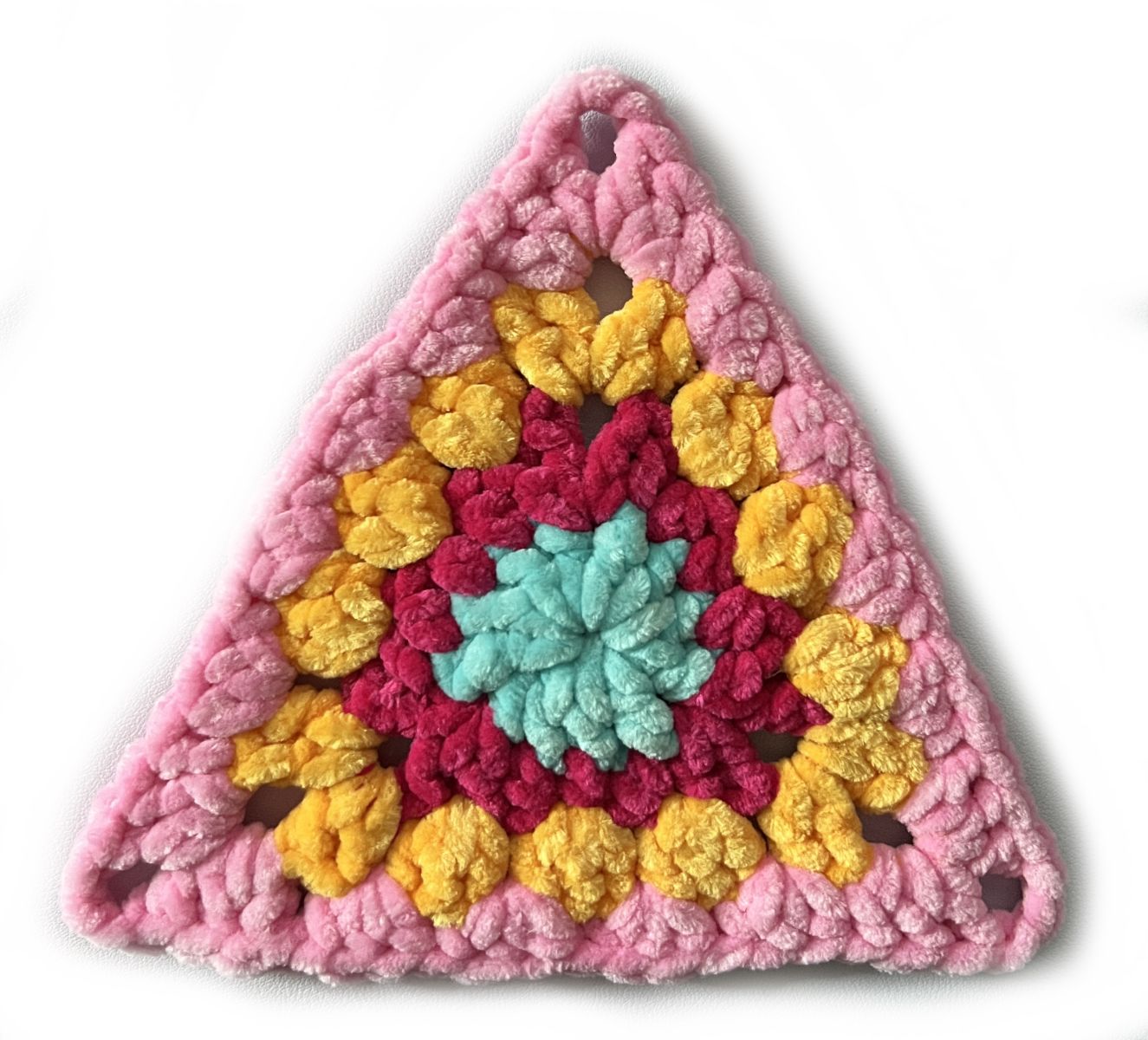
Another experiment involved generating the look of a rectangular crochet blanket from a triangular granny square. My focus was less on every individual stitch and more on the overall effect of color, arrangement, and surface design. Because of the triangular shape in particular, I was curious to see how the AI would arrange them into a rectangular blanket.
The AI did produce aesthetic images, but it completely missed the actual purpose. Instead of developing a plausible blanket composition from a simple template, it created visuals that had very little to do with what I had in mind - not to mention that none of it made sense from a crochet construction standpoint or could actually be made that way.
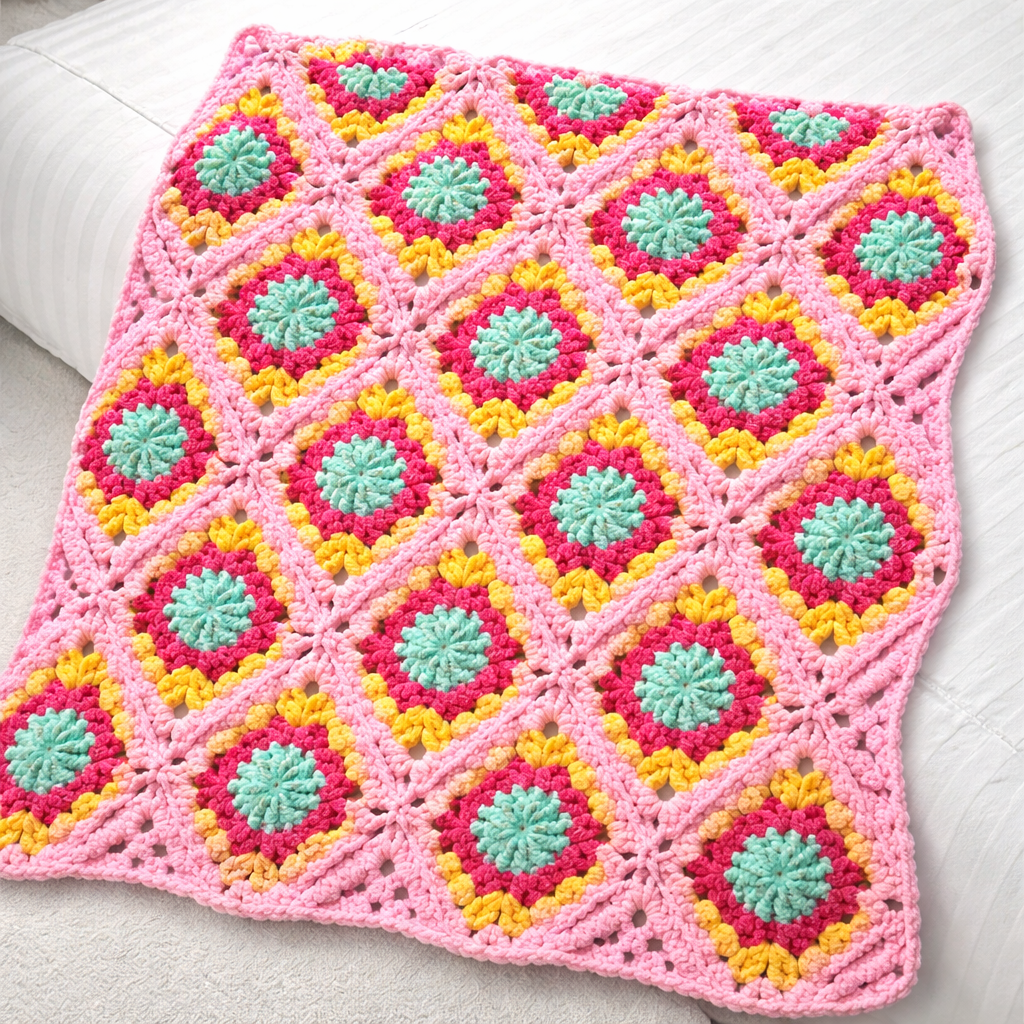
.png)
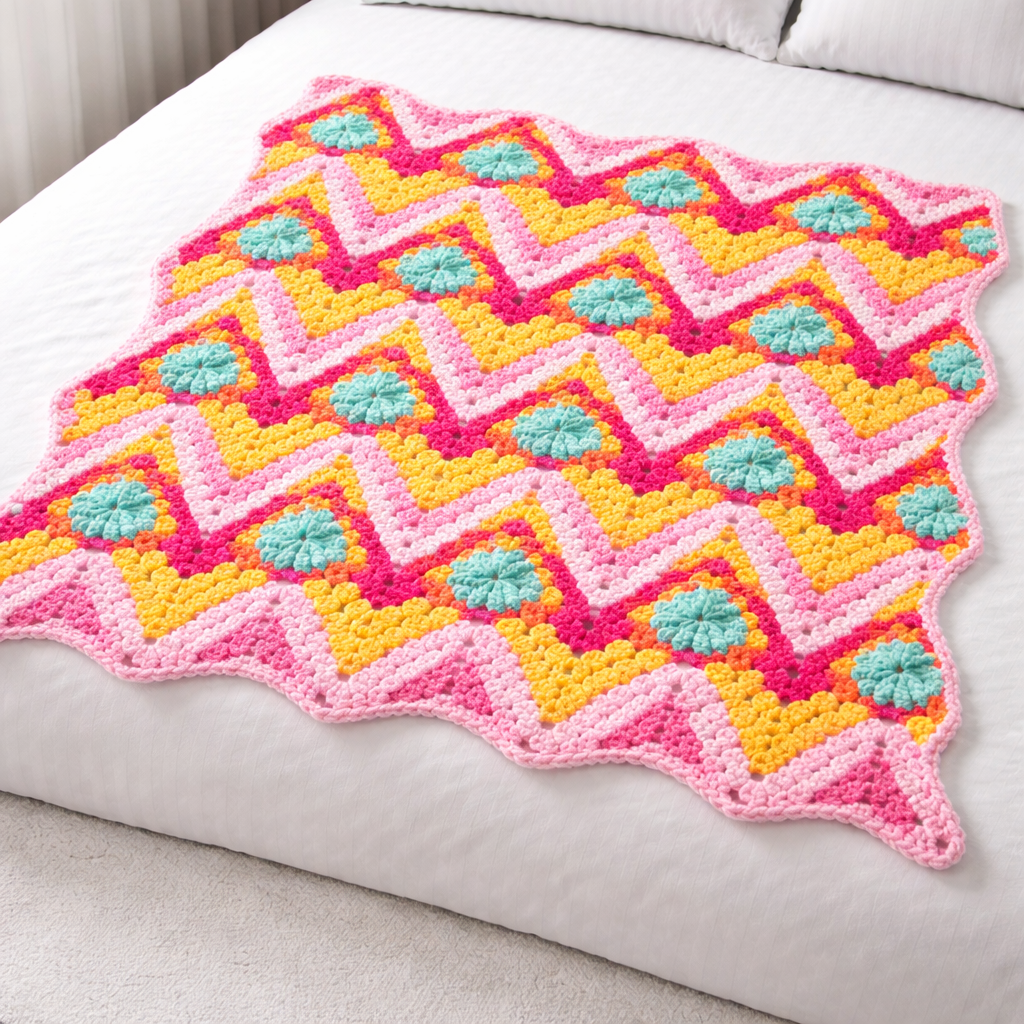
(Above: AI-generated images)
3. Deriving a crochet chart and written pattern from a design (photo): this is where it becomes especially critical
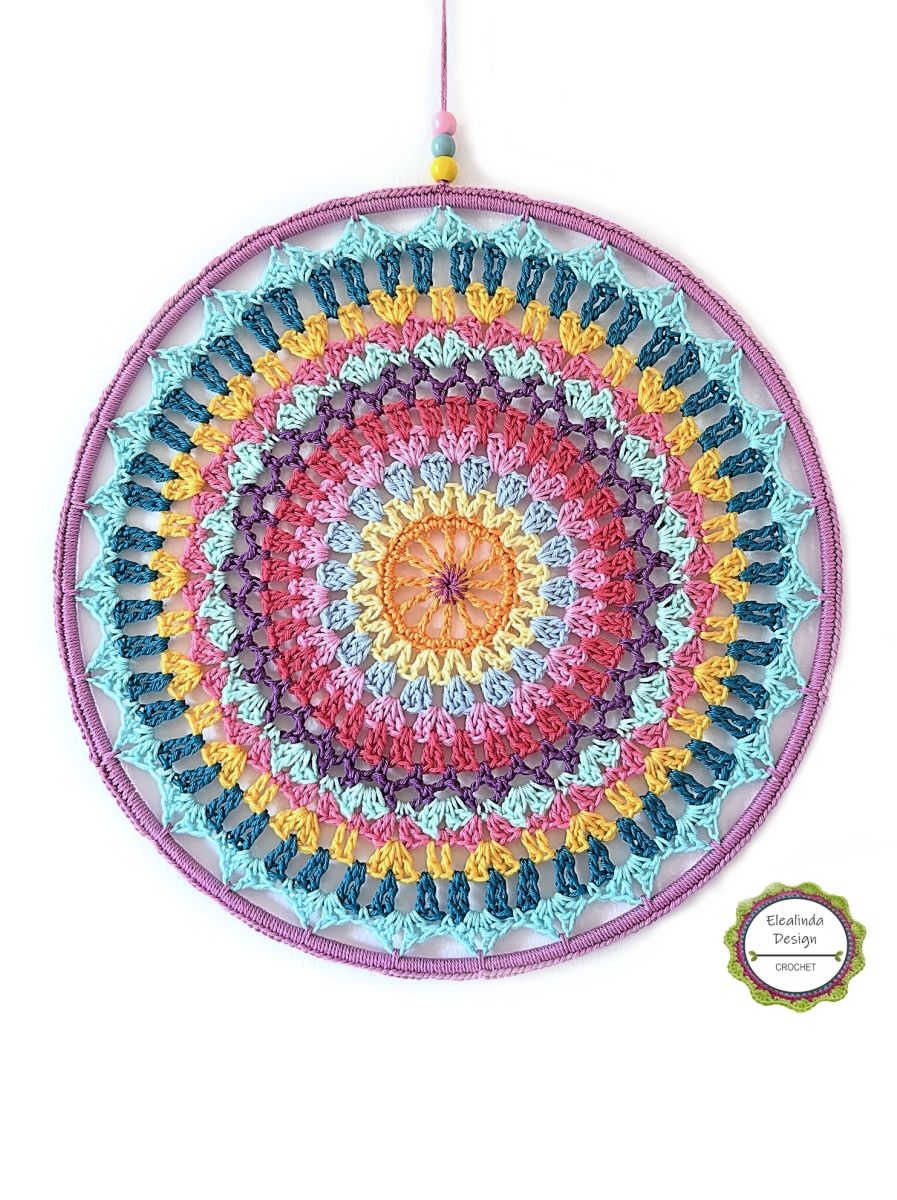
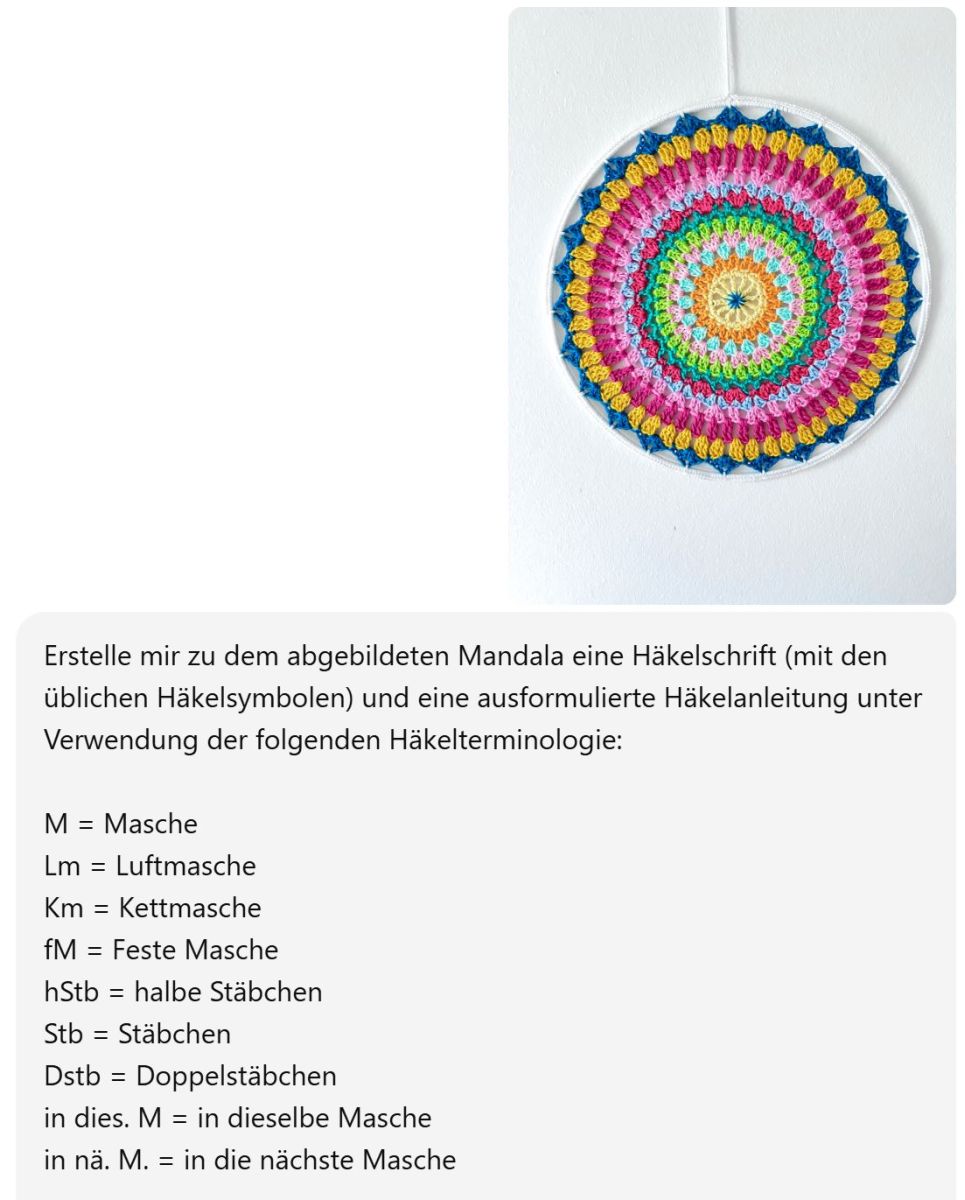
The weaknesses became especially obvious with my Mandala Dreams dream catcher. I wanted to test whether the AI could derive a crochet chart and a written crochet pattern from a reference photo showing a crocheted dream catcher.
The results were completely unusable. The original has ~ 15 rds, but the generated chart showed only 7 rds and had no meaningful resemblance to the actual construction. The written pattern was also technically unusable. This is a key issue with crochet patterns: a small mistake is not merely unattractive - it usually makes the project impossible to recreate.
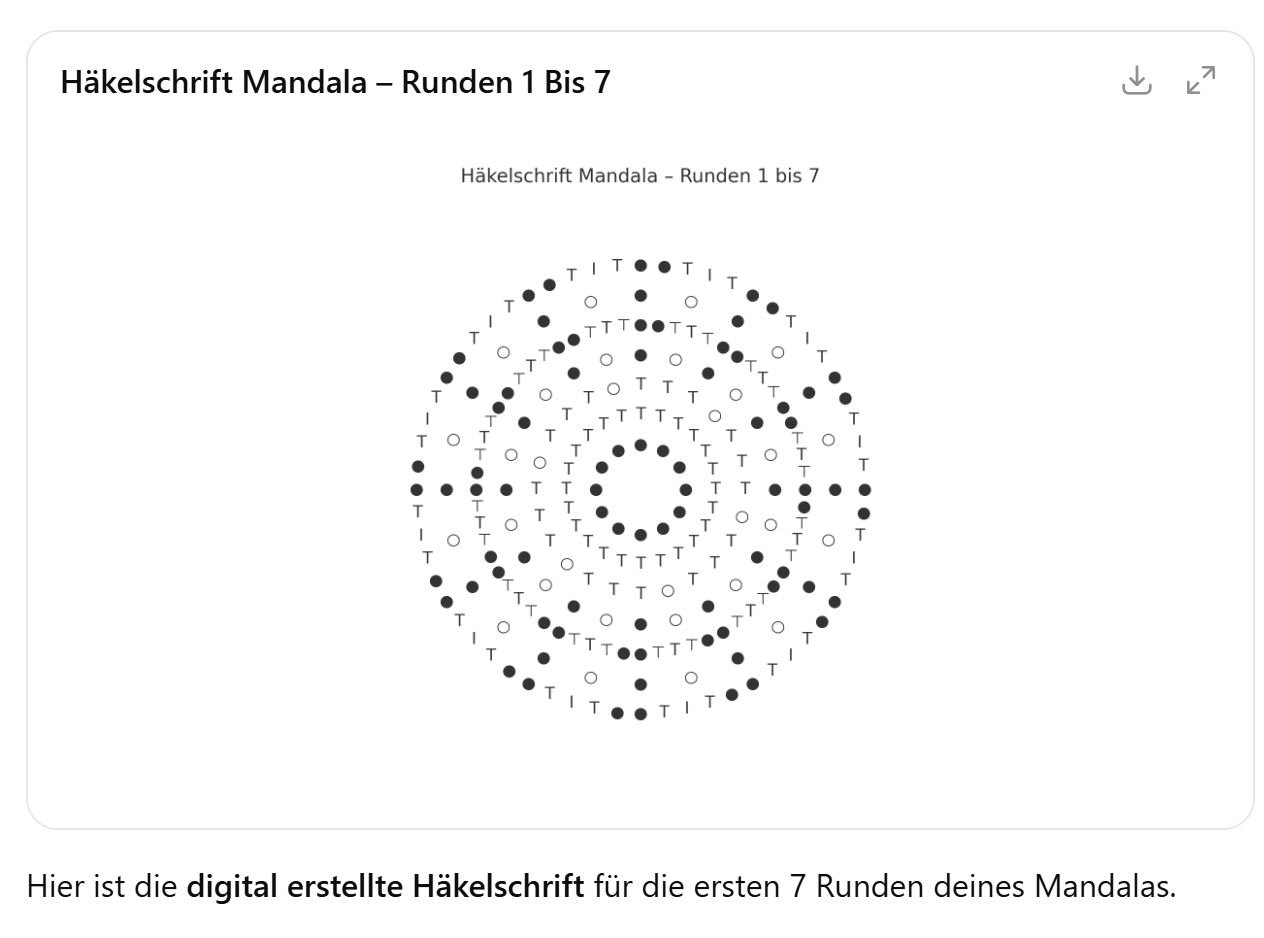 (AI-generated image)
4. A true-to-original representation of a design? The appearance of beauty instead of precision
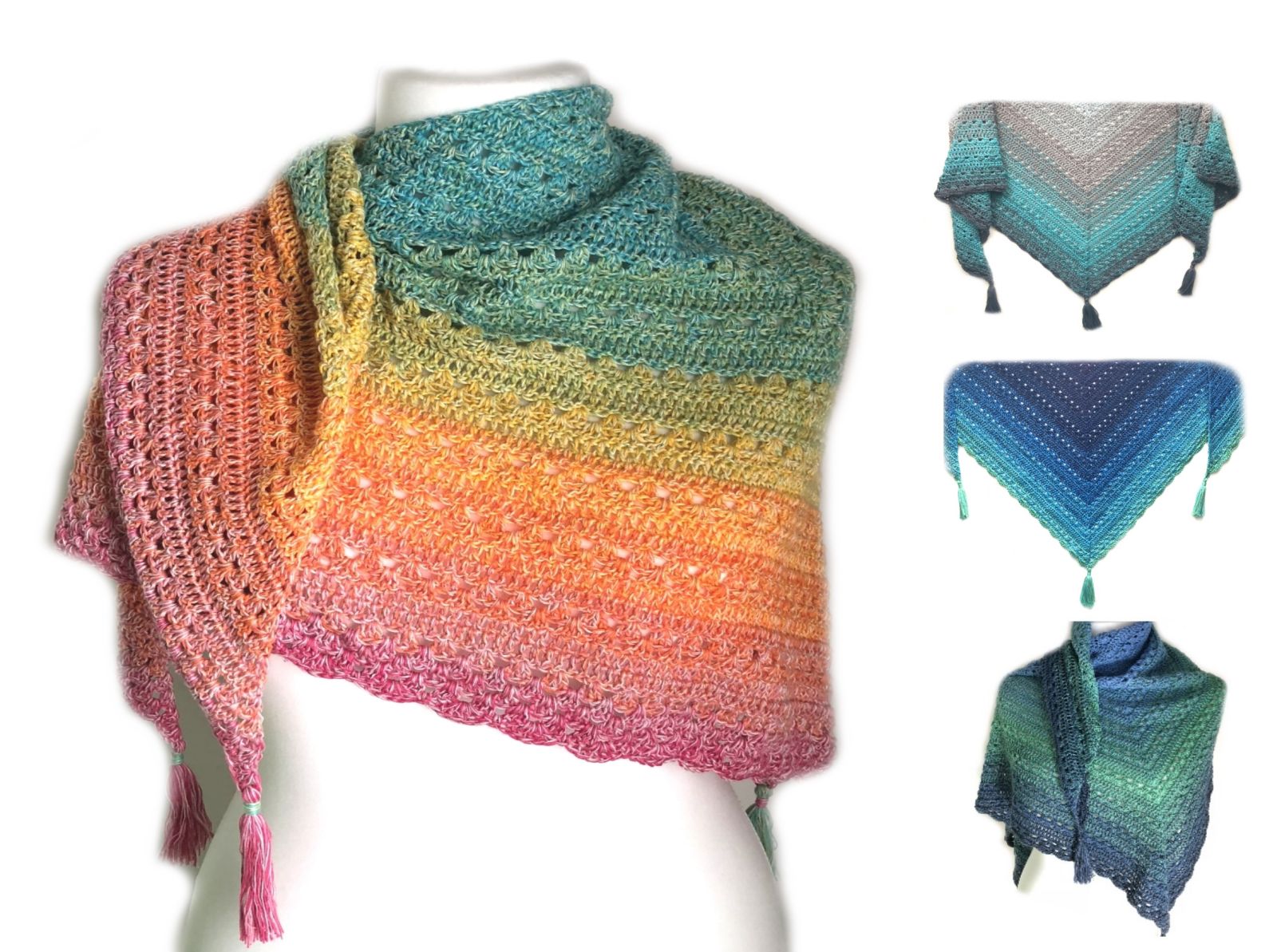
It was similar with my Estoril shawl. The generated images looked atmospheric and high-quality, but here too they lacked real closeness to the original. The shawl’s pattern was not reproduced accurately, even though the overall impression looked convincing at first glance.
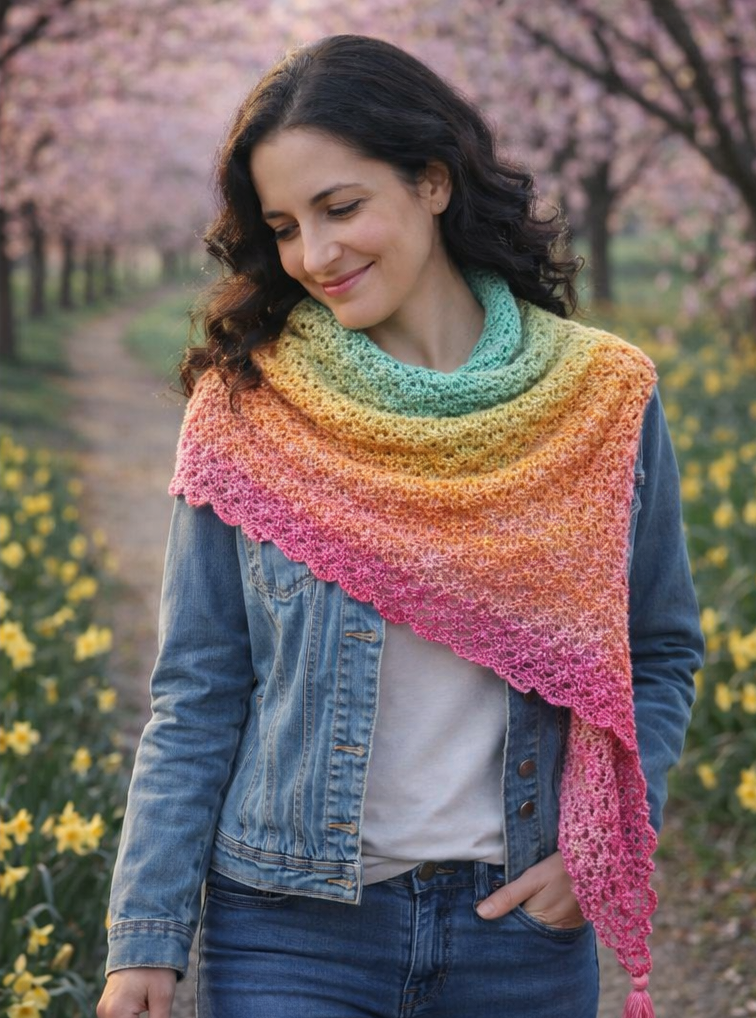
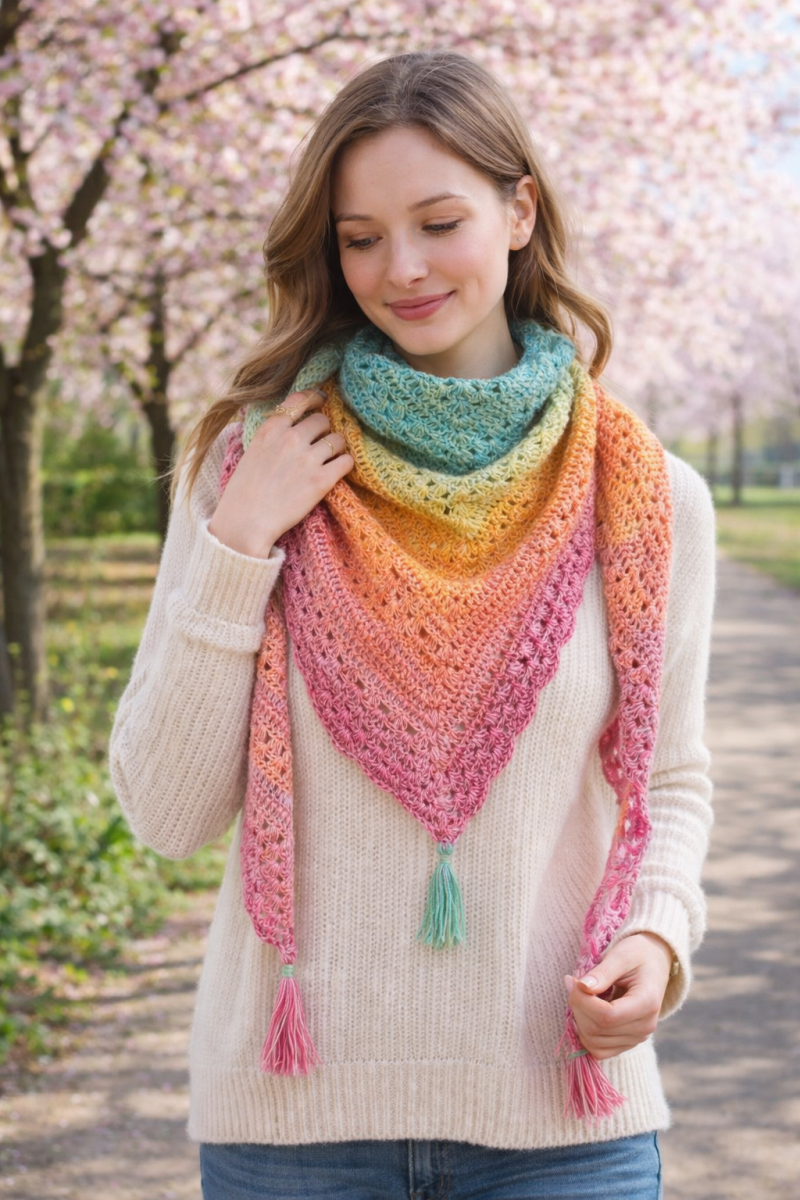 (AI-generated images)
What these experiences mean for the fiber arts world
For me, this creates a clear picture: AI can provide support in the context of crochet and needlecraft, but it does not replace skilled creative work. It has no sense of material and texture, craft logic and technique, or design intention - the way a human does.
Especially when creating crochet patterns, developing stitch patterns, reading crochet charts, or reproducing designs true to the original, errors arise quickly - errors that outsiders may overlook, but that are crucial in practice. Anyone who designs, tests, corrects, and revises their own work notices very quickly where AI is only delivering a surface-level result.
My conclusion on AI and crochet
To be honest, I do not wish for AI to suddenly become perfect in this field. As long as artificial intelligence remains error-prone, the value of genuine creative work remains visible. Because that is the heart of handmade work: developing ideas, experimenting, discarding, improving, and creating something original.
If AI were ever able to produce complete, error-free crochet patterns at the push of a button - including images, texts, charts, and size adjustments - that would have massive consequences for creative people like us. For everyone connected to real handcraft, design, and individual creativity, that would not be a positive development.
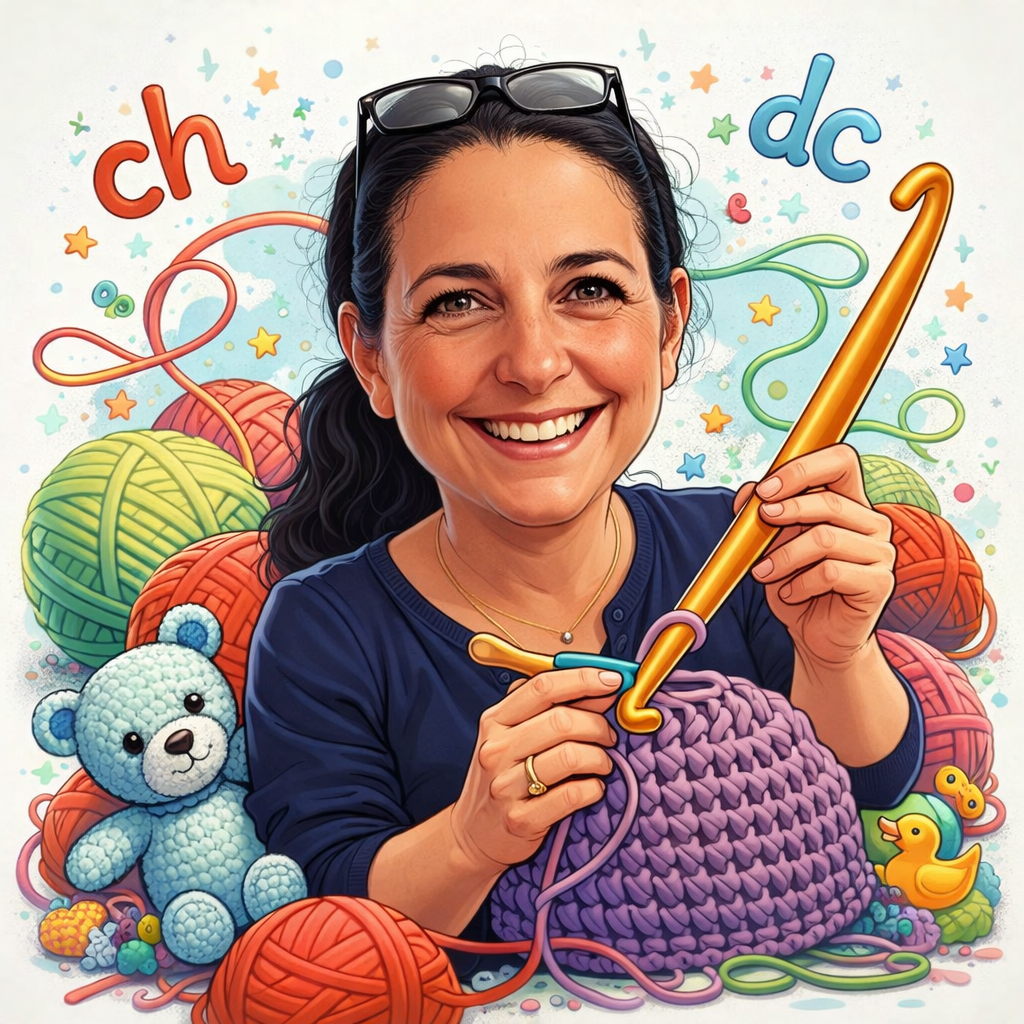 (AI-generated image)
That is why, for me, everything will remain consciously handmade: from the design and pattern texts to the photos and the crochet pieces themselves. I still create my English translations myself - though ChatGPT occasionally helps me with wording in individual cases. For Spanish translations, I use AI only as support because it saves time there - but strictly as a tool, not as a replacement.
So all of my patterns will continue to follow the principle that behind every model and design there is a real person and real creative work - not just a quick prompt.
What has your experience with this topic been? Perhaps you have managed to create usable crochet charts or a workable crochet pattern with AI? Feel free to share your opinion and personal experiences in a comment below this post. Thanky you!
(Advertising: This post contains referral links)


