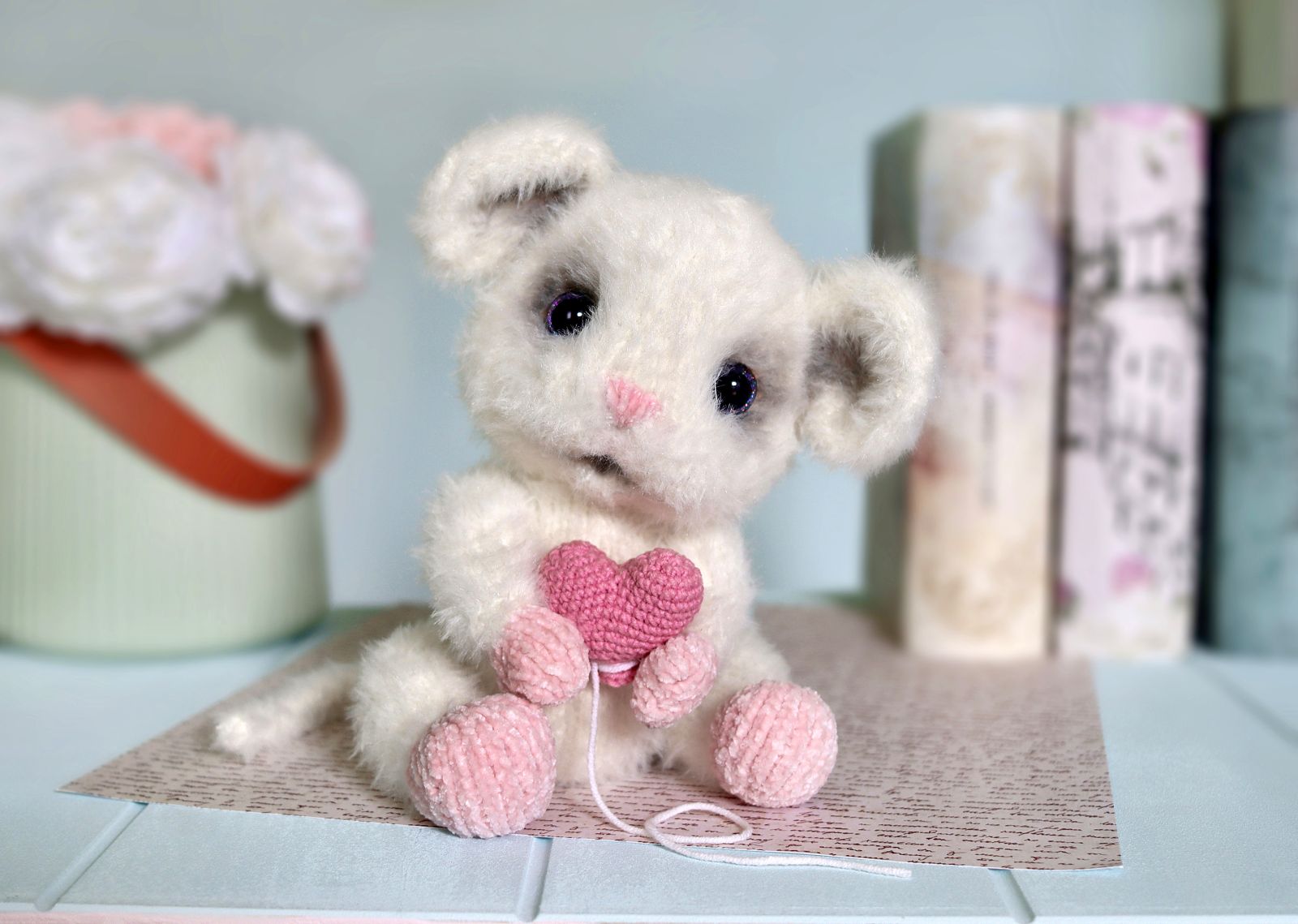
Hello everyone!
I'm thrilled to share my latest knitting pattern with you: The White Mouse. This adorable little cuddly toy is especially loved by children — soft, easy to handle, and simply charming. I’d be delighted if you’d like to knit along with me!
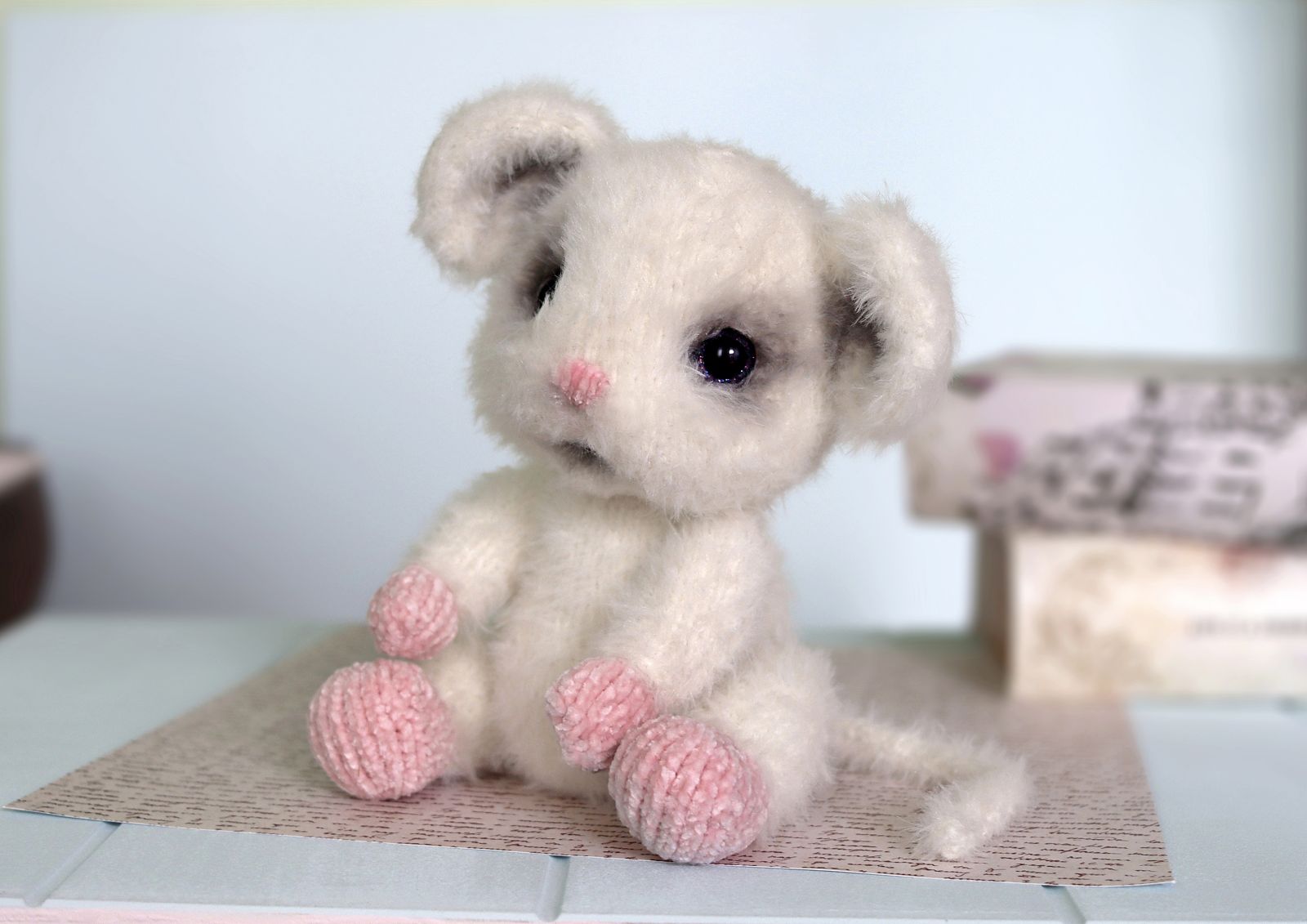
Knitting is just as dear to me as crocheting. Sadly, I’ve noticed that most animal figures these days are crocheted. But knitting offers just as many creative possibilities — and knitted animals are every bit as beautiful and snuggly as their crocheted counterparts.
With simple increases and decreases, you can shape a wide variety of forms and details. Even complex figures are achievable without advanced techniques. And for those who prefer to avoid working with three or four needles: this mouse is knitted entirely on two needles and then sewn together. Simple, effective, and beginner-friendly! For this project, I chose Brush for Plush by Leami — a wonderfully soft and fluffy yarn that gives the mouse a cozy, touchable texture. It’s perfect for little hands and adds a lovely finish to the final piece.
I wish everyone who joins in lots of joy and relaxation while knitting! I’d love to see your finished mice — feel free to share photos, tag me on social media, or send me a message. And if you have any questions about the pattern or materials, I’m always happy to help.
The finished mouse measures approximately 25 cm tall, though it cannot stand on its own. Please note that the final size may vary slightly depending on your yarn choice and knitting tension.
You have full creative freedom with this project:
- Choose any yarn you like — fluffy, smooth, colorful, or neutral
- Use knitting needles that suit your style and comfort
- Select eyes that match your vision — safety eyes, buttons, or embroidered details
This way, you can make your mouse truly unique — tailored to your taste and skill level.
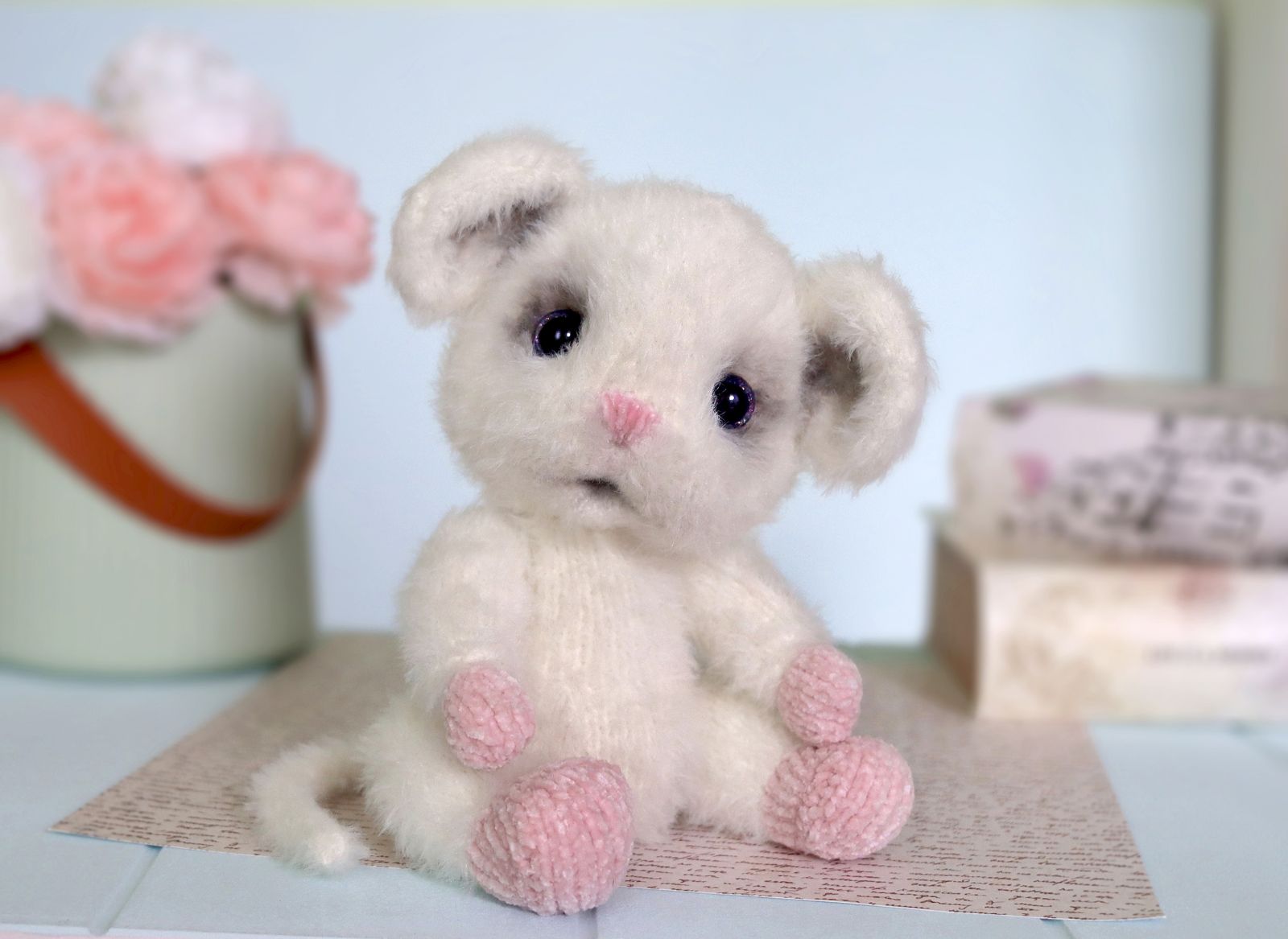
Materials:
✓ Knitting yarn white 80 gr Leami Brush for Plush (160 m/ 100g).
✓ Knitting yarn pink 20 gr Ricorumi Nilli Nilli (25 gr/ 65 m).
✓ Knitting needles No.2,5
Please note that wool consumption can vary depending on the knitting style – those who knit loosely usually need a little more yarn than those who knit more tightly.
✓ Fiberfill, Eyes 16- 20 mm, 1 extra long sewing needle, pastel chalk gray.
Abbreviations:
CH – Chain(s)
inc – increase
dec – decrease
X dec – X- times decrease
X inc – X- times increase
ST – Stitch
P – purl
K– knit (garter stitch)
Knitting Instructions for all Pieces
All parts are crafted entirely with two knitting needles.
Follow these steps:
First Row - Purl Stitches Begin by knitting the first row entirely in purl stitches. These will form the back side of your project, creating a neat texture.
Second Row - Knit Stitches In the second row, knit every stitch. This will produce a smooth, even front for your piece.
Repeating the Pattern Continue alternating between purl stitches in the odd-numbered rows and knit stitches in the even-numbered rows:
- Odd-numbered rows (e.g., 1st, 3rd, 5th): Work in purl stitches.
- Even-numbered rows (e.g., 2nd, 4th, 6th): Work in knit stitches.
This straightforward pattern of alternating knit and purl rows is ideal for beginners, offering an easy yet satisfying introduction to the craft.
If you're knitting with three or four needles to avoid joining and creating a seam, this is certainly possible. In this case, all purl stitches are worked as knit stitches
Body
Cast on 6 stitches (ch) onto the knitting needle. Make sure the stitches are evenly stretched while knitting to ensure your knitted piece is nice and even.
1. 6 P (6)
2. 6 K inc. (12)
3. 12 P (12)
4. (1 K, 1 K inc)x 6 (18)
5. 18 P (18)
6. (2 K, 1 K inc)x 6 (24)
7. 24 P (24)
8. (3 K, 1 K inc)x 6 (30)
9. 30 P
10. 10 K, 10 K inc, 10 K (40)
11. 40 P
12. 40 K
13. 40 P
14. 40 K
15. 40 P
16. 5 K inc, 30 K, 5 K inc (50)
17. 50 P
18. 50 K
19. 50 P
20. 50 K
21. 50 P
22. 15 K, (1 dec, 2 K)х 5, 15 K (45)
23. 45 P
24. 15 K, (1 dec, 1 K)х 5, 15 K (40)
25. 40 P
26. 14 K, (1 dec, 1 K)х 4, 14 K (36)
27. 36 P
28. 36 K
29. 36 P
30. (1 dec, 4 K)х 6 (30)
31. 30 P
32. (1 dec, 3 K)х 6 (24)
33. 24 P
34. 24 K
35. 24 P
36. 24 K
37. 24 P
38. 24 K
39. 24 P
40. (1 dec, 2 K)х 6 (18)
41. 18 P
42. (1 dec, 1 K)х 6 (12)
43. 12 P
44. 6 dec
Finally, bind off the remaining stitches to complete the knitting.
Next, carefully sew the body together using a wool needle and matching yarn. Take your time to make even, delicate stitches, ensuring the seam looks tidy and blends seamlessly into the overall design. I highly recommend using soft, fluffy yarn for this step. Not only does it create a wonderfully cozy texture, but it also helps the seams fade into the fabric, making them almost invisible. As you sew, gradually fill the body with fiberfill. This will help the mouse maintain its shape and give it a soft, cuddly feel.
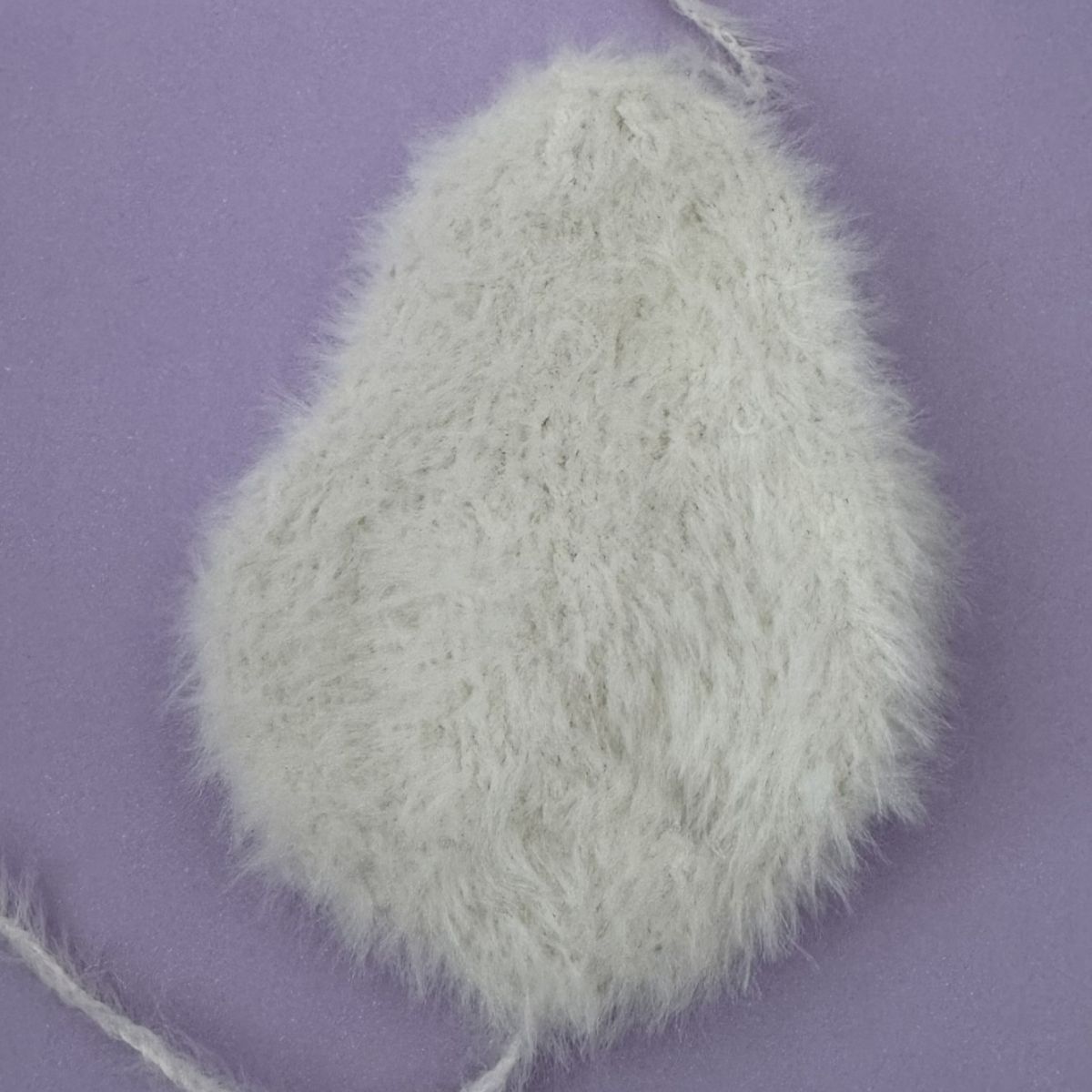

Legs – Starting from the Foot
Begin each leg by knitting the sole, starting with pink yarn.
To start, cast on 8 stitches onto your needle.
1. 8 P
2. 8 K
3. 8 P
4. 8 K
5. 8 P
6. 8 K
7. 8 P
8. 8 K
9. 8 P
10. 8 K
11. 8 P
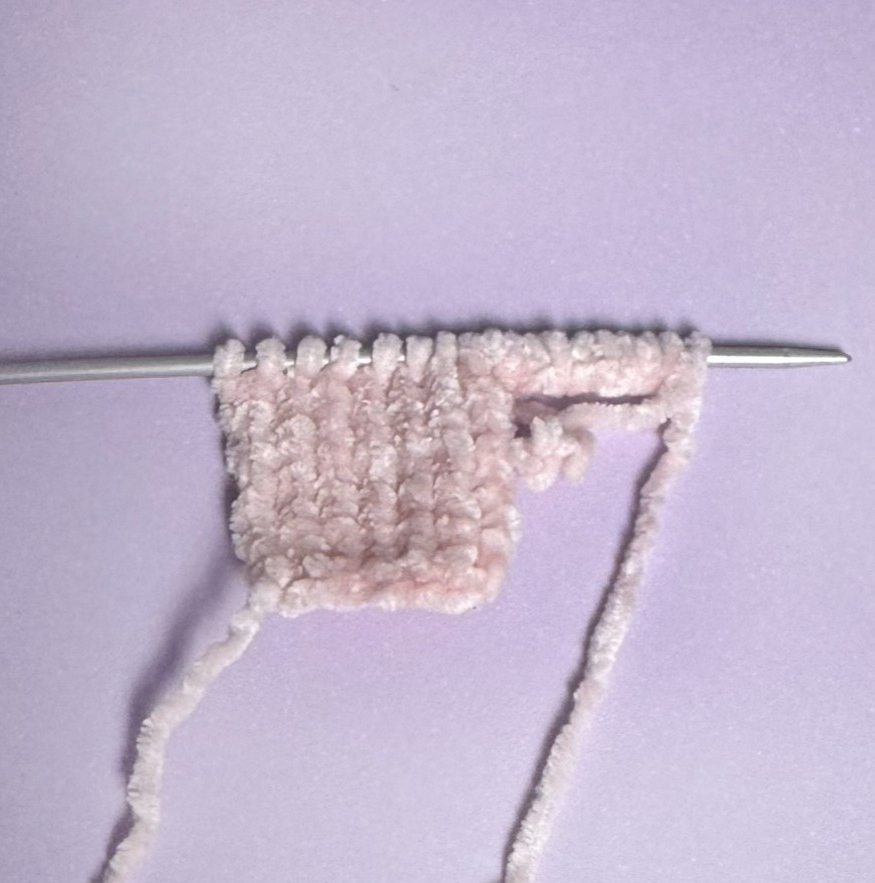
12. Cast on 10 chain stitches (ch) and add them to the 8 stitches you already have on your needle.
Knit the first 10 stitches, followed by the 8 existing stitches. Cast on an additional 10 chain stitches at the end. This will give you a total of 28 stitches on your needle.

13. 28 P
14. 28 K
15. 28 P
16. 8 K, 6 dec, 8 K (22)
17. 22 P
18. 8 K, 3 dec, 8 K (19)
19. 19 P
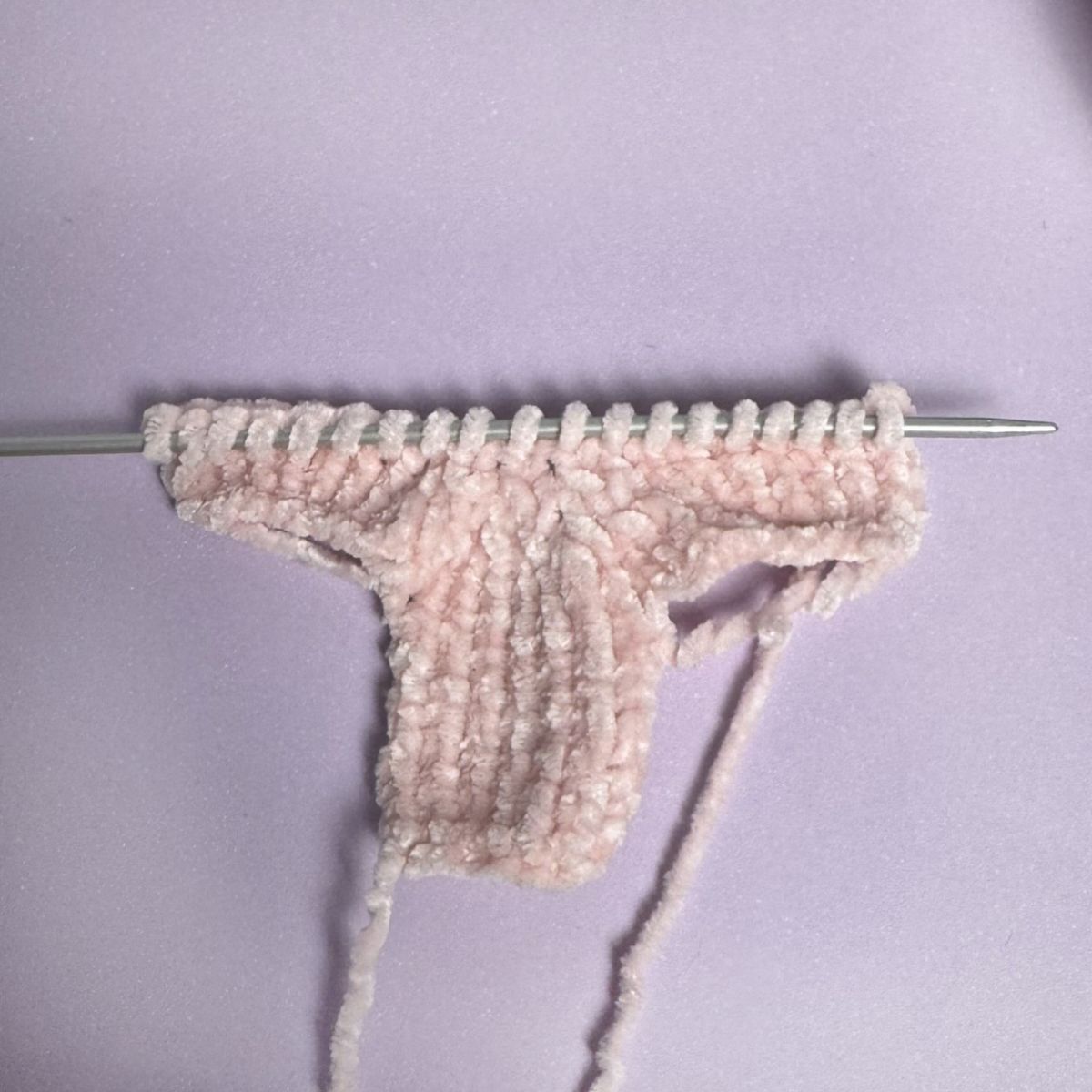
Color change white
20. 5 K, 4 dec, 5 K (14)
21. 14 P
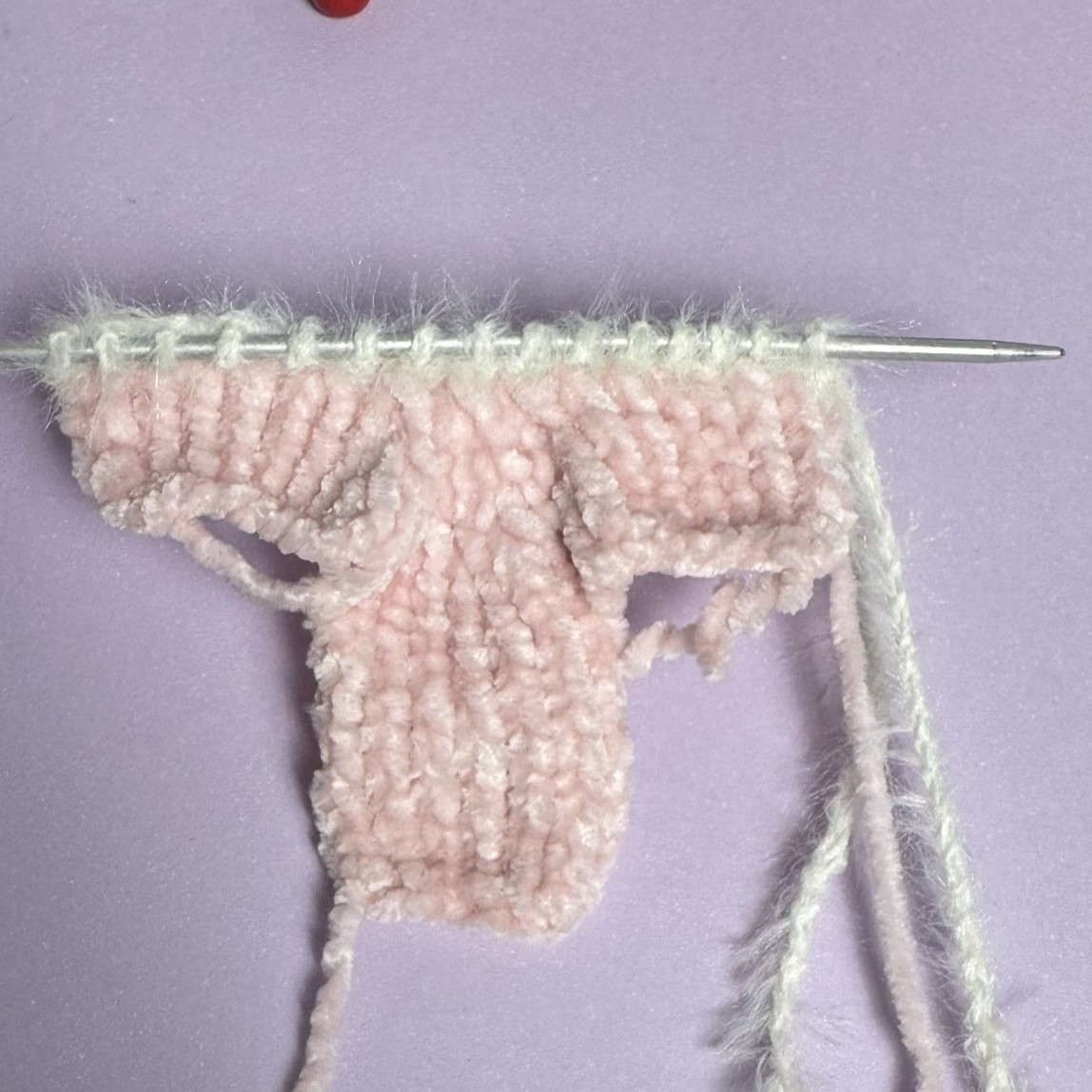
22. 14 K
23. 14 P
24. 2 K, 1 K inc, 3 K, 1 K inc, 2 K, 1 K inc, 3 K, 1 K inc (18)
25. 18 P
26. (2 K, 1 K inc)x 6 (24)
27. 24 P
Knit a total of 16rows in stockinette stitch:
On the front side of the work, knit all stitches across the row.
On the back side of the work, purl all stitches across the row.
28. 30. 32. 34. 36. 38. 40. 42. – 24 K
29. 31. 33. 35. 37. 39. 41. 43. - 24 P
44. (1 dec, 2 K)х 6 (18)
45. 18 P
46. (1 dec, 1 K)х 6 (12)
47. 12 P
48. 6 dec
Cast off the remaining stitches carefully.
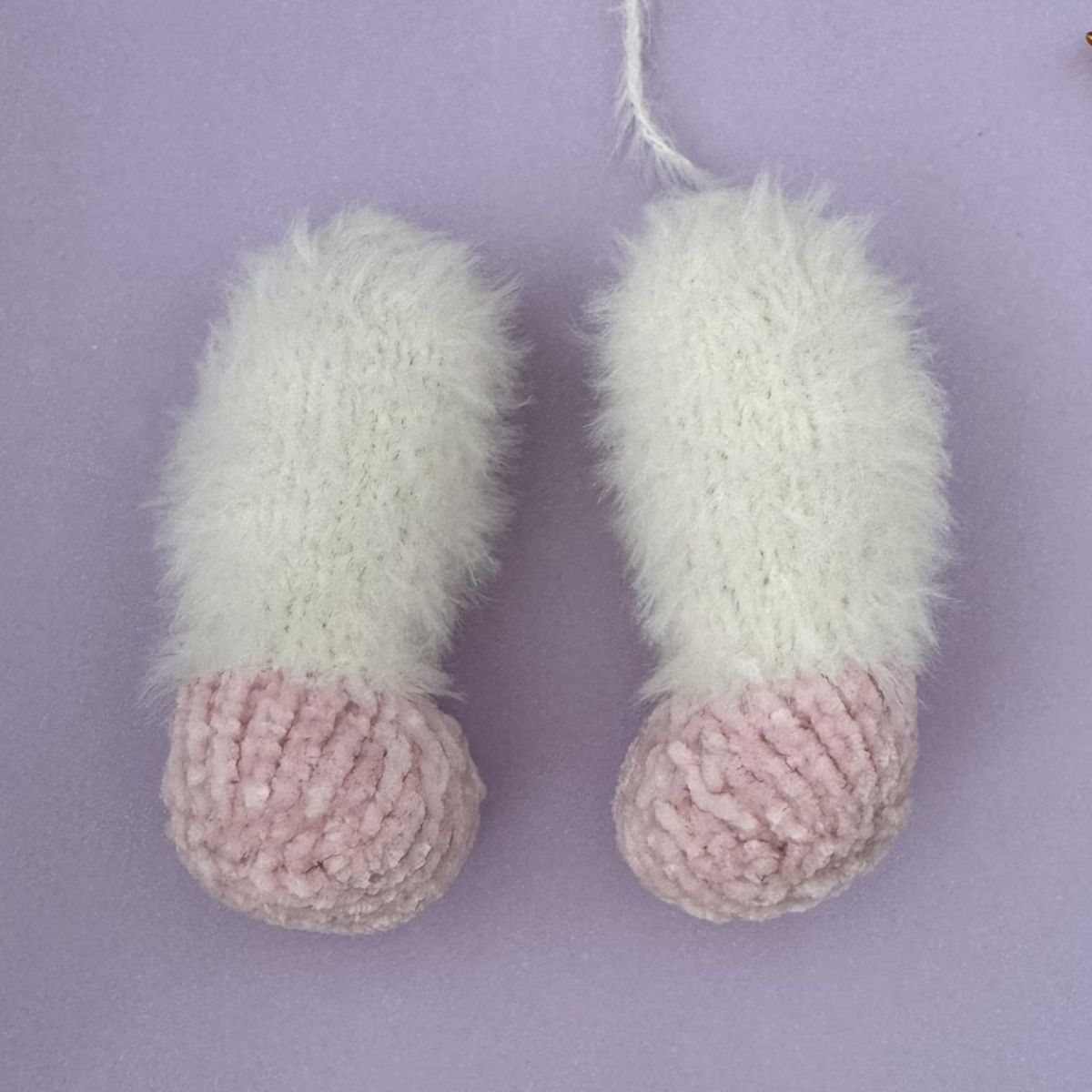
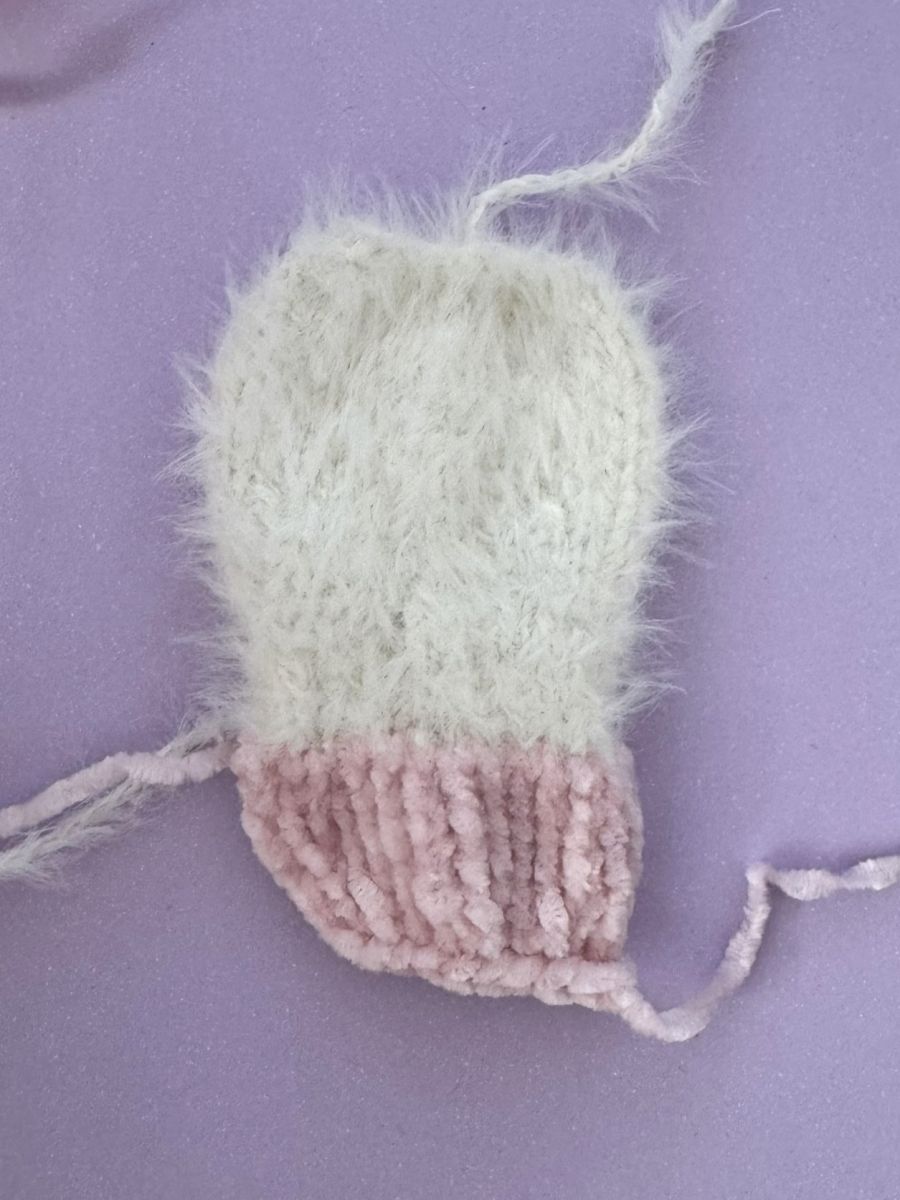
Using a wool needle and the same yarn, sew the legs together. Aim for even, consistent stitches to create a neat and polished seam.
Begin sewing at the foot, joining the right and left sides together. Gradually work your way up to the center of the leg.
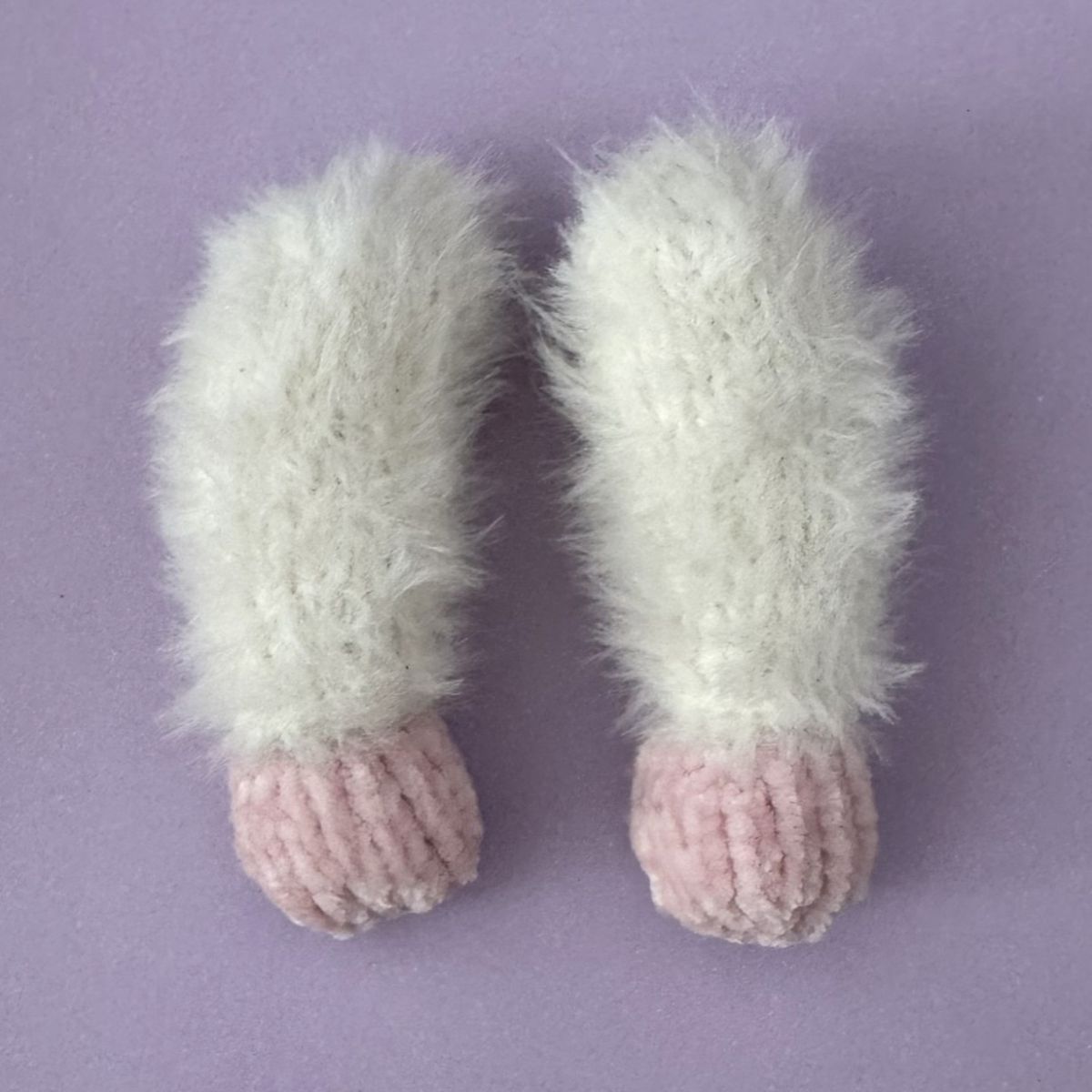
Remember to stuff the knitted piece with fiberfill as you sew, shaping it to ensure a plump and even look
Arms
Begin with white yarn.
Cast on 6 stitches (ch) onto the knitting needle.
1. 6 P (6)
2. 6 K inc. (12)
3. 12 P (12)
4. (1 K, 1 K inc)x 6 (18)
5. 18 P
6. 18 K
7. 18 P
8. 18 K
9. 18 P
10. 18 K
11. 18 P
12. 18 K
13. 18 P
14. 18 K
15. 18 P
16. 1 K, 1 dec, 12 K, 1 dec, 1 K (16)
17. 16 P
18. 16 K
19. 16 P
20. 1 K, 1 dec, 10 K, 1 dec, 1 K (14)
21. 14 P
22. 14 K
23. 14 P
24. 1 K, 1 dec, 8 K, 1 dec, 1 K (12)
25. 12 P
26. 1 K, 1 dec, 6 K, 1 dec, 1 K (10)
27. 10 P
Color change pink
28. 1 K, 1 K inc, 2 K, 1 K inc, 1 K, 1 K inc, 2 K, 1 K inc (14)
29. 14 P
30. 6 K, 1 K inc, 6 K, 1 K inc (16)
31. 16 P
32. 6 K, 1 dec, 6 K, 1 dec (14)
33. 14 P
34. 1 K, 1 dec, 2 K, 1 dec, 1 K, 1 dec, 2 K, 1 dec (10)
35. 10 P
36. 3 K, 1 dec, 3 K, 1 dec (8)
37. 8 P
Cast off the remaining stitches .
Sew the arms together using a wool needle and the same yarn. Maintain even and consistent stitches to ensure a neat and polished seam. Start at the hand, carefully joining these sections first. As you sew, remember to stuff the piece with fiberfill, shaping it evenly for a smooth and well-filled appearance.
Head
Cast on 6 chain stitches (ch) onto your knitting needle.
Ensure the stitches are evenly tensioned as you knit. This helps create a smooth and symmetrical head shape.
1. 6 P (6)
2. 6 K inc. (12)
3. 12 P
4. (1 K, 1 K inc)x 6 (18)
5. 18 P
6. (2 K, 1 K inc)x 6 (24)
7. 24 P
8. (3 K, 1 K inc)x 6 (30)
9. 30 P
10. (4 K, 1 K inc)x 6 (36)
11. 36 P
12. (5 K, 1 K inc)x 6 (42)
13. 42 P
14. (6 K, 1 K inc)x 6 (48)
15. 50 P
16. (7 K, 1 K inc)x 6 (54)
17. 54 P
18. (8 K, 1 K inc)x 6 (60)
19. 60 P
20. 60 K
21. 60 P
22. 60 K
23. 60 P
24. 60 K
25. 60 P
26. 24 K, insert 1st marker, 12 K , insert 2st marker, 24 K (60)
In this case, the thread marker serves as a guide for positioning the eyes
27. 60 P
28. 60 K
29. 60 P
30. 60 K
31. 60 P
32. 24 K, insert 3st marker, 12 K , insert 4st marker, 24 K (60)
In this case, the thread marker serves as a guide for positioning the eyes
33. 60 P
34. 25 K, 10 inc, 25 K (70)
35. P
36. 25 K, 1 dec, 16 K, 1 dec, 25 K (68)
37. 68 P
38. 68 K
39. 68 P
40. 68 K
41. 68 P
42. (5 K, 1 dec)х4, 5 K, 2 inc, 5 K (1 dec, 5 K)х4 (62)
43. 62 P
44. (4 K, 1 dec)х5, 2 inc, (1 dec, 4 K)х5 (54)
45. 54 P
46. (3 K, 1 dec)х5, 2 K, insert 4st marker, 2 K, (1 dec, 3 K)х5 (44)
47. 44 P
48. (2 K, 1 dec)х4, 12 K, (1 dec, 2 K)х4 (36)
49. 36 P
50. 36 K
51. 36 P
52. (4 K, 1 dec)х6 (30)
53. 30 P
54. (3 K, 1 dec)х6 (24)
55. 24 P
56. (2 K, 1 dec)х6 (18)
57. 18 P
58. (1 K, 1 dec)х6 (12)
59. 12 P
60. 6 dec
Cast off the remaining stitches with care.
Sew the head together neatly using a wool needle and the same yarn. Focus on creating even, consistent stitches to achieve a clean and professional seam.
Stuff the head with fiberfill as you sew, ensuring the stuffing is evenly distributed for a well-shaped appearance.
Deepening the eyelets:
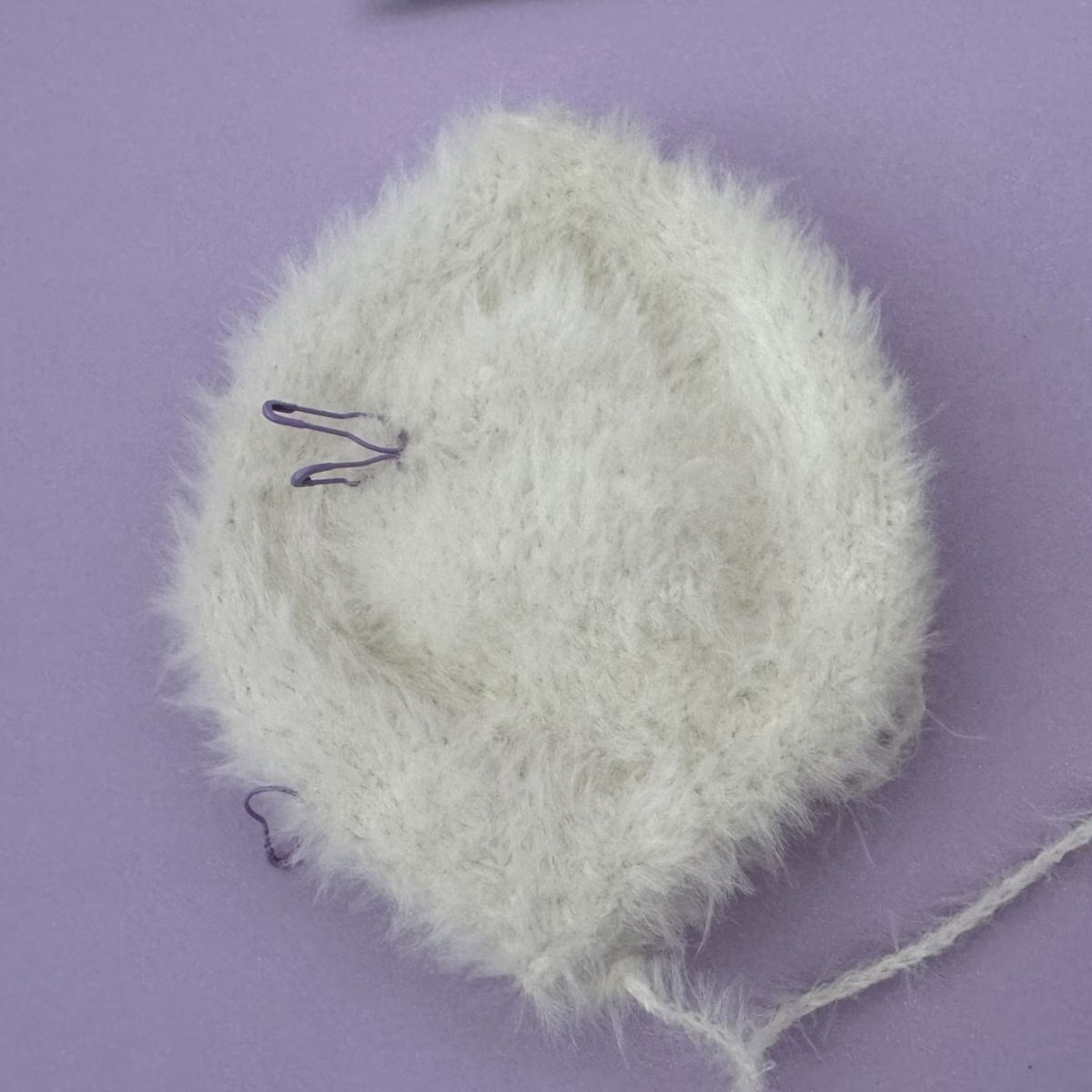
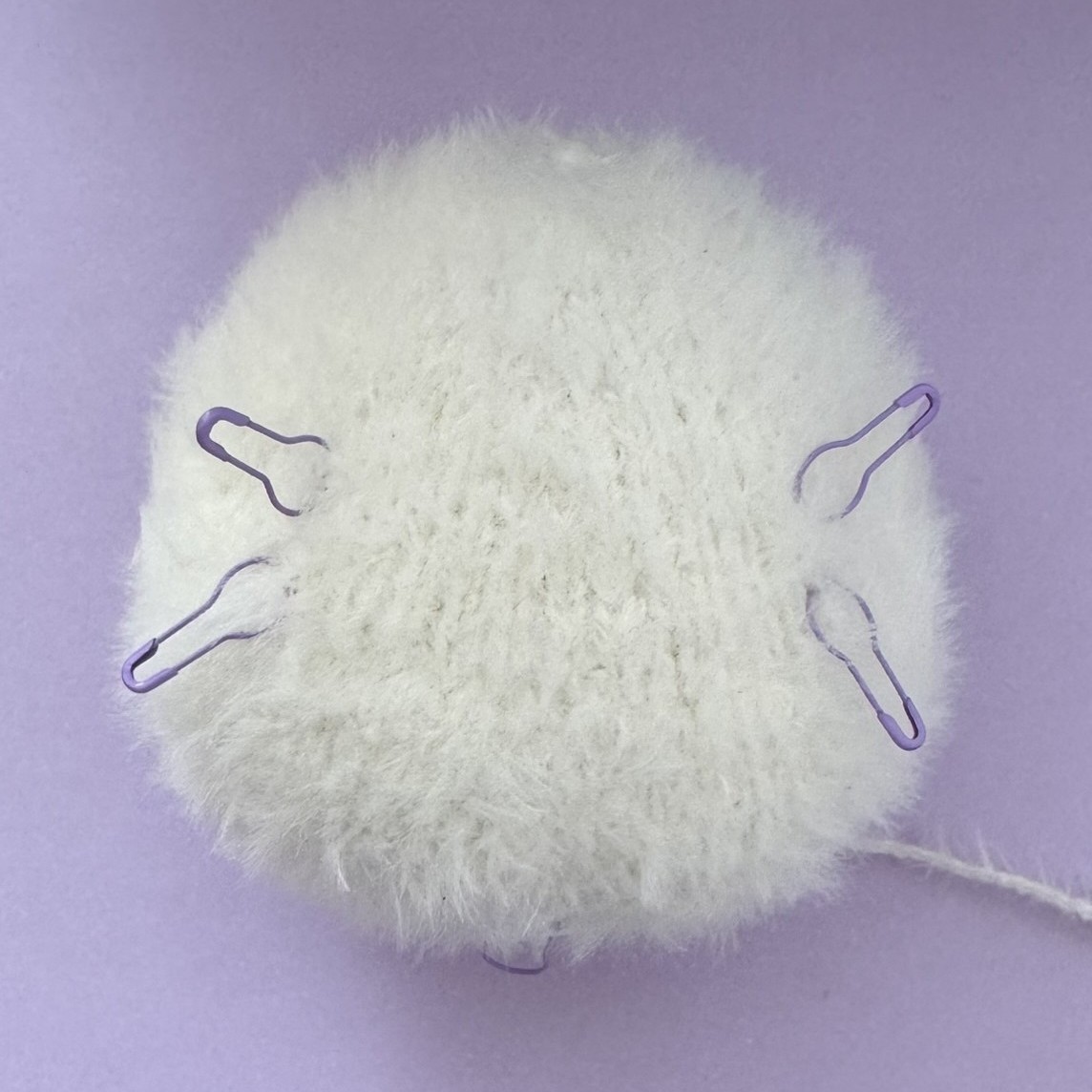
To shape the eye sockets, insert a total of four thread markers in rows 26 and 32. These will serve as guides for positioning the eyes later on. You can easily follow the exact placement using the reference images provided in the instructions.
To create the eye contour, begin by inserting your needle at marker 2, then bring it out on the opposite side at marker 1, which marks the intended eye position. Next, guide the needle three rows downward and insert it at marker 3. From there, pass the needle back across to the other side, where it exits at marker 4.
Once the thread is in place, gently pull it tight to form a subtle indentation around the eyes, giving the mouse a more expressive and lifelike appearance. Finally, secure the thread with a firm knot to hold the shape.
This technique adds lovely definition to the face and enhances the character of your knitted mouse.
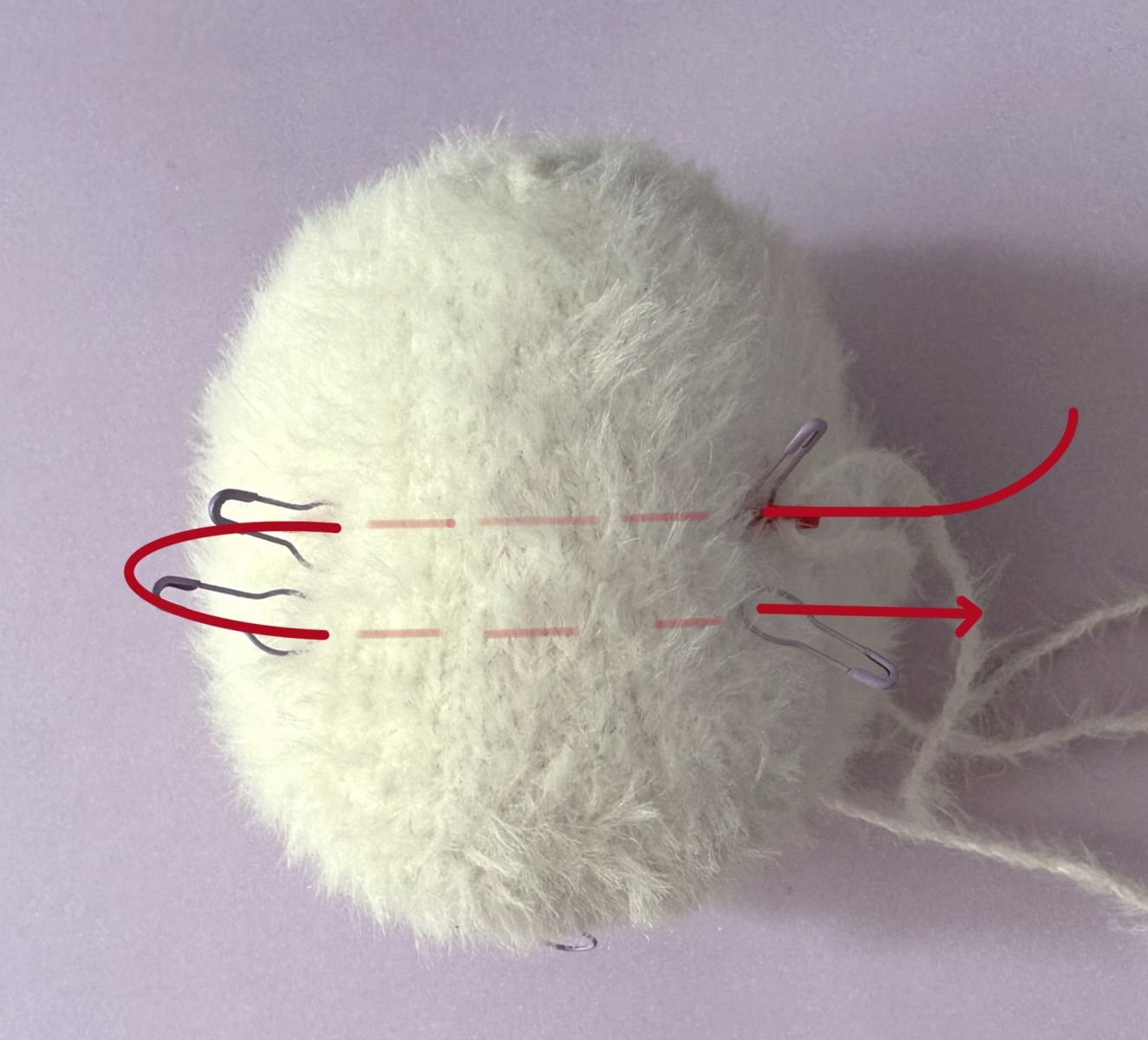

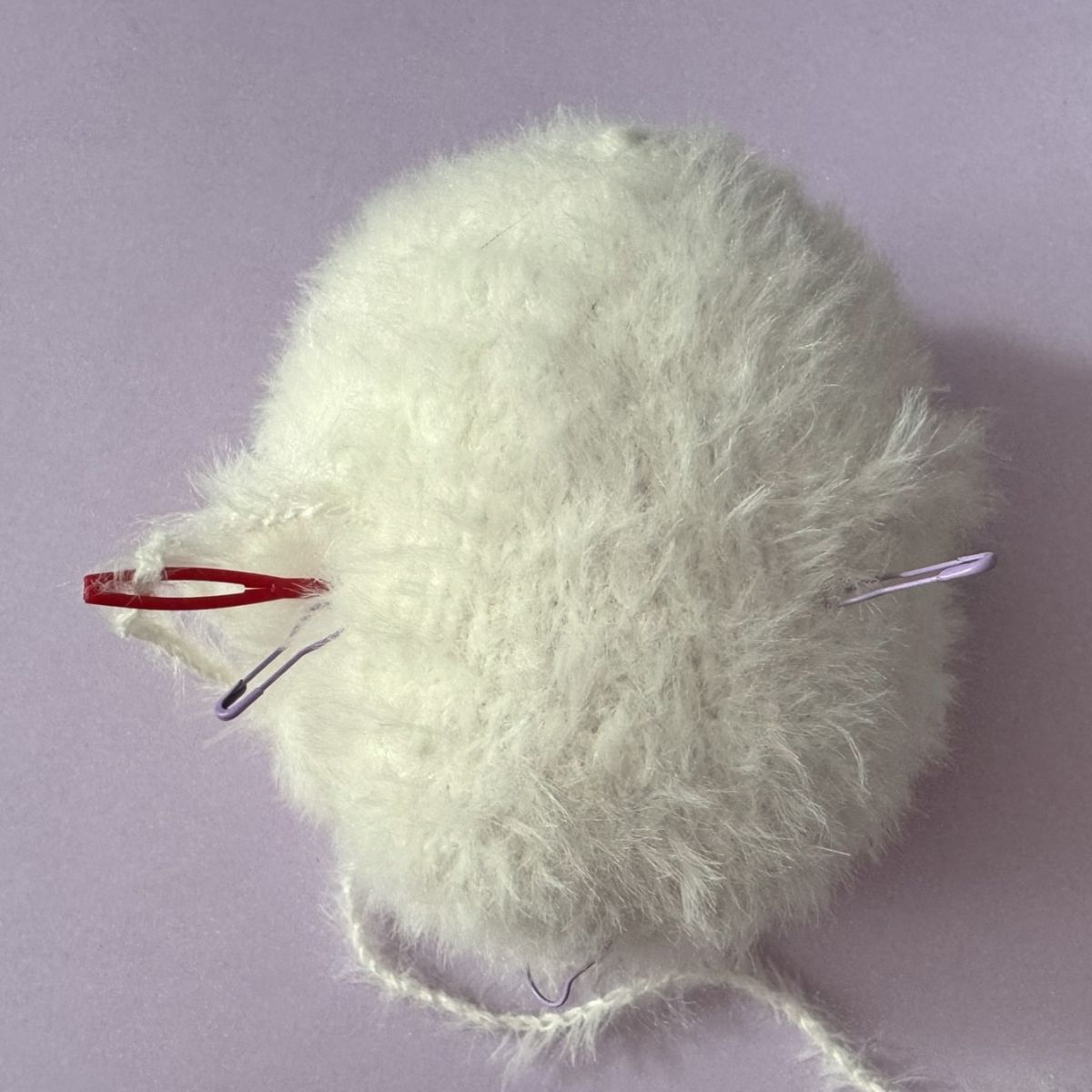
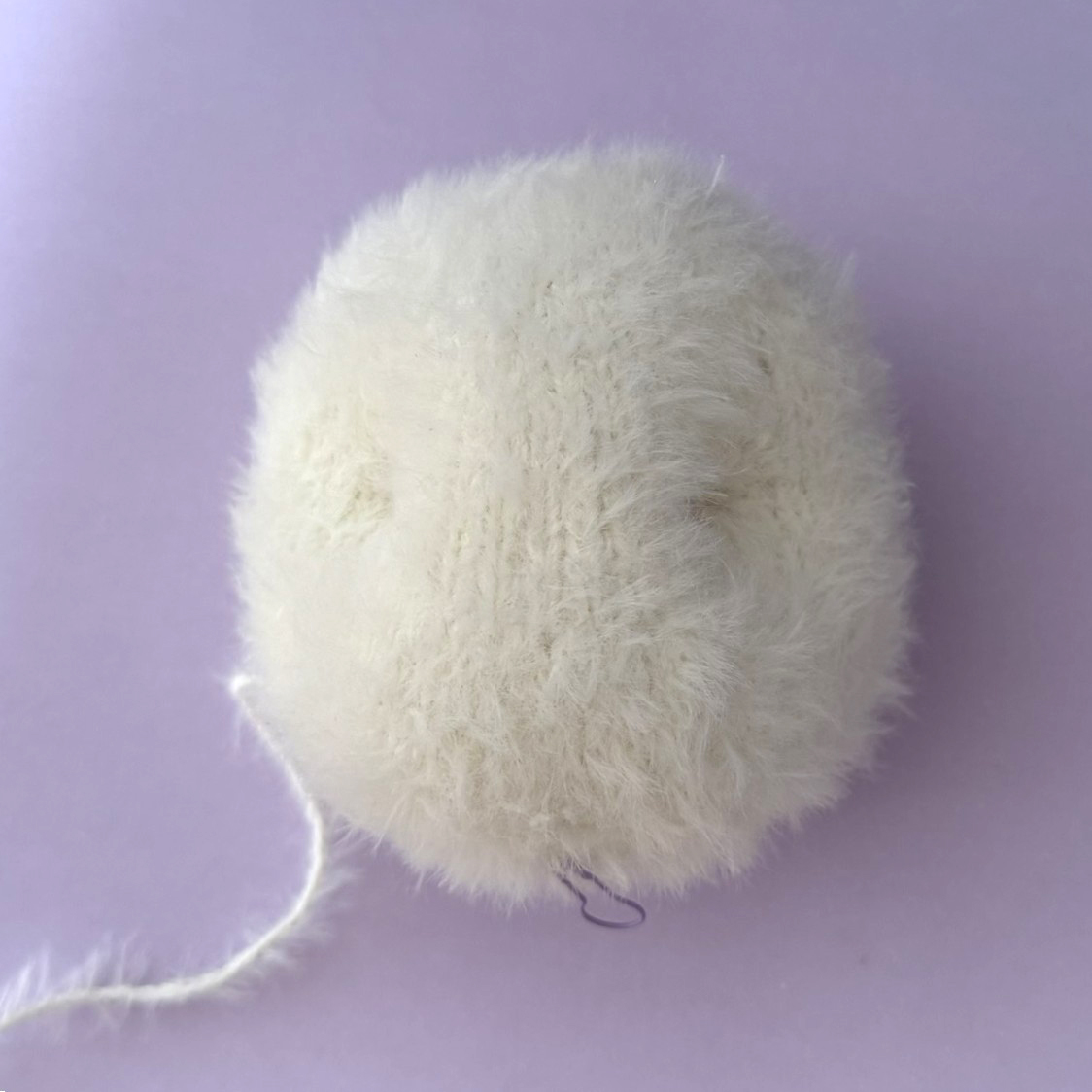
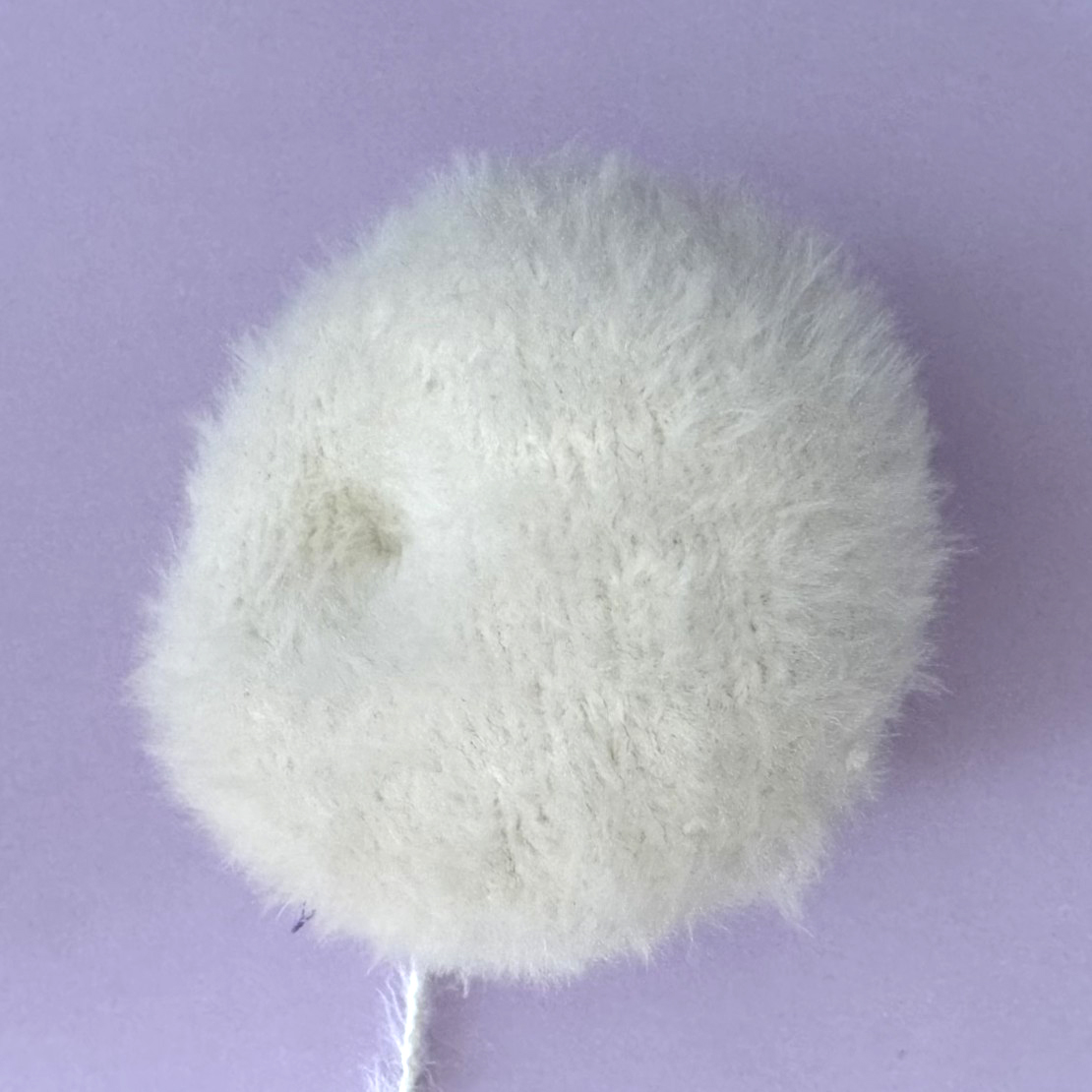
Once the eye area has been shaped, it's time to work on the mouth area to give the mouse’s face more character and depth.
Begin by inserting the needle from below at marker 5, which is located in row 46. Guide the needle upward to the right eye area and bring it out at that point. Then, move approximately 1 cm to the right of this exit point, insert the needle again, and guide it back down to marker 5, where it exits once more. Carefully pull both thread ends together to create a gentle indentation in the mouth area. Once the desired shape is achieved, secure the threads with a tight knot.
Repeat the same process on the left side, but in reverse: Insert the needle again from below at marker 5, and bring it out at the left eye area. About 1 cm to the left of this point, insert the needle again and return down to marker 5, exiting at the same spot. Pull the threads taut and knot them securely to hold the shape.
To better understand the exact placement and direction of the needle, we recommend closely examining the step-by-step images included in the pattern. They clearly show how to guide the needle and where to position the markers.
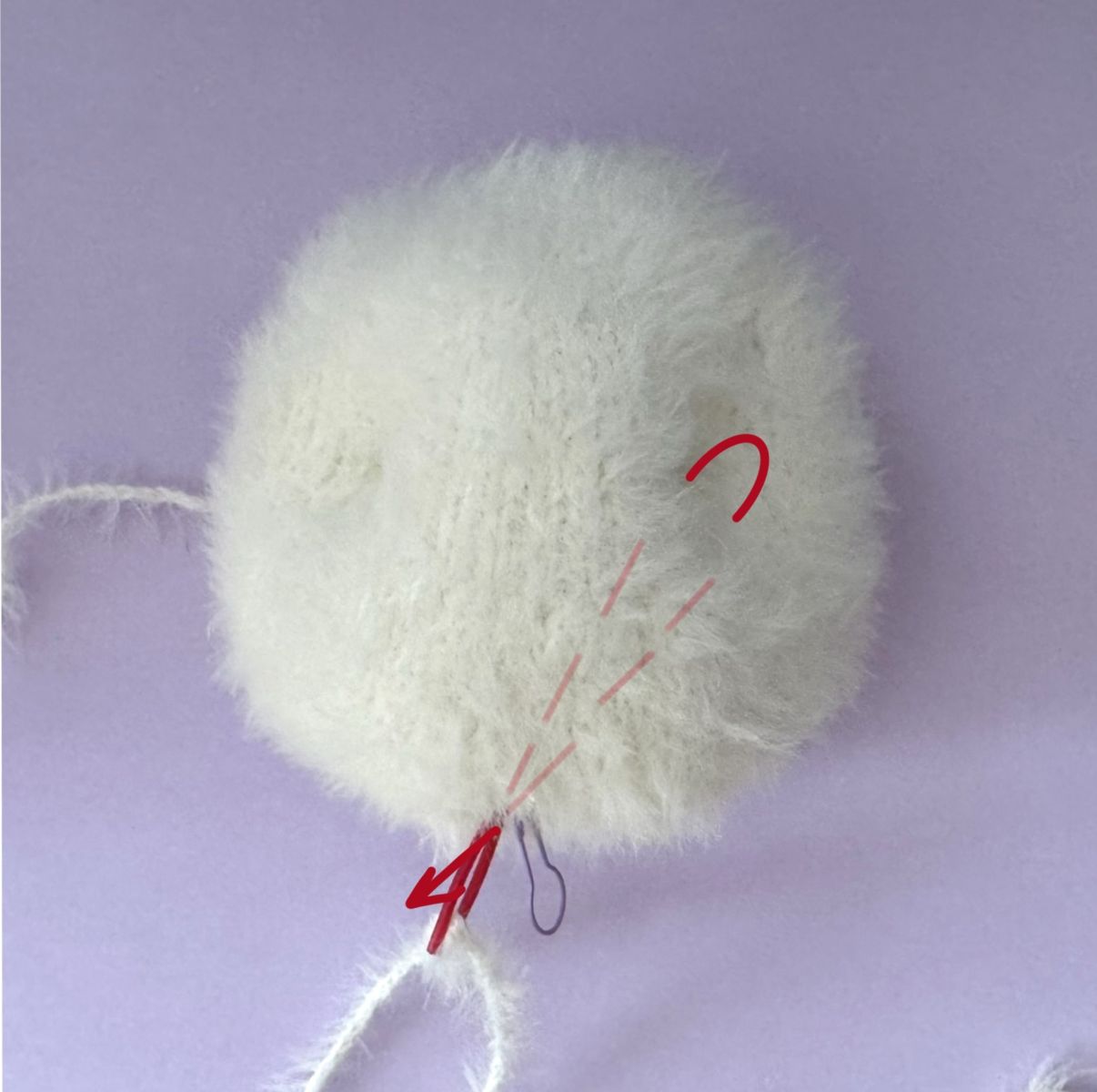
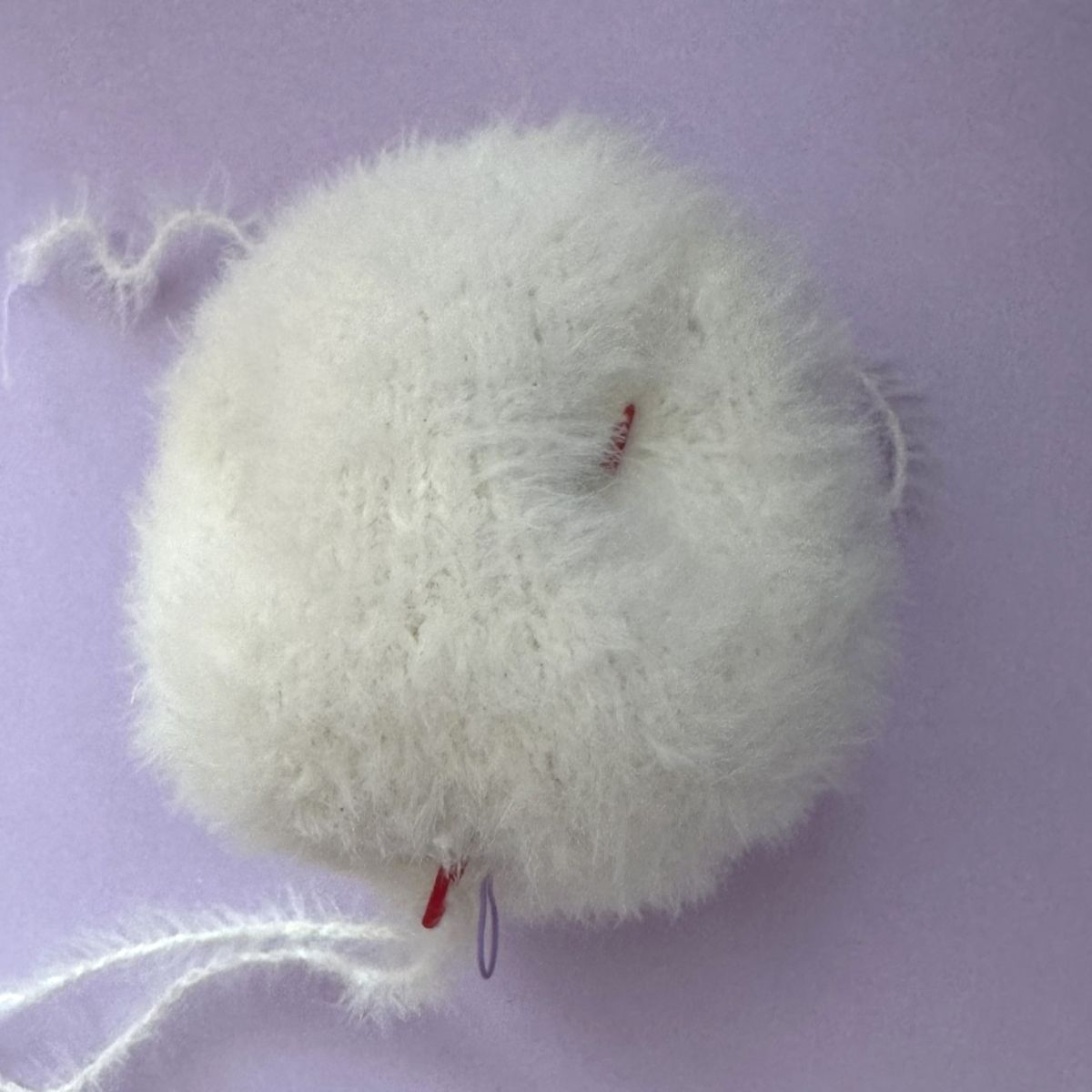
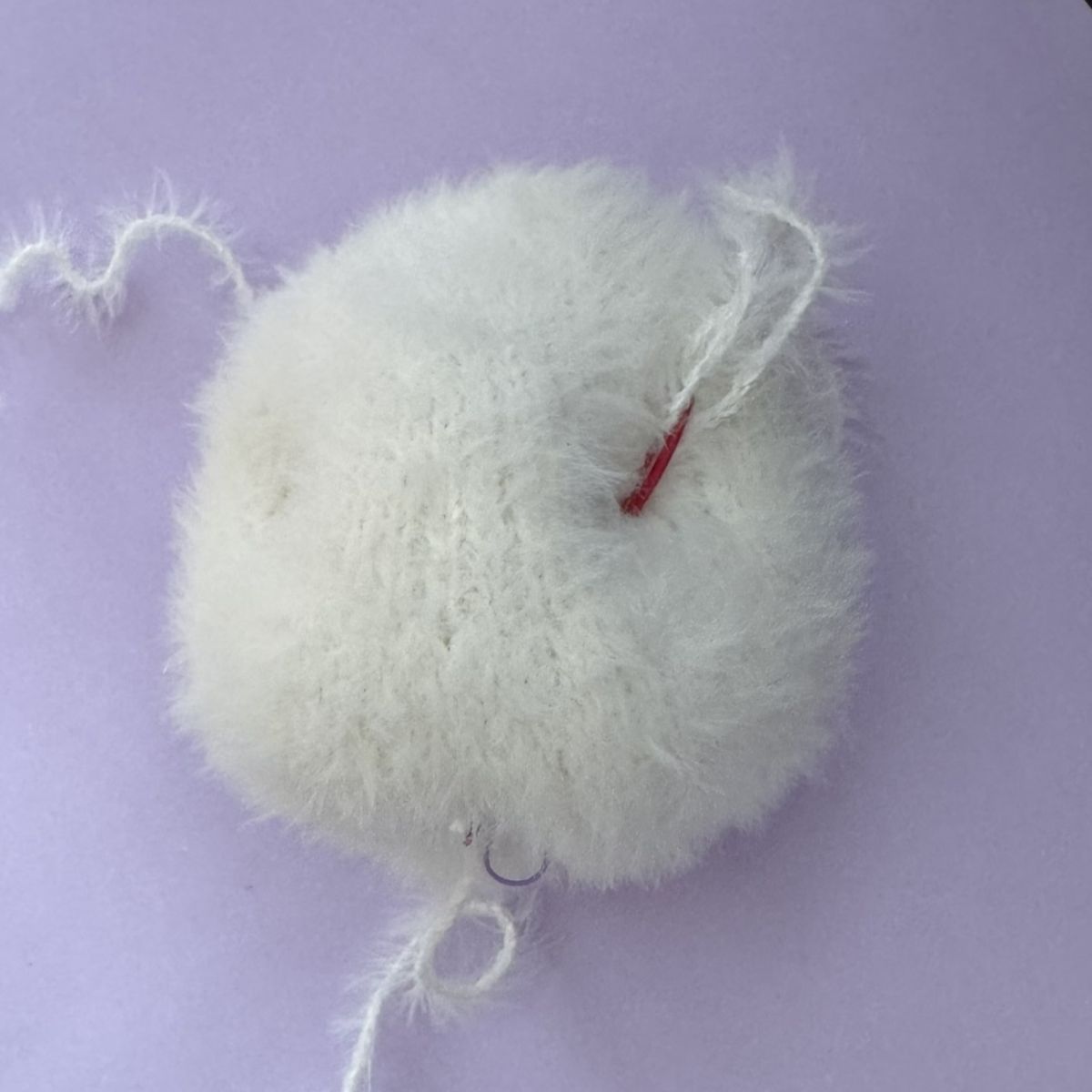
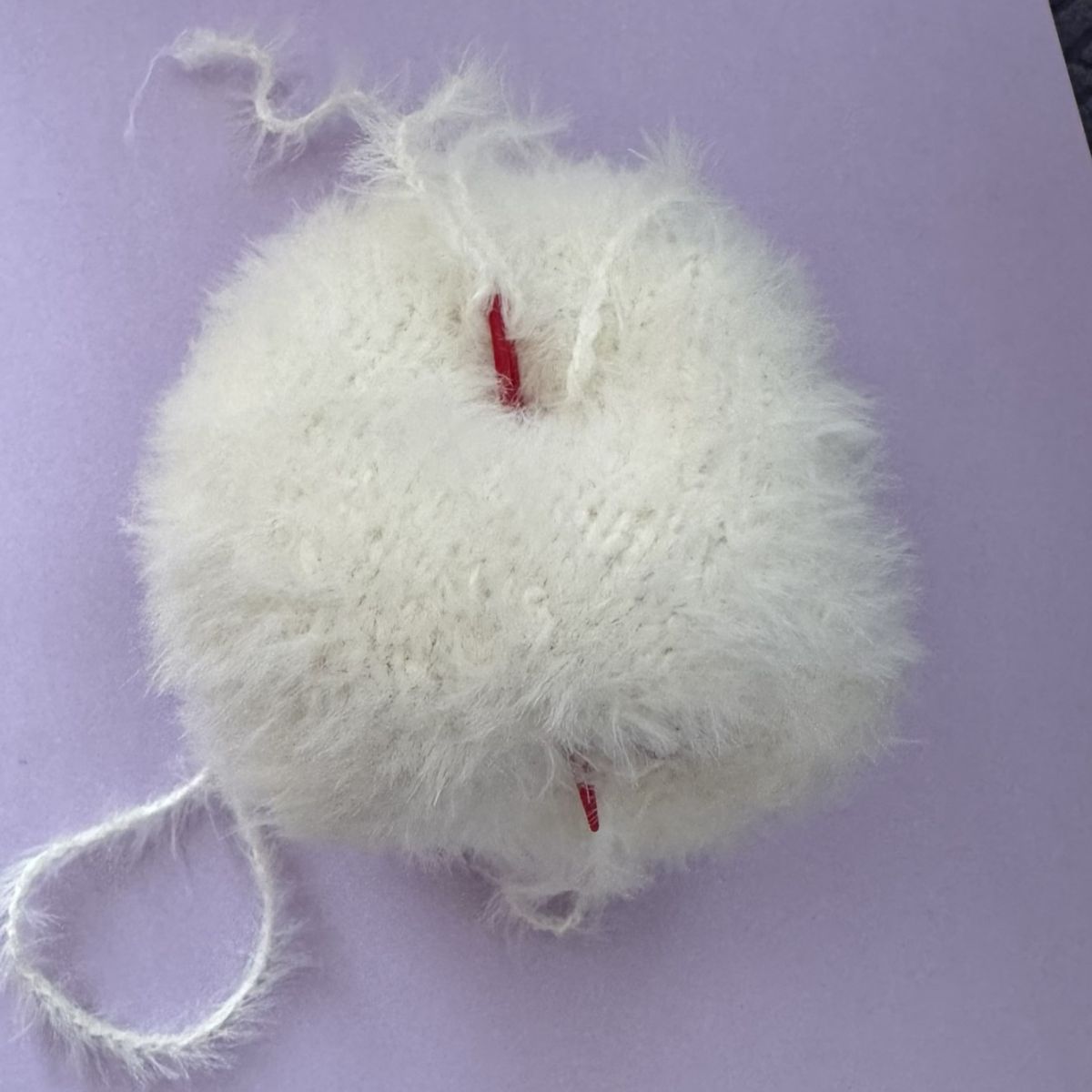
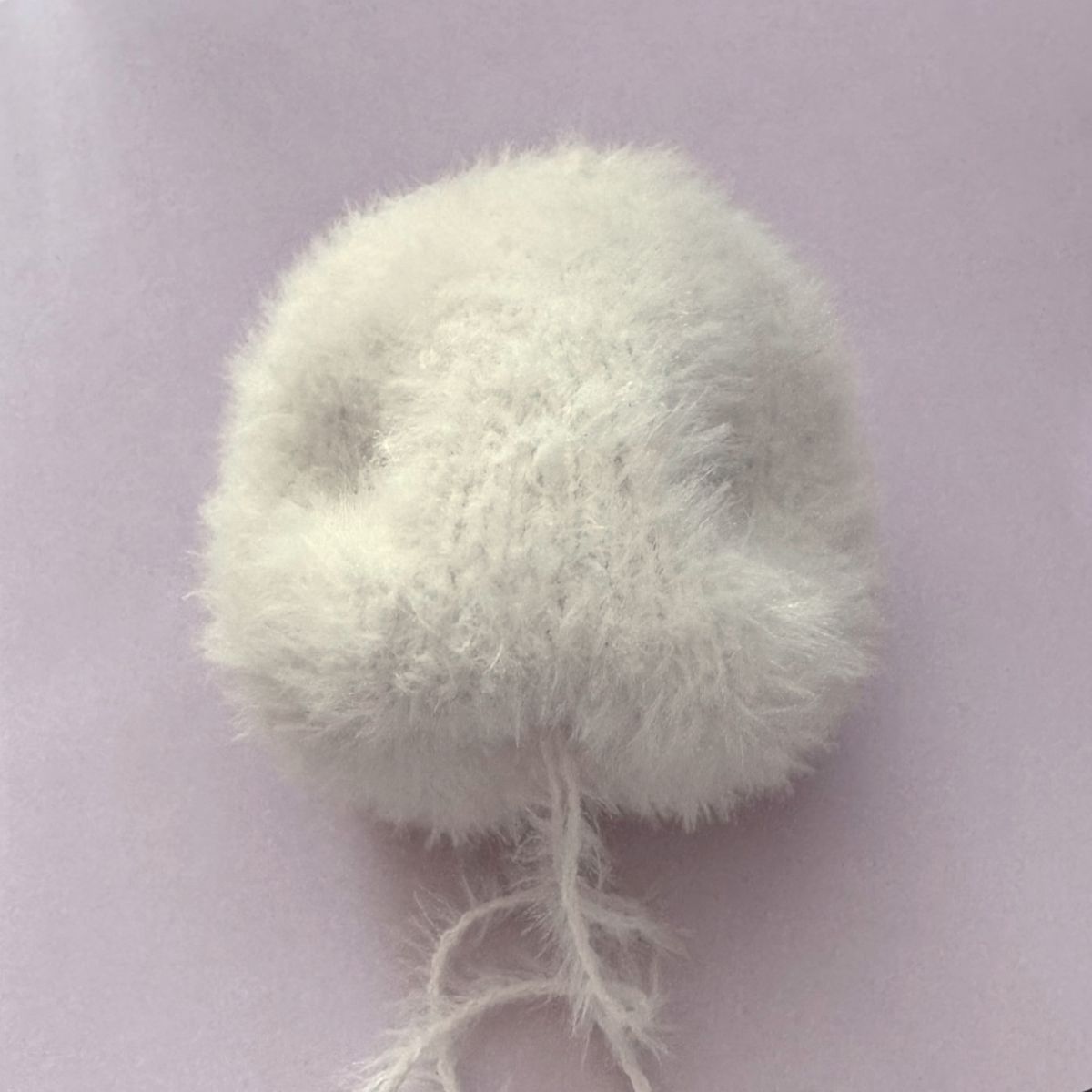
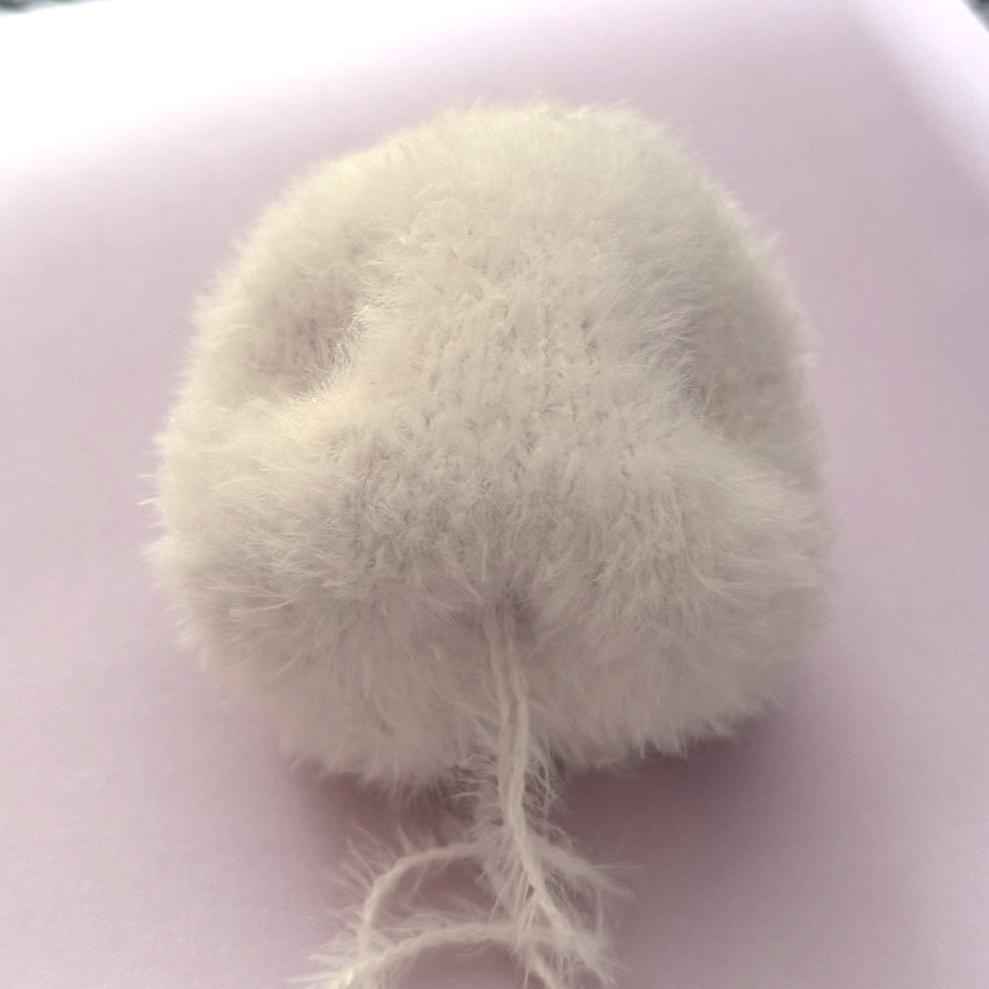
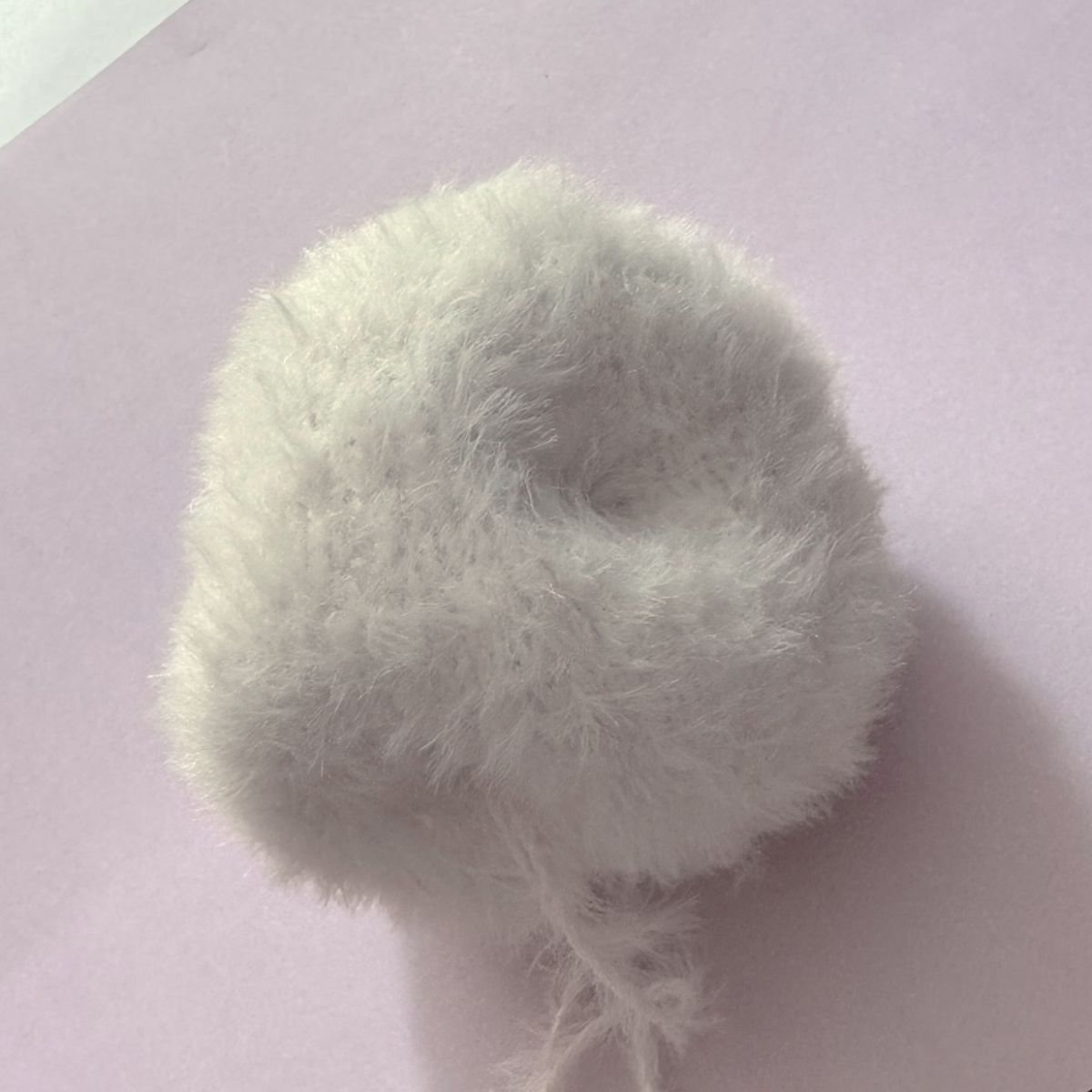
Now that the facial indentations are complete, it’s time to move on to knitting the ears.
Ears
Cast on 6 chain stitches (ch) onto your knitting needle.
Ensure the stitches are evenly tensioned as you knit. This helps create a smooth and symmetrical ears shape.
1. 6 P (6)
2. 6 K inc. (12)
3. 12 P
4. (1 K, 1 K inc)x 6 (18)
5. 18 P
6. (2 K, 1 K inc)x 6 (24)
7. 24 P
8. (3 K, 1 K inc)x 6 (30)
9. 30 P
10. (4 K, 1 K inc)x 6 (36)
11. 36 P
12. 36 K
13. 36 P
14. 36 K
15. 36 P
16. 36 K
17. 36 P
18. 36 K
19. 36 P
20. 16 K, 1 dec, 16 K, 1 dec (34)
21. 34 P
22. 15 K, 1 dec, 15 K, 1 dec (32)
23. P
Once the ears are complete, bind off the remaining stitches. The ears are not filled with stuffing, as they are meant to stay flat and soft.
Next, gently gather the bottom edges of each ear to create a slight curve and give them a more natural shape. Then, position the ears on the left and right sides of the head, making sure they are placed symmetrically. Finally, sew the ears securely in place.
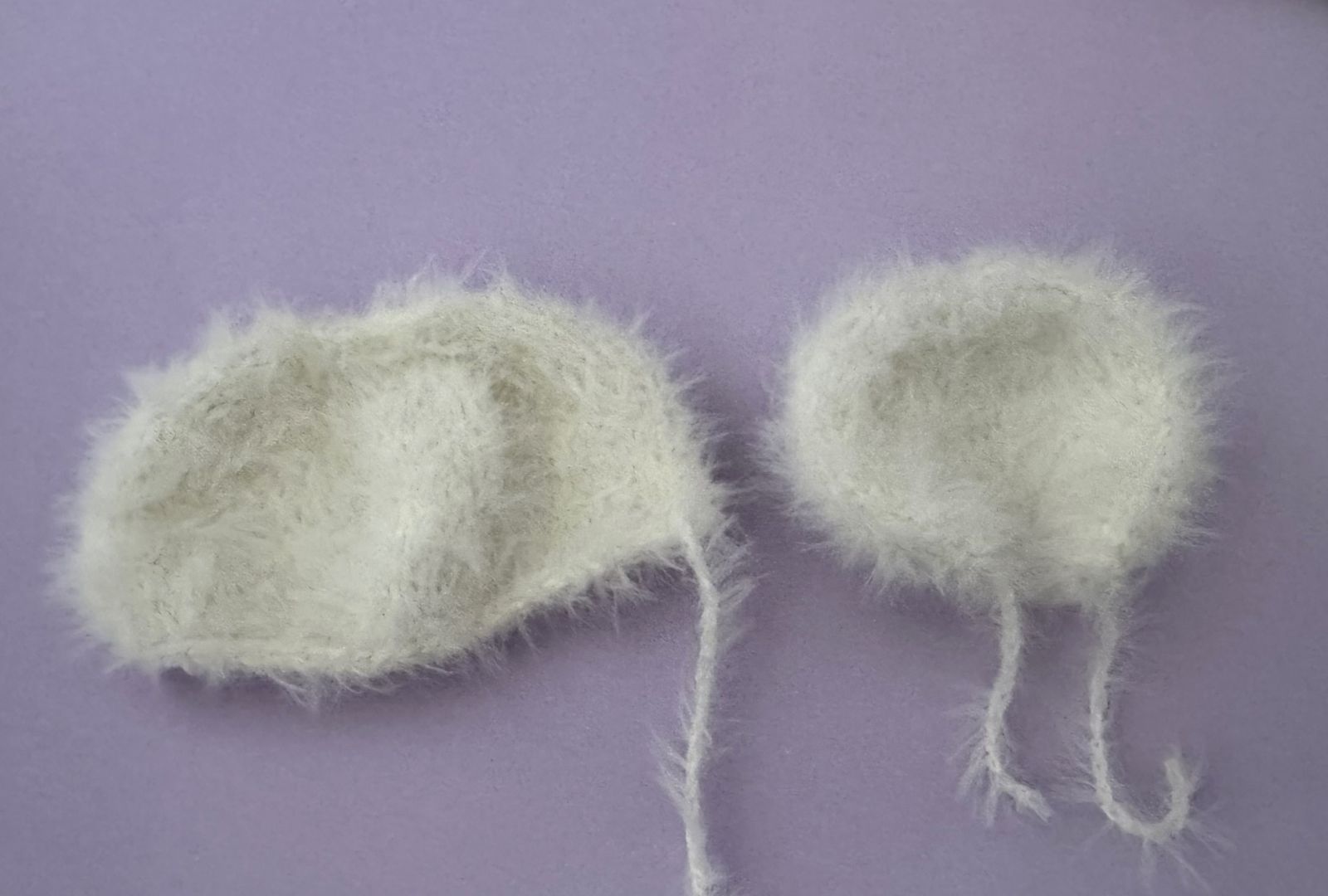
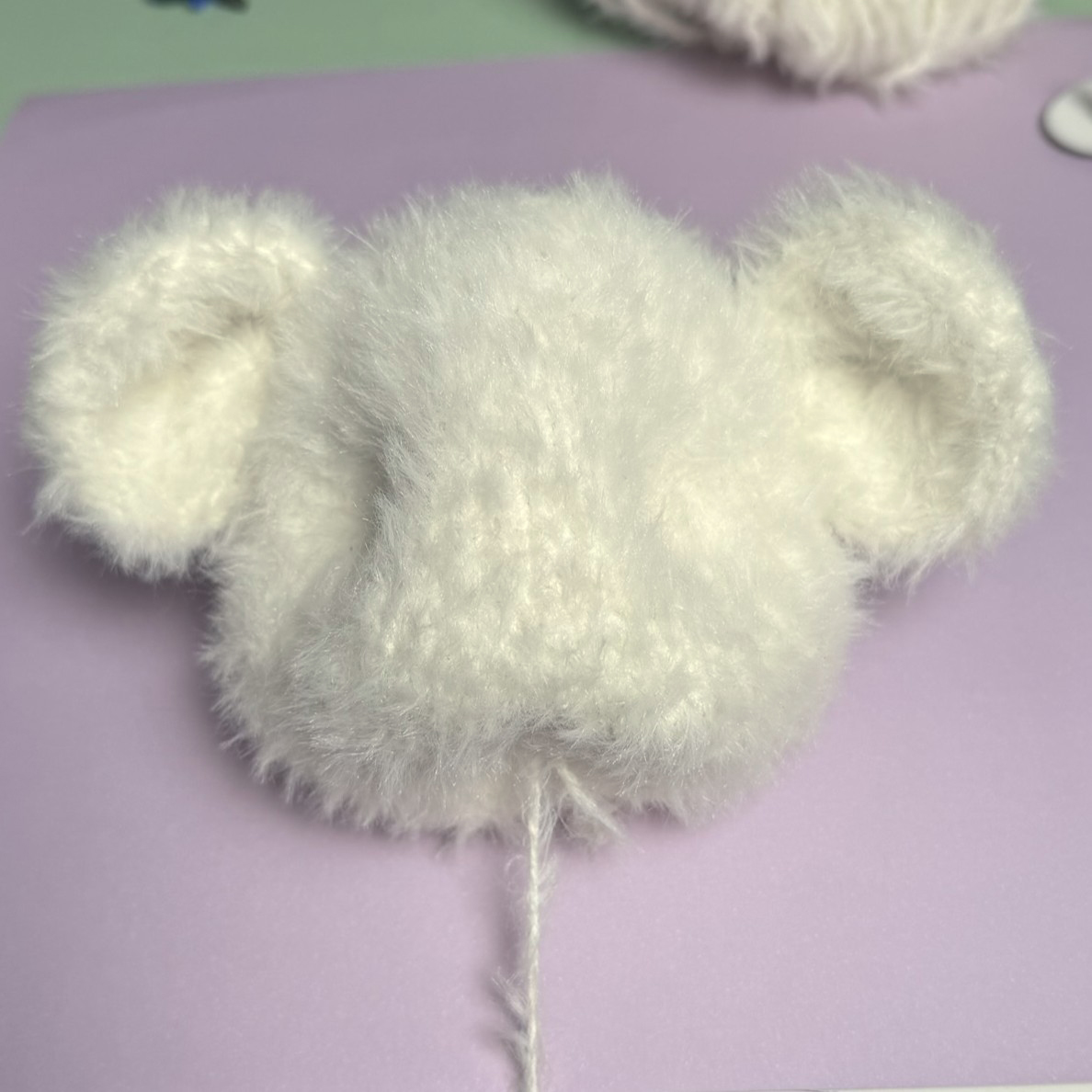
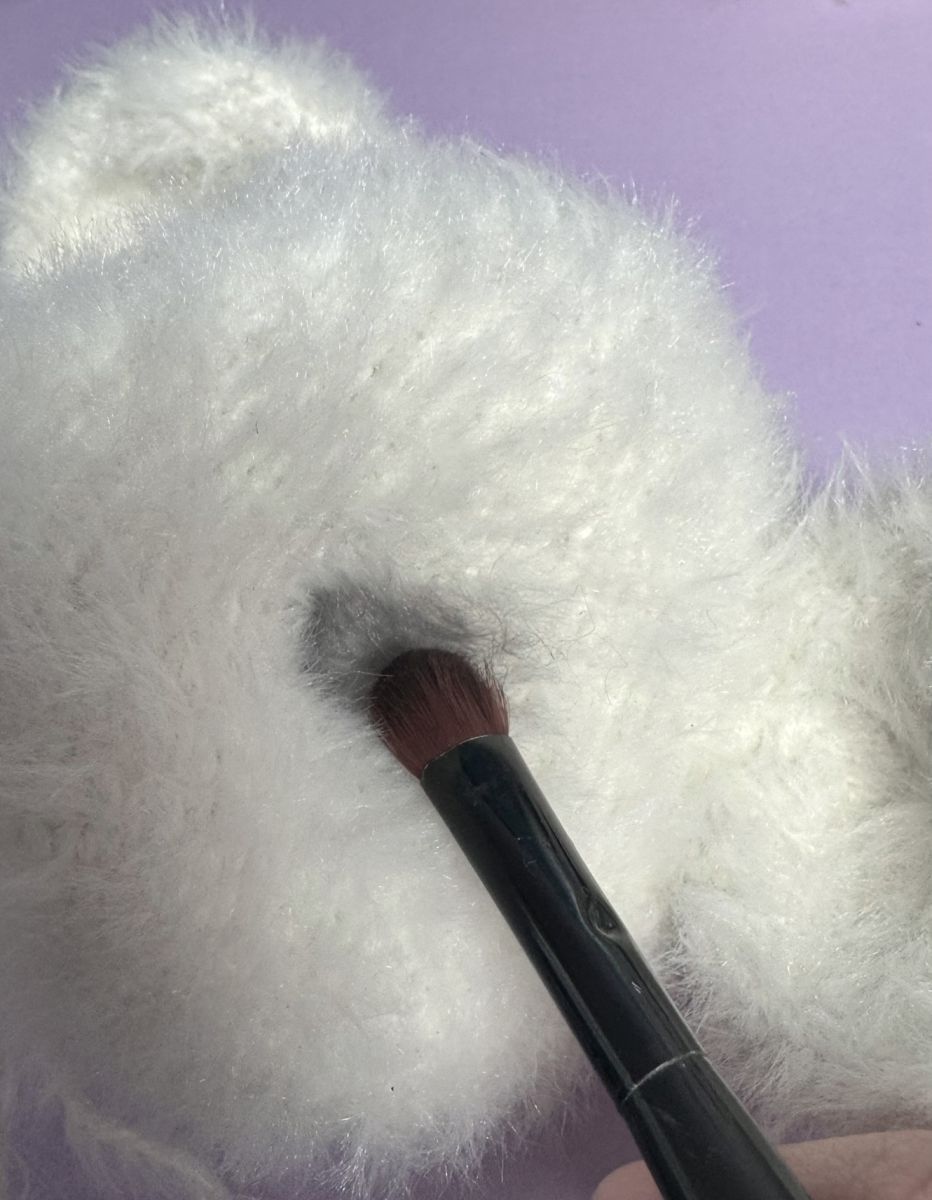
To achieve a soft, natural shading, lightly tint both the eyes and ears using a small amount of gray pastel chalk. Since the mouse is made with white yarn, only a tiny amount of pigment is needed. The goal is to create gentle accents — not to cover the surface with color.
For best results, begin by rubbing the chalk onto a sheet of paper to release fine pigment particles. Then, use a soft brush to pick up the powder and gently apply it to the desired areas. Work slowly and with light strokes to ensure a subtle, even finish.
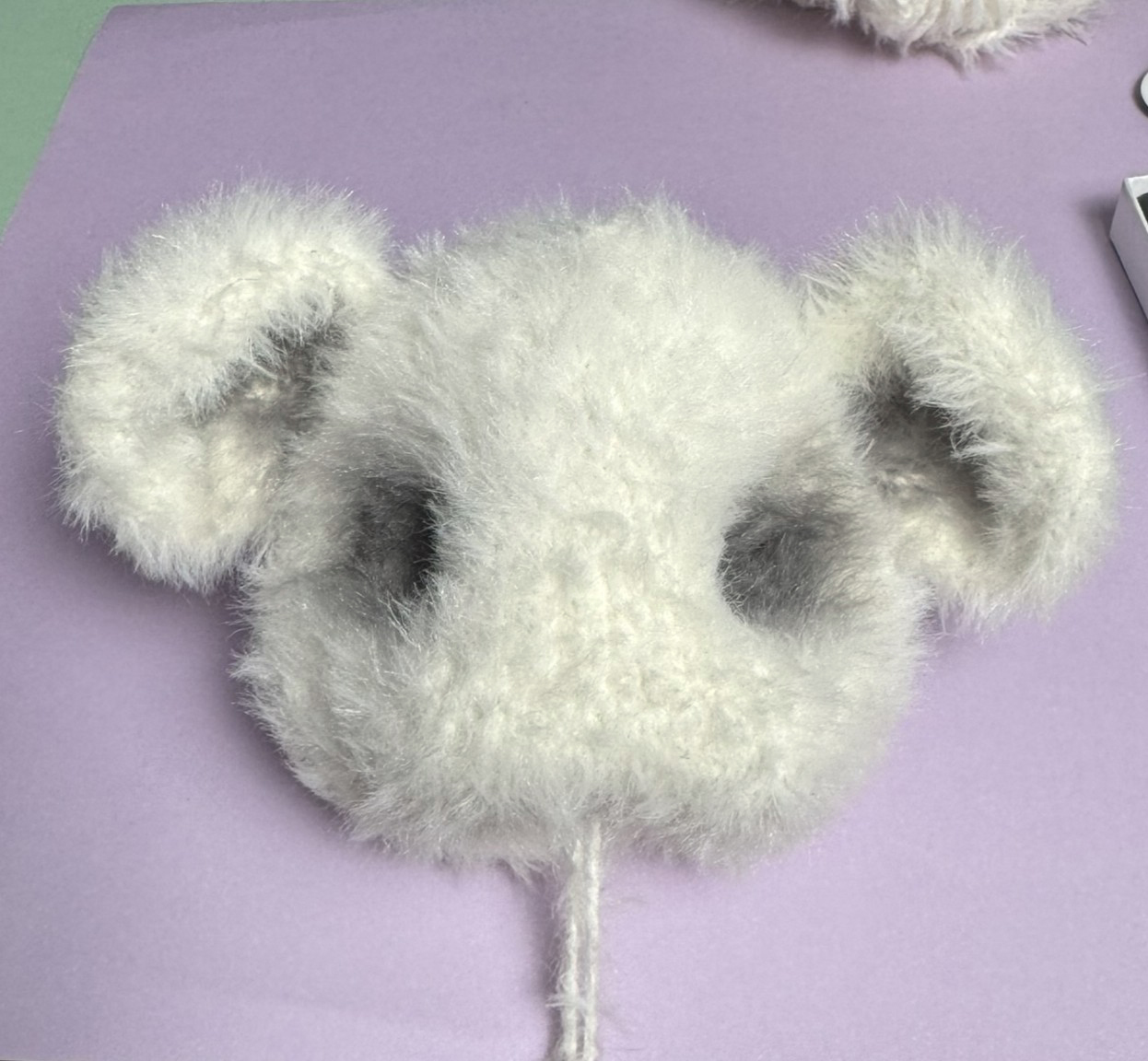
!!! Attaching the Eyes – With Extra Caution !!!
After shading the eye area, it’s time to attach the eyes. This step requires special attention, especially if the stuffed animal is intended for a young child under the age of 5. The responsibility for securely fastening the eyes lies entirely with you — loose eyes can pose a serious choking hazard.
Please take the time to carefully check that the eyes you use are firmly attached and cannot be pulled out or loosened during play.
For my mouse, I used standard safety eyes. Since the head was already closed, I chose to attach them using a hot glue gun — not regular craft glue, but hot-melt adhesive, which offers strong and lasting hold. I first positioned the eyes — on my mouse, they sit about half a centimeter above the eye indentations, which gives a very pleasing look. I then applied the hot glue directly to the eye area and quickly inserted the eyes through the stitches, pressing them into place before the glue cooled. After about 10 minutes, I checked the attachment — the eyes were firmly secured, with no movement or looseness.
Alternatively, you can use sew-on eyes, which are stitched directly onto the head with thread. If you choose this method, make sure the eyes are securely sewn and cannot be pulled off — safety is the top priority, especially for toys intended for small children. If you're unsure, give the eyes a gentle tug to test their hold. Only when they are completely secure is your mouse ready for little hands to cuddle and enjoy.
Now it's time to embroider the nose, adding a friendly and expressive touch to the mouse’s face. For this, I used the same pink thread as for the feet and hands, which helps create a harmonious overall look.
The nose is stitched in the shape of a small triangle. To achieve this, insert the needle repeatedly from the bottom at the same point, and work your way upward stitch by stitch, slightly shifting to the sides as you go. This technique gradually builds the classic triangular shape. Be sure to place your stitches evenly and neatly, so the outline appears clean and well-defined.
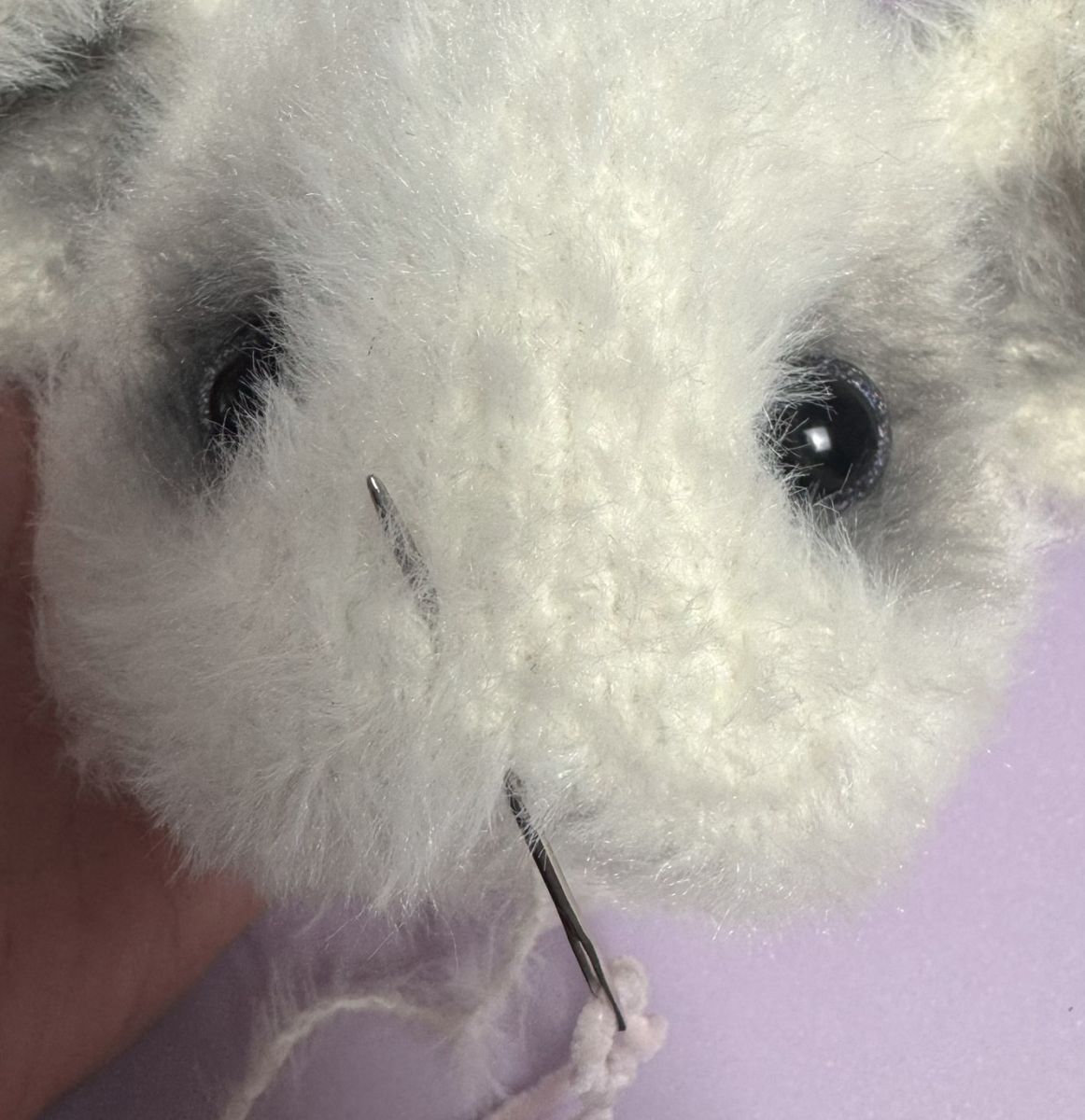
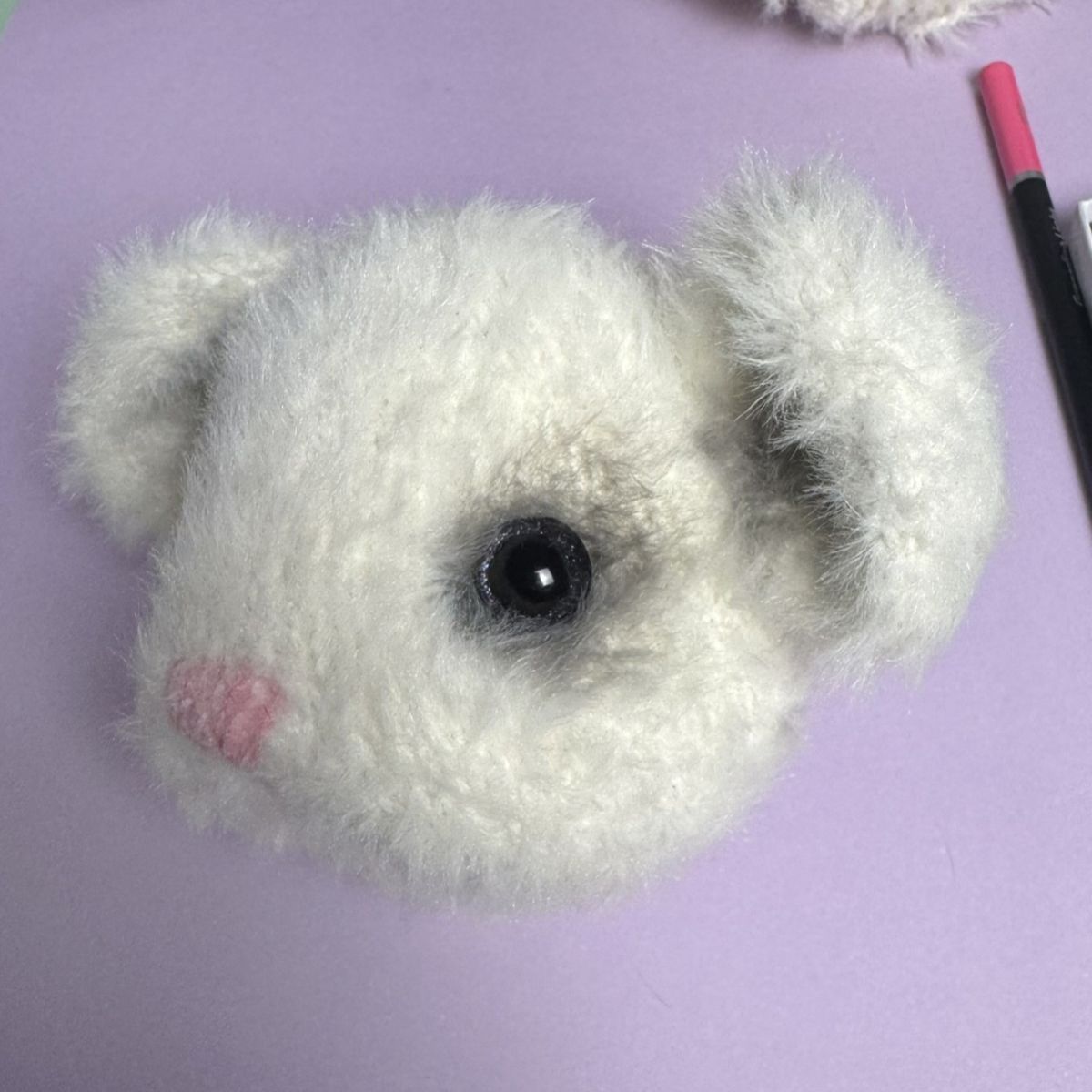
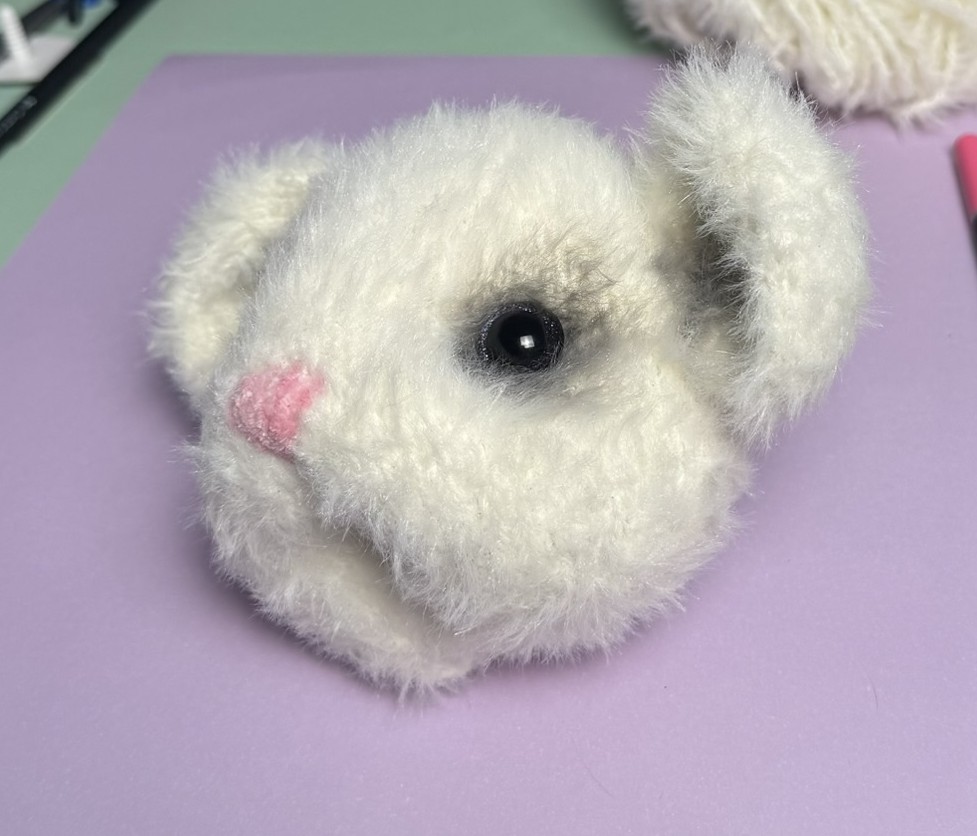
Once the nose is complete, you can move on to embroidering the mouth.
Mouth
Cast on 8 stitches (ch) onto the knitting needle.
1. 3. 5. 7. - 8 P
2. 4. 6. 8. - 8 K
After completing the mouth embroidery, bind off the remaining stitches and sew the sides together neatly.
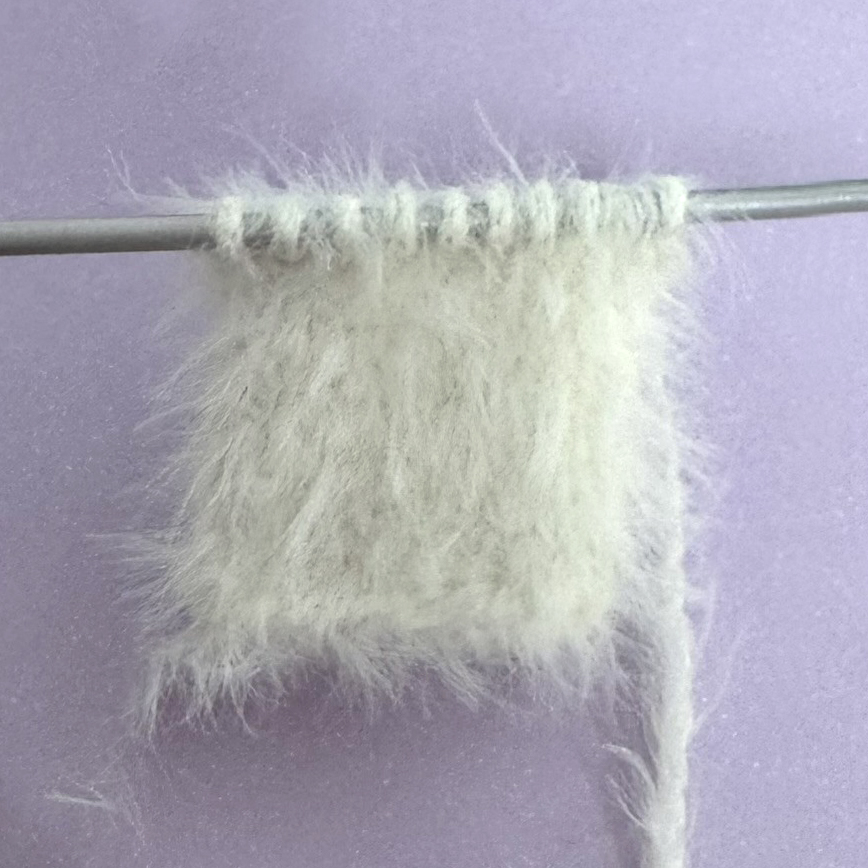
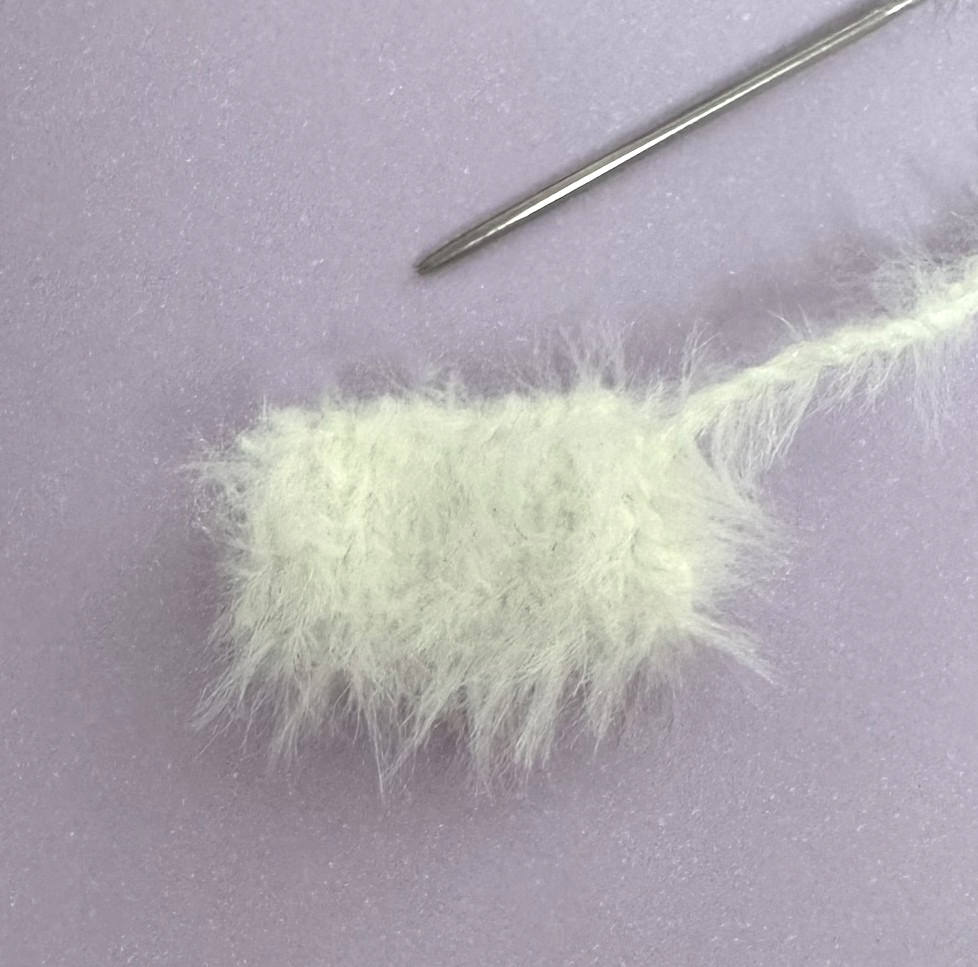
The mouth should be placed directly in the indentation beneath the nose, which was previously formed (marker 5). Carefully stitch it in place to enhance the mouse’s friendly expression. If the yarn around the nose and mouth appears too fluffy or obscures the facial details, you can carefully trim it with a pair of scissors.
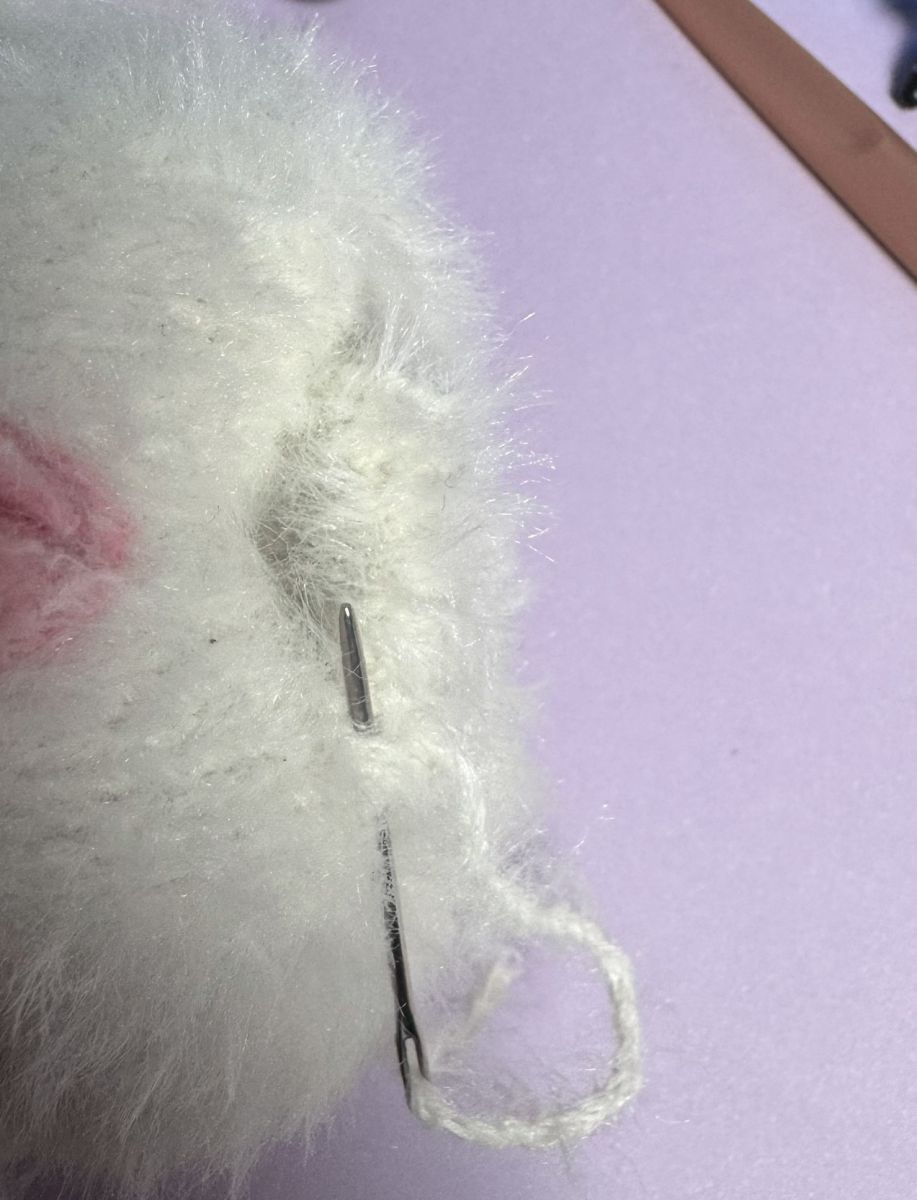
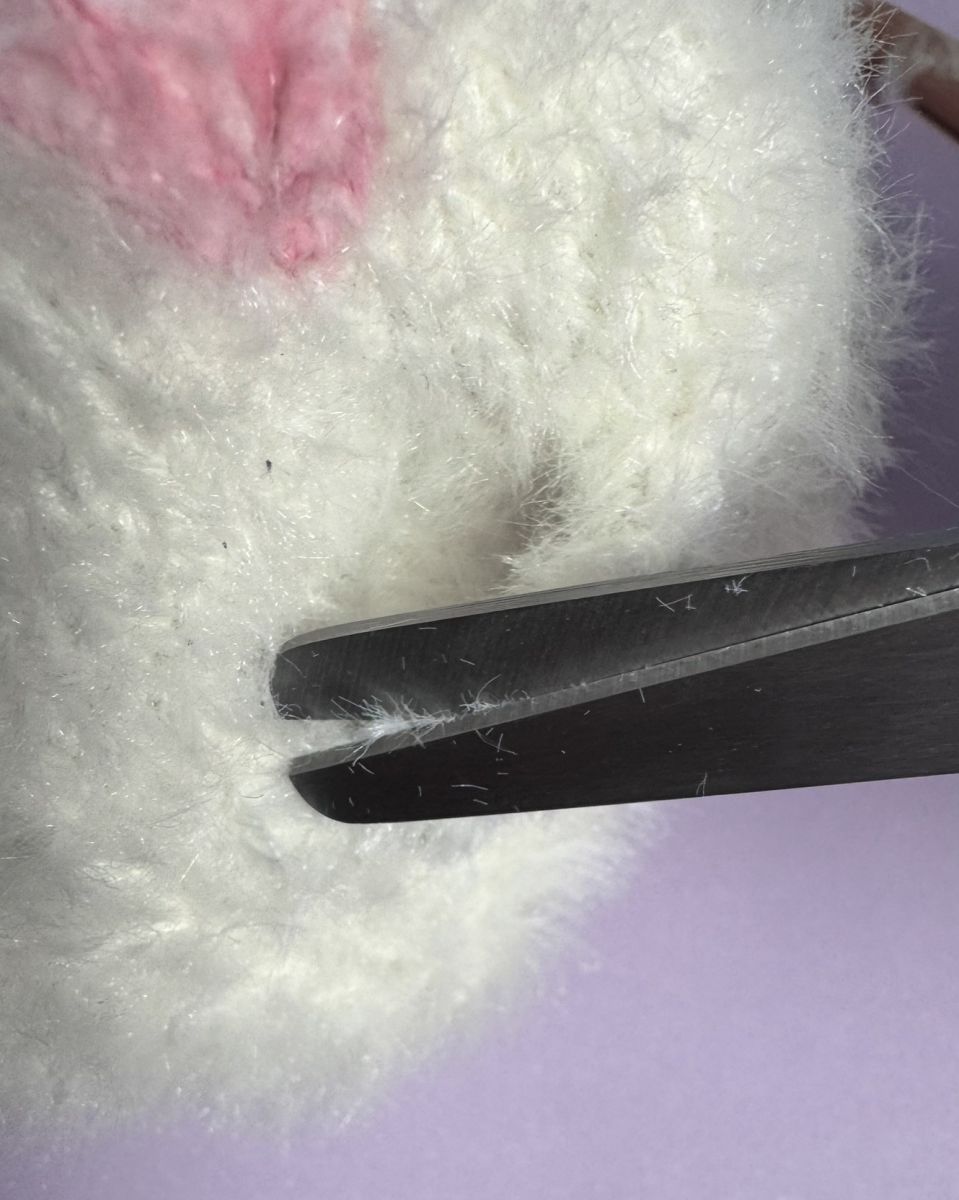
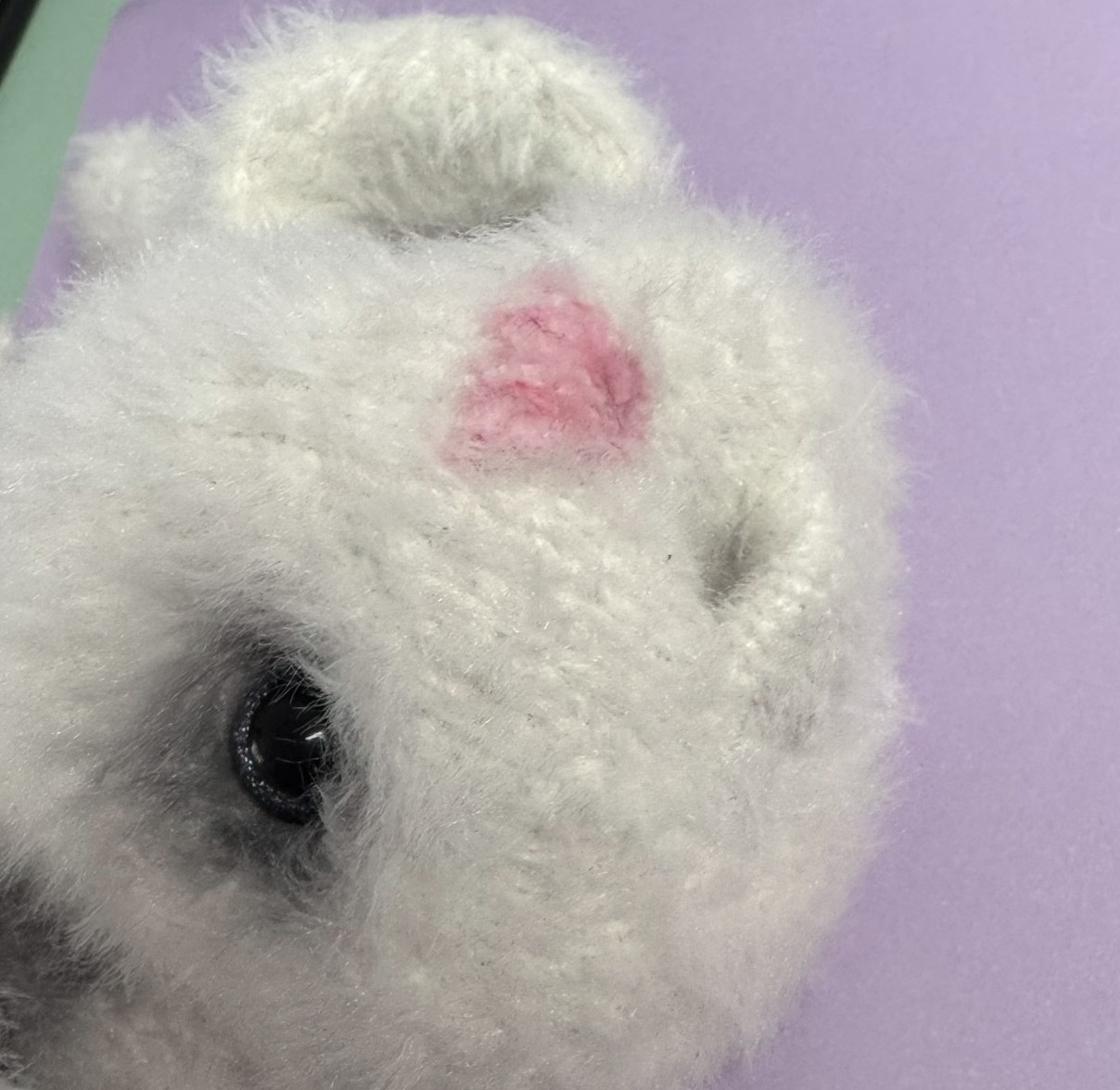
Next, it’s time to attach the head to the body. Make sure it’s centered and properly aligned so that the overall proportions of the mouse appear balanced and harmonious. Use a sturdy yarn in a matching color, and sew around the base of the head with small, even stitches to ensure it’s securely and discreetly fastened.
Once the head is attached, position the arms and legs. Take your time to find the right placement — they should be sewn on symmetrically, so the mouse looks well-balanced and can sit or lie comfortably. You may want to pin the limbs in place temporarily to check their alignment before sewing them on permanently. For best results, use the same thread you used to sew the body together. This helps maintain a consistent look and ensures the seams are strong and cohesive.
Tail
Cast on 40 stitches (ch) onto the knitting needle.
- Rows 1, 3, 5, 7: Work 12 purl stitches.
- Rows 2, 4, 6, 8: Work 12 knitt stitches.
Bind off the stitches and sew the sides together. Finally, sew the tail onto the back of the body.
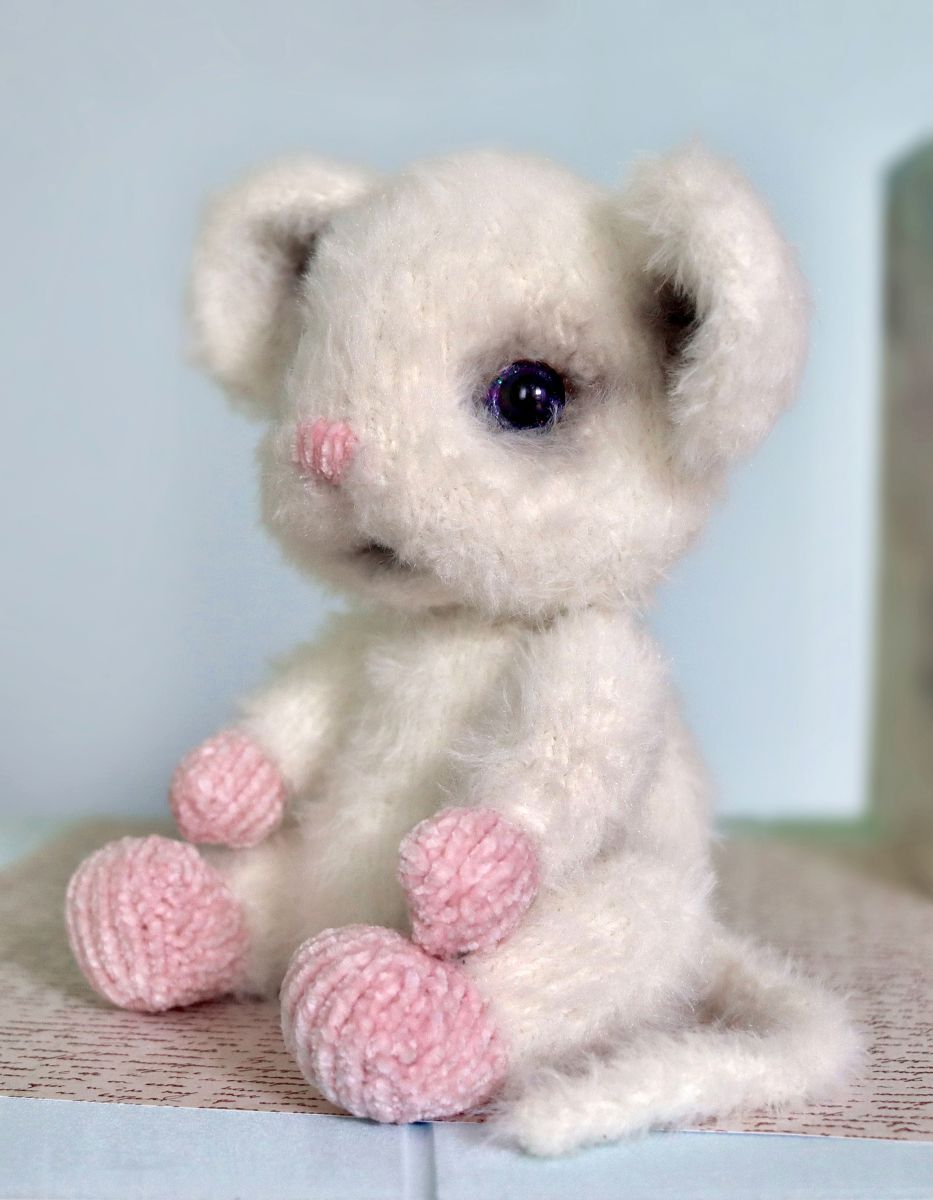
If you've used the same fluffy yarn throughout, it's a lovely idea to gently brush the finished toy to enhance its softness and give the surface a more even, plush appearance.
A pet brush, especially one designed for cats, works wonderfully for this. With gentle, sweeping motions, you can lightly fluff up the fibers, making the mouse feel even more cuddly and giving it a beautifully soft texture.