The most important thing is probably that the dress form matches your
own clothing size. If you sew or craft clothing for yourself, a dress form is very practical. You can easily keep garments in progress—even after individual steps—on the form and see how the finished parts so far drape or fit.
Even if you want to
sell or trade garments (tops only), they always look more presentable and easier to visualize on a dress form than lying flat on a table.

However, you have to keep in mind that a dress form never matches your exact original measurements, because we humans are simply different despite having the same clothing size. You could pad it out in the relevant places if you want it to be completely exact. Since I tend to work with stretchy fabrics, I can ignore the difference.
My “standard dress form” can be taken apart into 3 pieces, so for short tops I can also place the torso on the table—and then, for example, get a better look at the neckline and pin it.
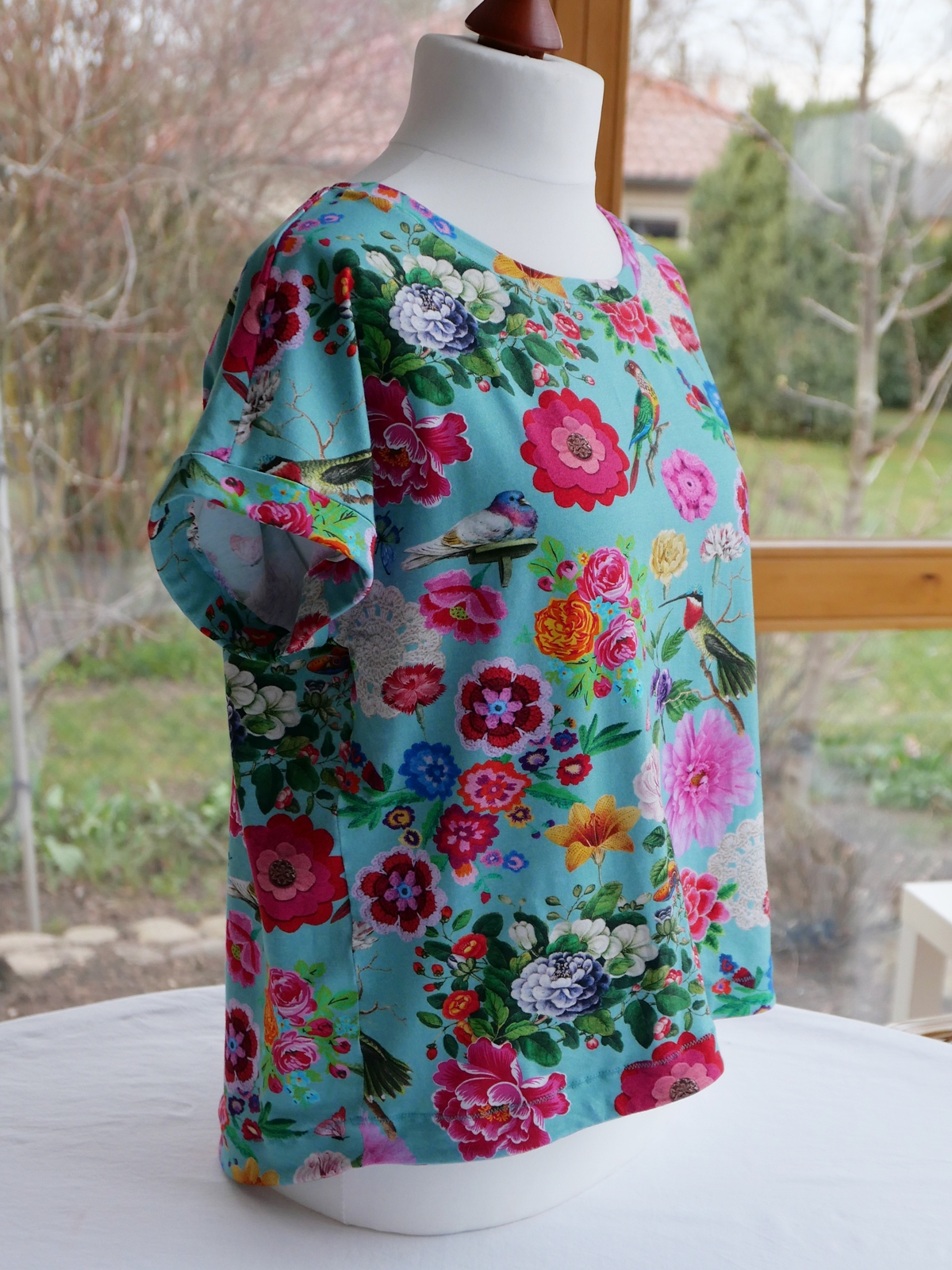
The dress form only shows the upper body. Sleeves or sleeve length can only be tested on yourself. The same applies to pants. A “dress form” is simply for tops or dresses—and not for pants.
***
Before I bought it, I of course looked at other models too. Anyone who sews fashion in several sizes can also choose an
“adjustable multi-size model”. These models have little dials at bust, waist, and hip height for setting the right size. But at around 150 euros, this “multi-size model” also has quite a hefty price tag.
Mine is enough for me, and I’m happy with it.
Best regards, Ina