Hi Erika,
I don’t have any experience with this kind of yarn, but I have enough imagination to picture the pros and cons.
Pros:
- You have fewer loose ends to weave in.
- You don’t have to worry about the pattern—it forms on its own.
Cons:
- The yarn is relatively expensive, considering its quality.
- You can’t choose the material. For example, I prefer to knit with natural fibers and don’t particularly like synthetic stuff, partly for environmental reasons. A lot of microplastics end up in the oceans from washing machines because the synthetic fibers wear down a little with every wash. And wastewater treatment plants can’t filter them out.
- You can’t choose the color combinations; everything is already predetermined.
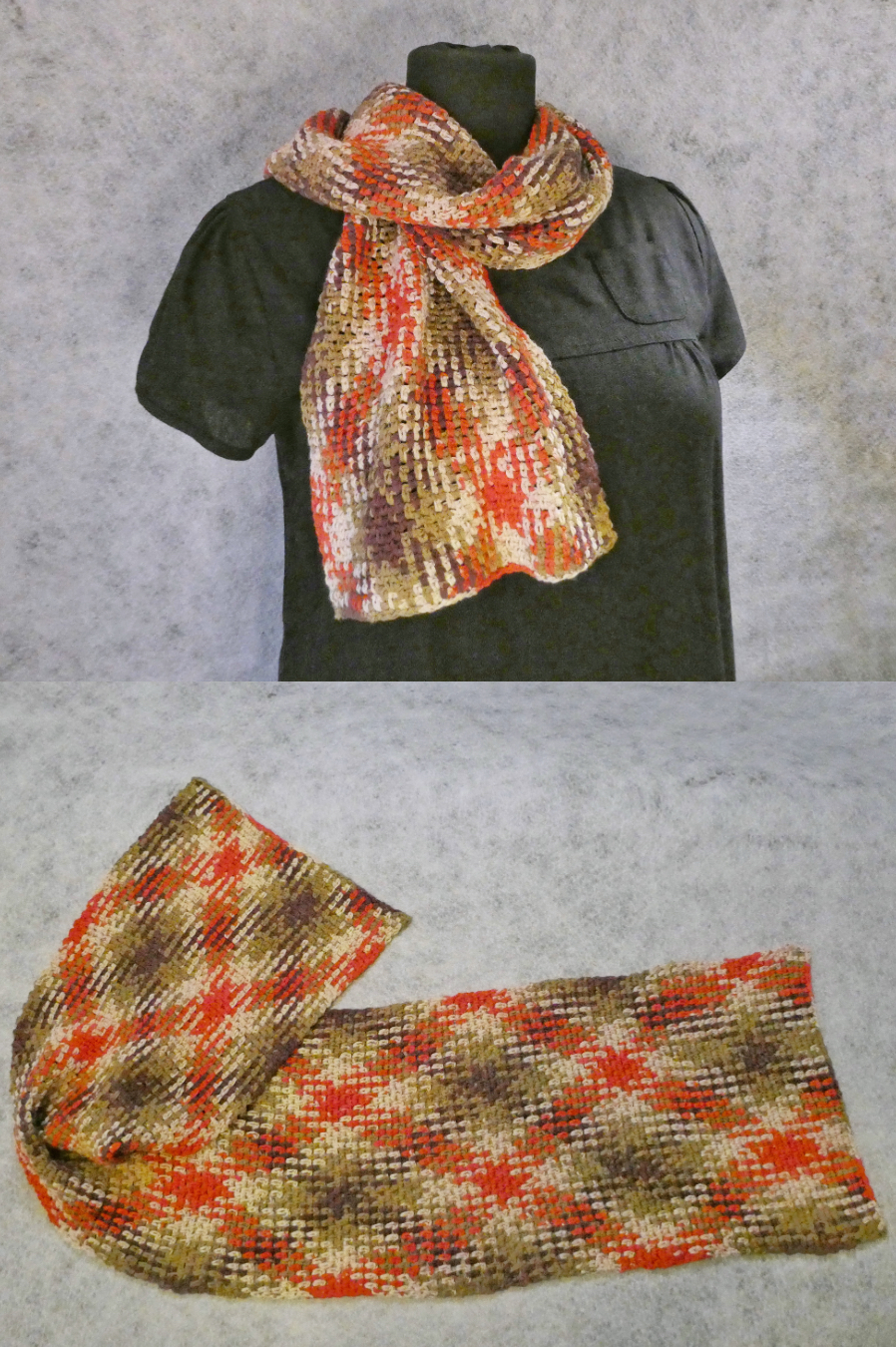
- Depending on the pattern, you always have to stick to a specific working width or gauge; otherwise, the pattern won’t come out clearly.
- If you don’t work at an “average” tension—but rather, for example, very tightly or very loosely—you may first have to make several swatches to achieve the required gauge. For people who hate making gauge swatches, this is very annoying.
- Size adjustments are only possible to a limited extent, even with something as simple as a blanket. Every stitch too many or too few immediately ruins the pattern.
There are plenty of knitting and crochet patterns and techniques you can use to create something resembling a checkered pattern, using any material, in your favorite color combination, and in any desired size, without having to resort to special pre-made yarns. For example, you can crochet narrow vertical and horizontal stripes onto the piece afterward. Wide stripes are worked separately and then sewn or crocheted together. The same applies to squares.
With a little imagination and some knitting or crocheting skill, you don’t need those expensive specialty yarns.