Hello everyone,
I’m sure many of you use those handy, always-on-hand disposable tissues every day. But are you aware that they have a very poor environmental footprint? Their production consumes a lot of wood, a lot of energy, and a lot of water. And when they’re bleached, scented, and made soft to the touch, harmful chemicals are released that leave their mark on the tissues and the environment. Everything generated during the production process has to be disposed of, too. On top of that, every little pack is wrapped in plastic, which in turn is packed along with many others in a colorfully printed plastic bulk package. Used tissues and their packaging keep adding to our growing mountains of trash.
What did our great-grandparents, grandparents, and parents use for their noses?
Exactly…
cloth handkerchiefs.
Many of us still remember them from back in the day. Sometimes you’d receive them as gifts—with pretty, delicate lace trim around the edges—in beautiful packaging. Some even had embroidered initials. The cloth handkerchiefs for children had cute fairy-tale characters on them. Do you still remember?
****
Then the industry came along and showed us that “disposable tissues” existed. Always at the ready, always spotless, used once, quickly thrown away. At some point, for the sake of convenience, we probably got used to using only these. Today, you’ll hardly find a woman’s handbag without them. All mothers also keep them handy just in case.
****
But is that still appropriate today? We simply have to ask ourselves this question. Are we just going along with it without thinking, or can we do something to change that?
****
Yes, I can!
Yesterday I sewed cloth handkerchiefs for the men in my family.
They’re made of boil-proof cotton fabric and can be washed in the washing machine on the boil cycle at any time. That reliably kills all bacteria and germs. A quick pass with the iron, and they look good enough to put in the closet. I skip the ironing—for me, just shaking them out once before hanging them up is perfectly sufficient.
****
I used an old cotton bedsheet that had been washed countless times. The light blue color had already faded in some spots from drying in the sun on the clothesline. But that doesn’t matter when blowing your nose. I quickly did a “nose test” on myself. I found the fabric to be pleasantly soft and sturdy enough—so just right for handkerchiefs.
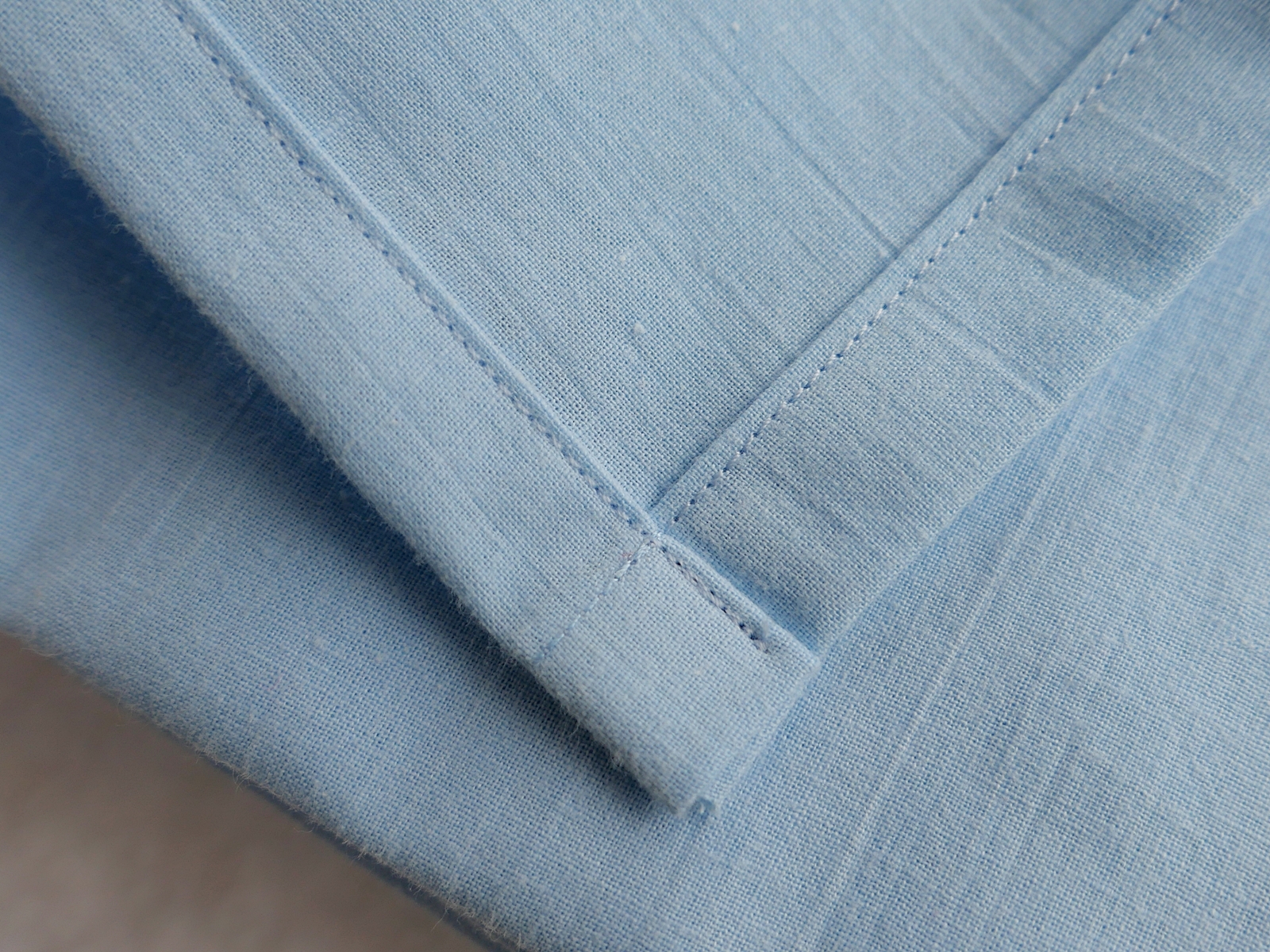
I cut out many 42 x 42 cm squares (men’s size; smaller for women and children). Then I folded the top and bottom edges over about 1 cm and ironed the fold right away. Then I folded the hem over again and ironed it down right away. I attached three fabric clips and sewed the folded edges close to the edge with a straight stitch.
Then I folded the other two sides over twice, ironed them, and sewed them.
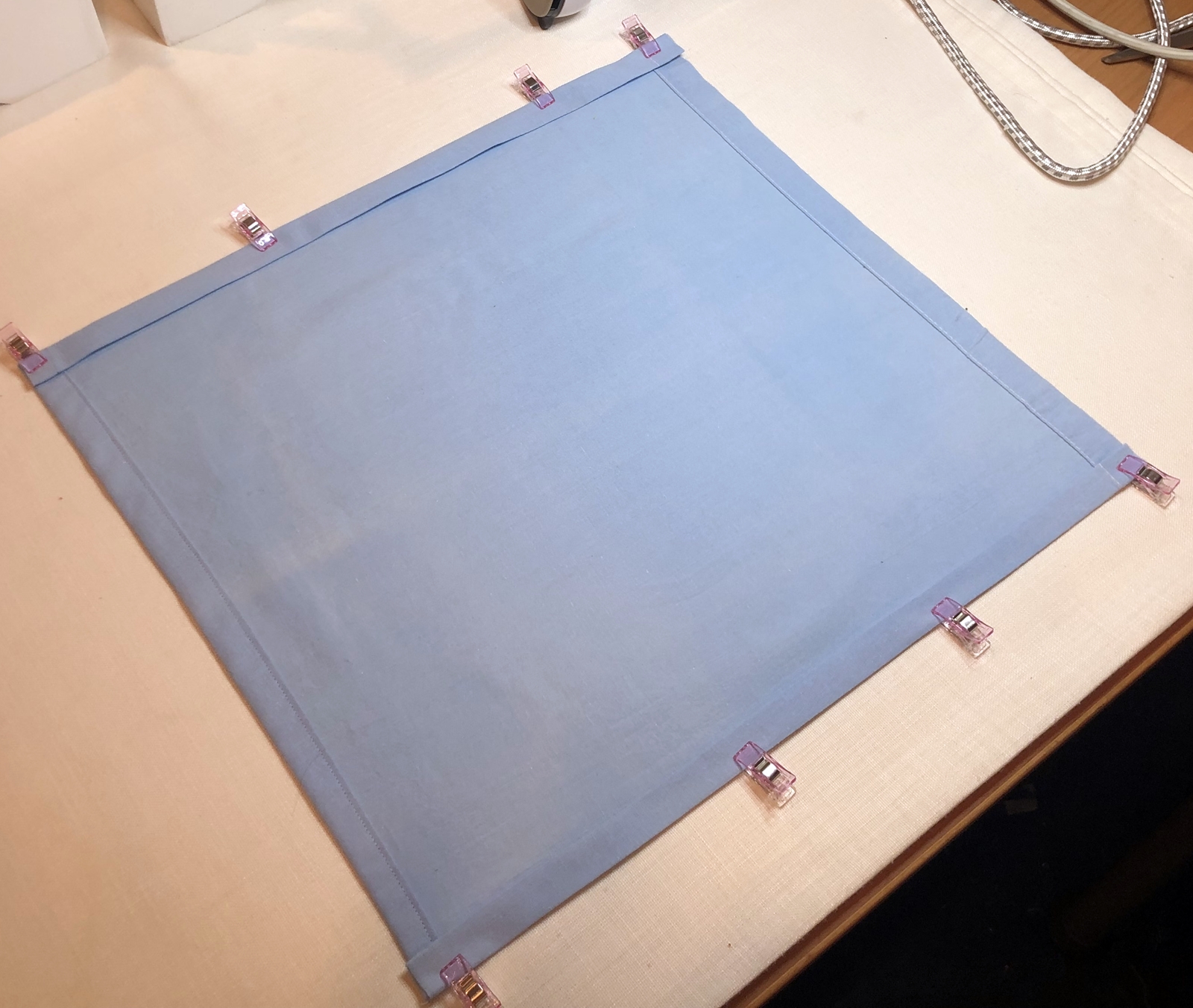
Even beginners can do this! It’s a great way to practice sewing in a straight line and securing the seam. So there aren’t any major hurdles. In the end, my men’s handkerchiefs measured about 38 x 38 cm.
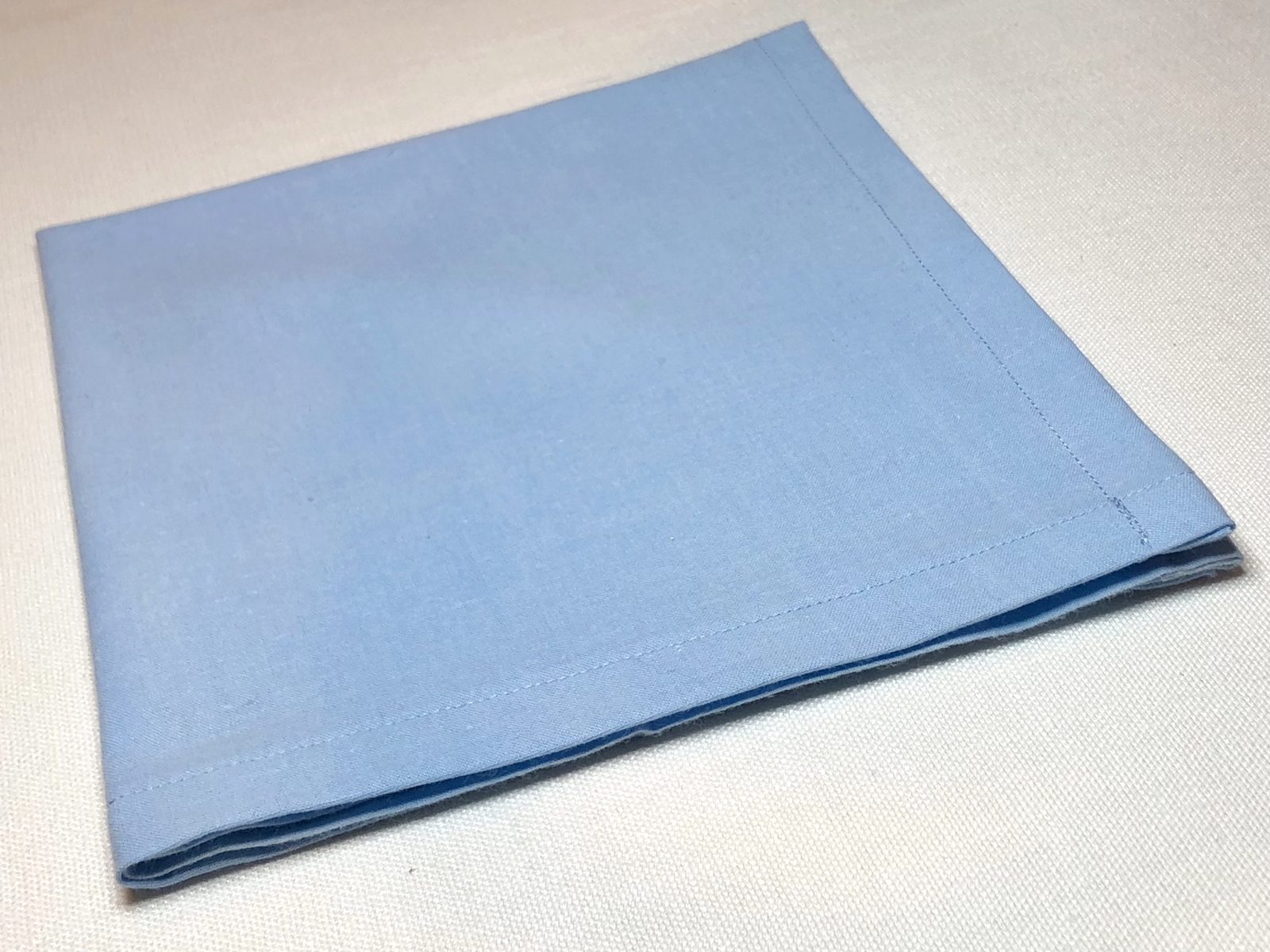
By the end of the afternoon, I’d sewn 8 handkerchiefs—and I still have fabric left over. They don’t even all have to be exactly the same size. Who cares?
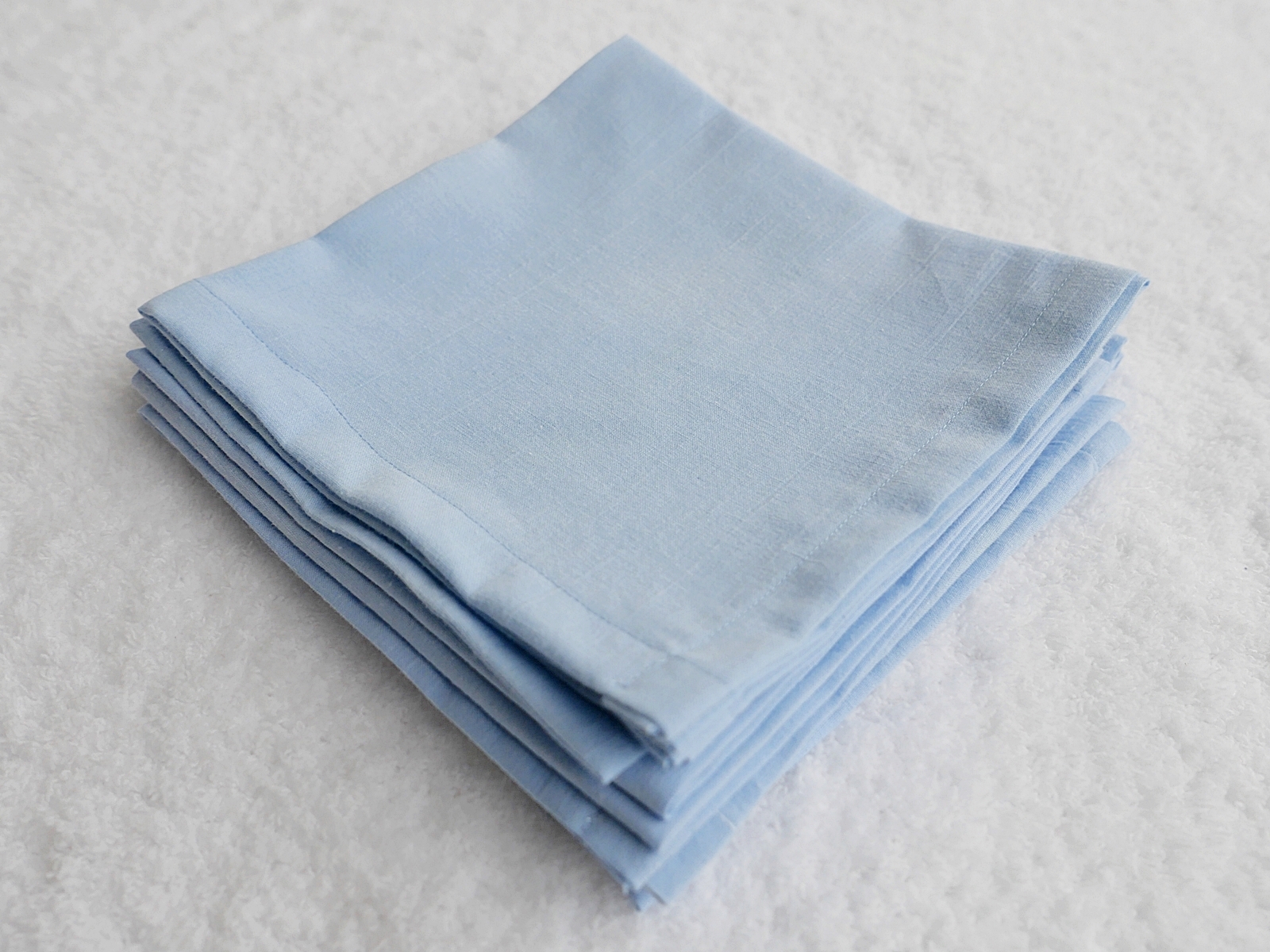
I enjoyed sewing them—especially knowing that I’d created something useful, practical, and sustainable. I only use disposable tissues in emergencies now.
Next, I’ll be looking for some pretty fabrics for women’s and children’s handkerchiefs. After all, we don’t just need them to be practical—we want them to be pretty, too :-)
Maybe this is a little inspiration for you?
Warm regards from Ina
P.S. Of course, you can also buy cloth handkerchiefs.