
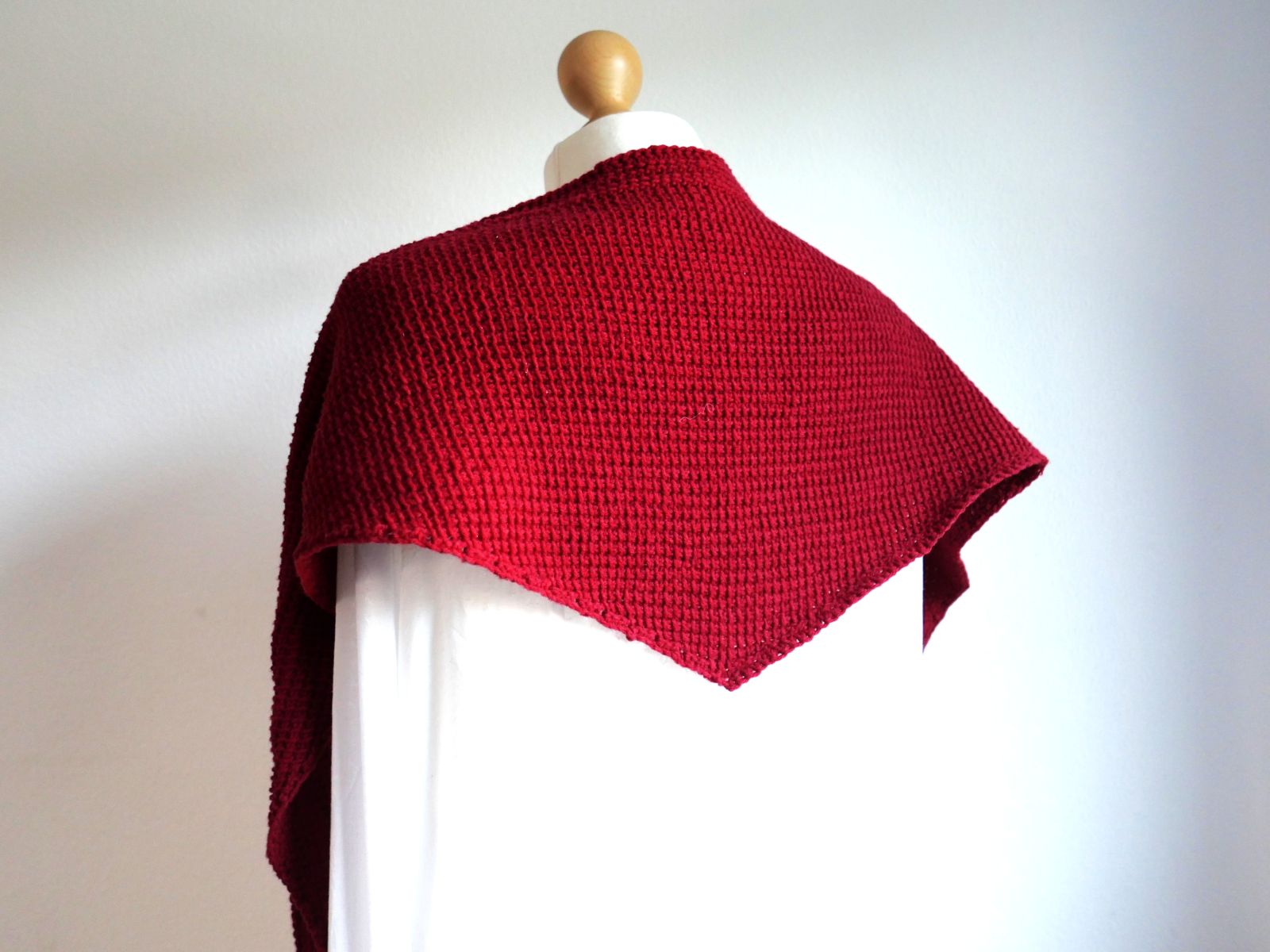
This skein of sock yarn was destined for something other than socks! A rather unusual idea – and a very long foundation chain – led to my latest Tunisian crochet shawl. I’ll tell you all about it on my blog.
The idea behind the shawl
I had a skein of wonderfully soft sock yarn with cashmere in it. It was almost too precious to turn into socks, so I decided to make a small, cosy shawl instead.
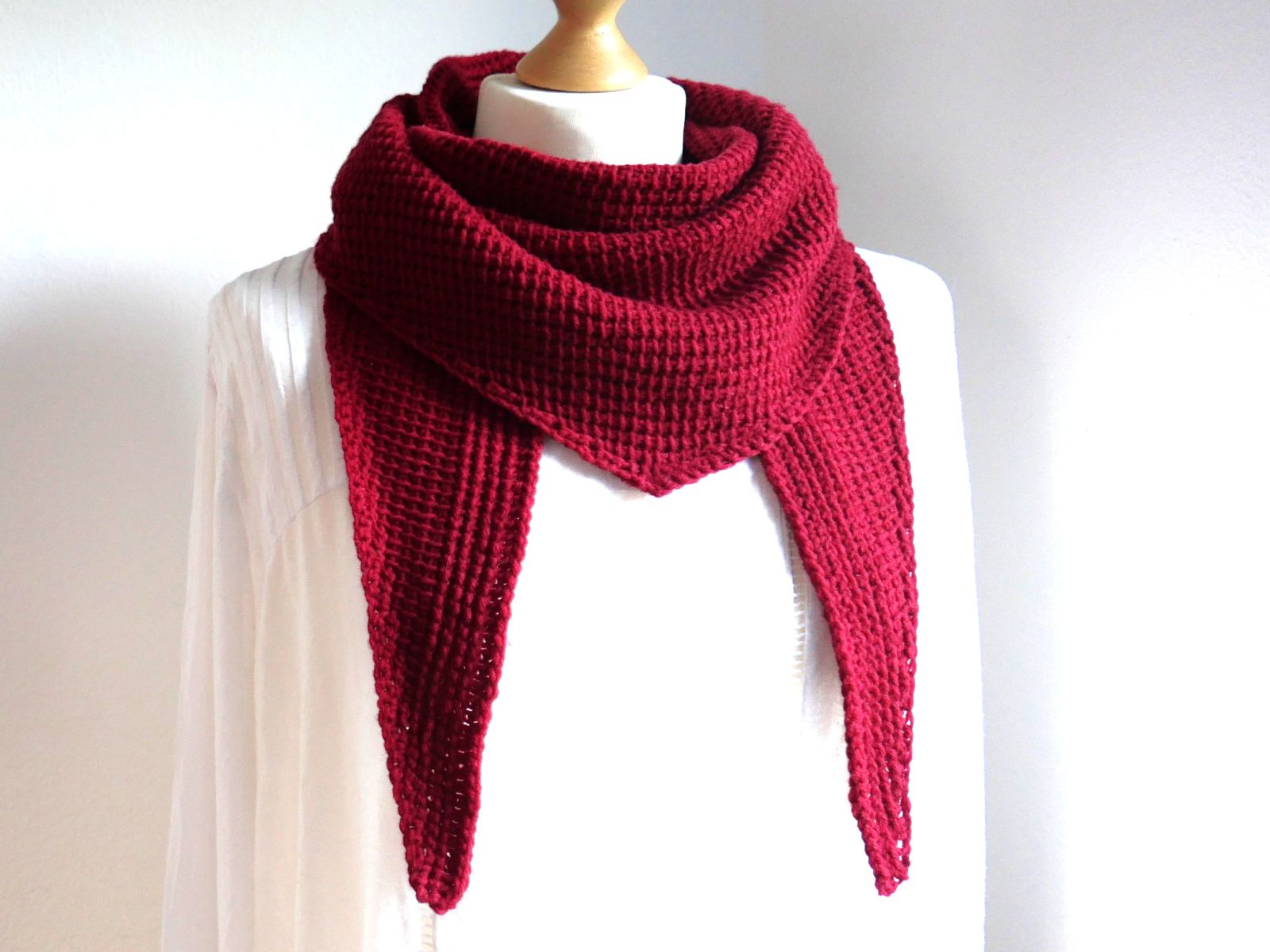
The result is a medium-sized Tunisian crochet triangle shawl called “Nicht-für-die-Füße”.
Many of my shawls are worked until the yarn runs out. This one is a little different: the size needs to be planned in advance because the foundation chain determines the length of one side of the shawl.
How the shawl is constructed
The shawl is worked from the bottom tip upwards. You begin with 3 stitches and increase by 3 stitches at the end of each forward pass. At the end of each return pass, you chain 3 stitches.
The long foundation chain serves as a guide for the increases along the left-hand edge. This creates a neat edge, while the chain stitches added at the end of the return passes form small decorative points along the other side.
A total of 6 stitches are increased in each row.
The main stitch used is Tunisian Simple Stitch. The 3 edge stitches are worked in Tunisian Reverse Stitch, also known as Tunisian Purl Stitch.
Materials
-
1 skein of sock yarn, 100 g / 400 m
-
4 mm Tunisian crochet hook, or a hook suitable for your yarn and tension
-
Tapestry needle
-
Scissors
-
Measuring tape
You can also use a different yarn. Choose a suitable hook size to achieve the fabric you like.
Choosing the right hook
Tunisian crochet often produces a firmer fabric than conventional crochet. You may therefore need a larger hook than the one recommended on the yarn label.
Try a hook two or three sizes larger and see which fabric you prefer. The shawl should drape nicely rather than feel stiff.
Finished size
-
Width: approx. 164 cm
-
Depth: approx. 33 cm
Instructions
The shawl is worked from the bottom tip upwards.
The foundation chain is used for the increases along the left-hand edge. At the end of every forward pass, stitches are worked into the foundation chain. At the end of every return pass, chain 3 stitches. This creates the small points along the right-hand edge.
You can finish this edge with a row of single crochet stitches if you wish.
The last 6 rows are worked in Tunisian Reverse Stitch. This stitch creates a decorative texture and helps reduce curling. Tunisian Simple Stitch can curl in much the same way as stockinette stitch in knitting.
The diagram is not drawn to scale.
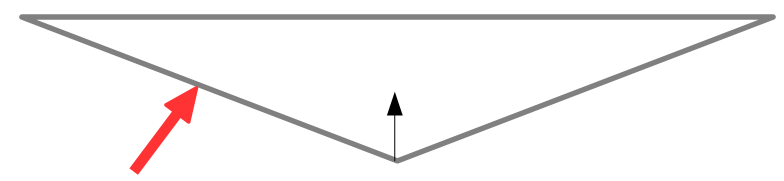
The black arrow indicates the direction of work, and the red arrow indicates the edge formed by the foundation chain.
The foundation chain
Chain 147 stitches, or any number divisible by 3.
Row 1 – Forward pass
Work 3 stitches in Tunisian Simple Stitch.
There are now 3 stitches.
Row 2 – Return pass
Work off the 3 stitches. At the end of the row, chain 3 stitches.
Row 3 – Forward pass
Work 2 stitches in Tunisian Simple Stitch, 3 stitches in Tunisian Simple Stitch, and 3 stitches in Tunisian Simple Stitch into the foundation chain.
There are now 9 stitches.
Row 4 – Return pass
Work off all the stitches. At the end of the row, chain 3 stitches.
Row 5 – Forward pass
Work 2 stitches in Tunisian Simple Stitch, 3 stitches in Tunisian Reverse Stitch, 6 stitches in Tunisian Simple Stitch, and 3 stitches in Tunisian Simple Stitch into the foundation chain.
There are now 15 stitches.
Row 6 – Return pass
Work off all the stitches. At the end of the row, chain 3 stitches.
Row 7 – Forward pass
Work the same stitches as in Row 5.
There are now 21 stitches.
Row 8 – Return pass
Work off all the stitches. At the end of the row, chain 3 stitches.
Row 9 – Forward pass
Work the same stitches as in Row 5.
There are now 27 stitches.
Row 10 – Return pass
Work off all the stitches. At the end of the row, chain 3 stitches.
Row 11 – Forward pass
Work the same stitches as in Row 5.
There are now 33 stitches.
Row 12 – Return pass
Work off all the stitches. At the end of the row, chain 3 stitches.
Row 13 – Forward pass
Work 2 stitches in Tunisian Simple Stitch, 3 stitches in Tunisian Reverse Stitch, 6 stitches in Tunisian Simple Stitch, and 3 stitches in Tunisian Simple Stitch into the foundation chain.
There are now 39 stitches.
Row 14 – Return pass
Work off the stitches. At the end of the row, chain 3 stitches.
Continuing the shawl
Continue working the increases in the same way until 18 stitches of the foundation chain remain unused. By this point, you will have completed 86 rows.
Rows 87–92
Work the last 6 rows in Tunisian Reverse Stitch, continuing the increases as before.
Tunisian Reverse Stitch is worked similarly to Tunisian Simple Stitch, but the hook is inserted from the back of the work.
Finishing
Work off the stitches in the final row.
On the forward pass, work single crochet stitches to bind off the stitches. Turn the work and work slip stitches along the final row to the end.
Turn the work again and crochet single crochet stitches along the jagged edge down to the tip. At the corner, work 3 stitches into the same insertion point.
Secure the yarn and weave in all ends.
I steamed my shawl to relax the stitches. After steaming, it no longer curled.
A little tip: The foundation chain cannot be unravelled in the usual way, but you can undo it chain by chain. It takes a little more patience, but it works.
|
|
Foundation Chain Chain 147 stitches, or any multiple of 3. |
|
|
Row 1: 3 Tunisian Simple Stitches Work 3 Tunisian simple stitches into the first 3 chain stitches of the foundation chain. |
|
|
Row 2: Bind Off Stitches and Chain 3 for Increases on the Right Side Do not turn your work. Bind off all stitches.
|
|
|
Row 3: 6 Tunisian Simple Stitches plus Increases |
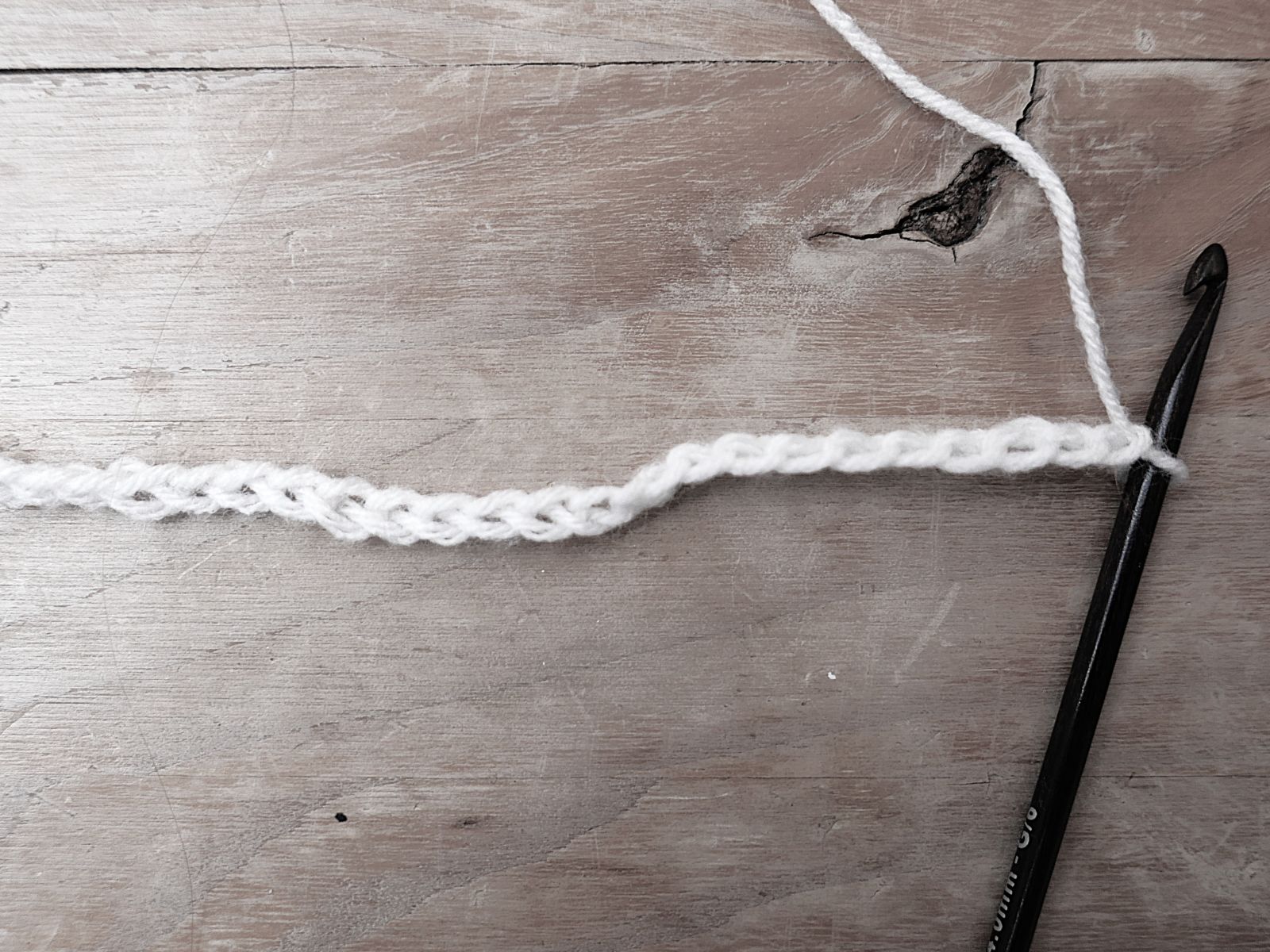
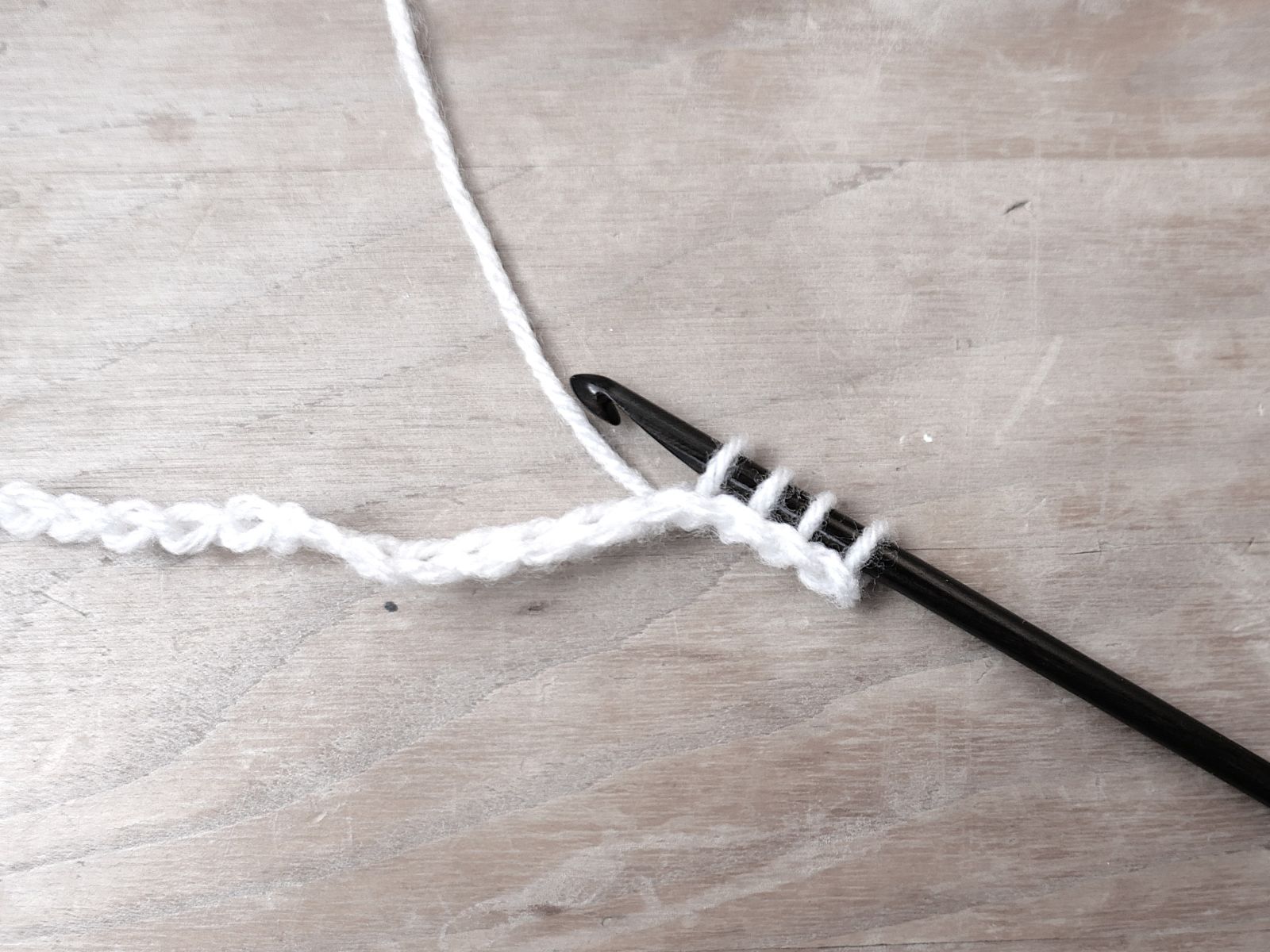
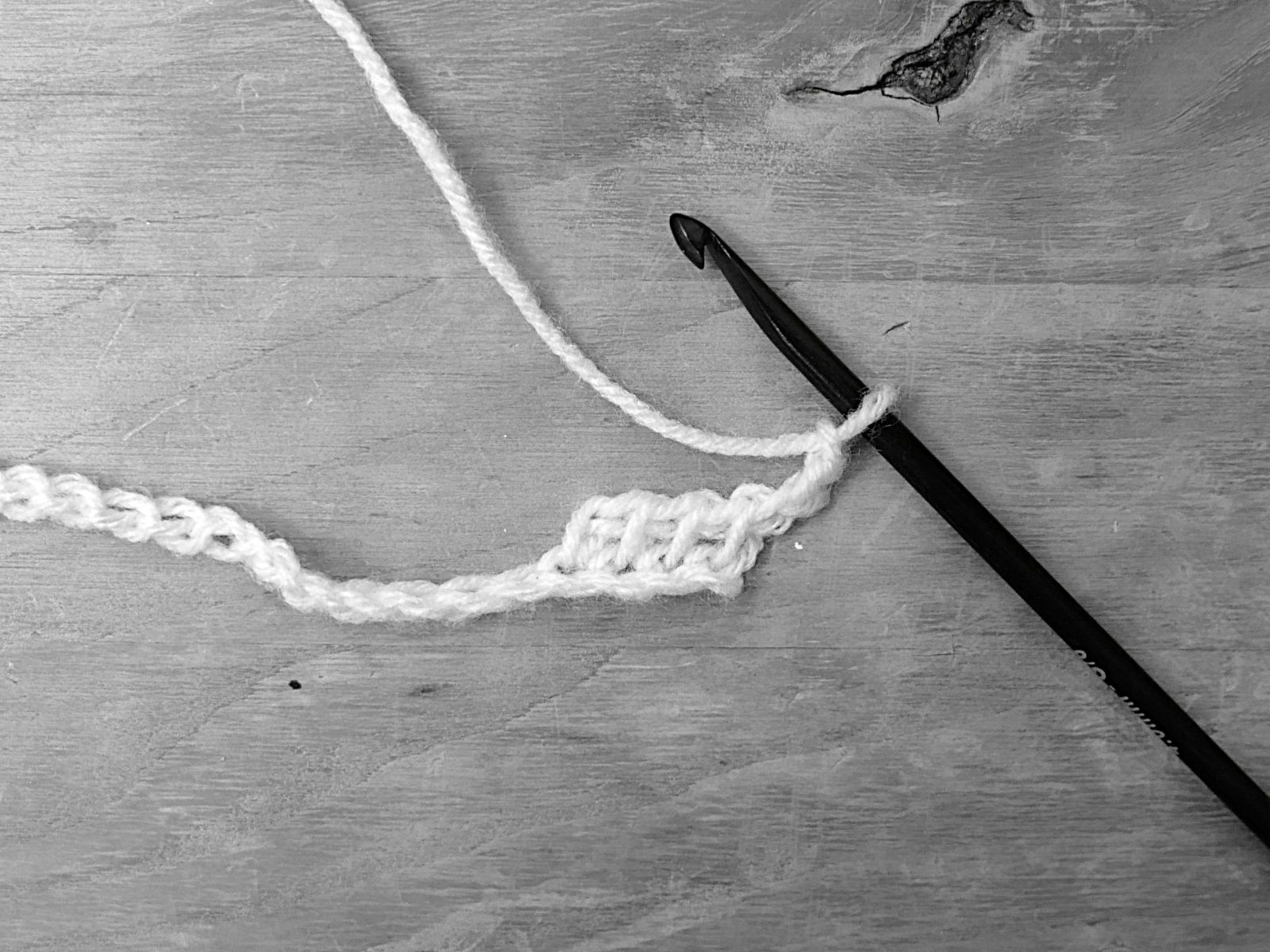
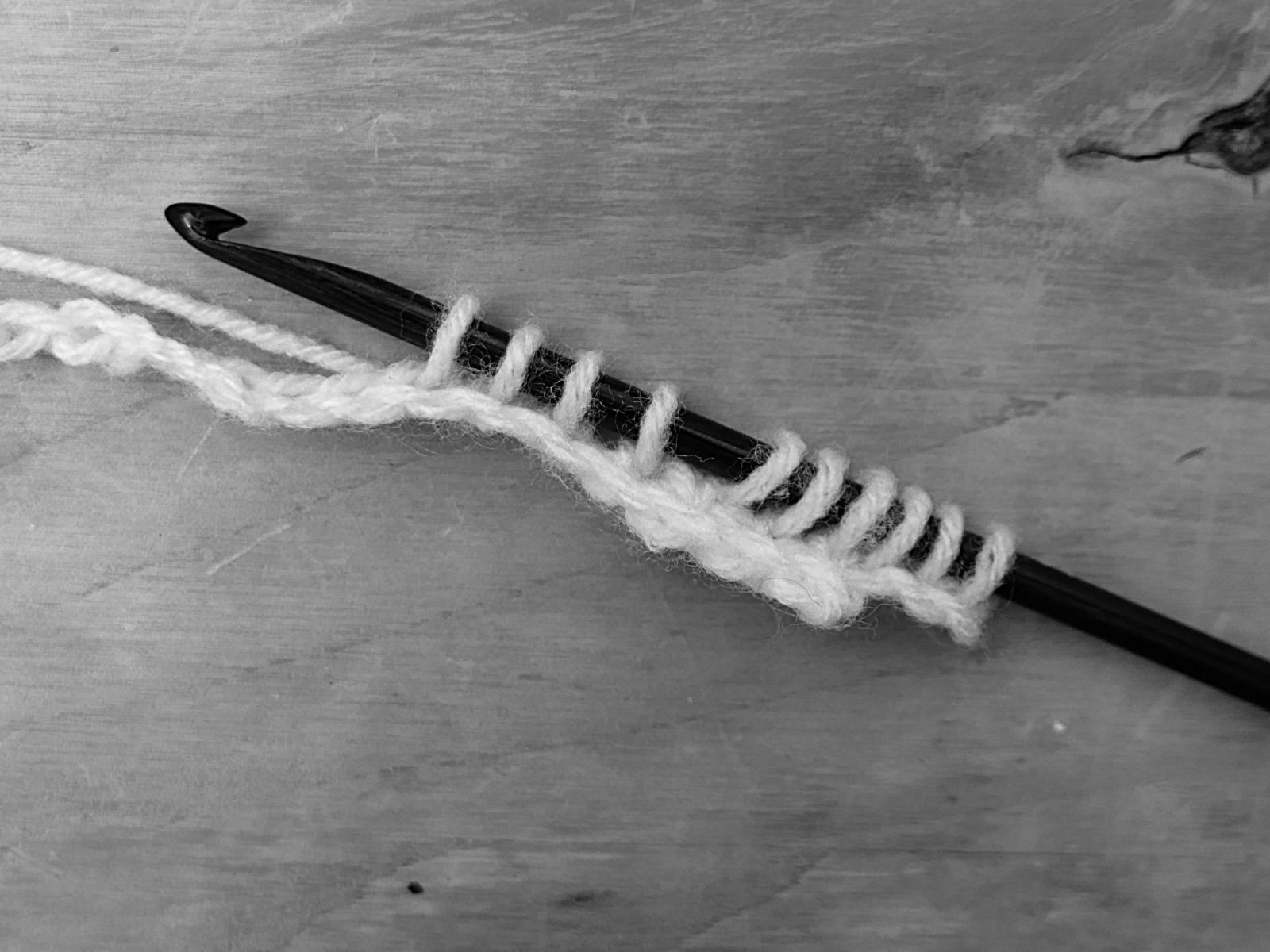
Photo Tutorial II: Tunisian Reverse Stitch
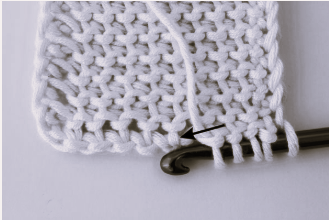
The Tunisian reverse stitch, also known as the Tunisian purl stitch, is a wonderful textured stitch. Unlike the traditional Tunisian simple stitch, the hook is inserted from the back of the work. This makes the stitch lean forward, creating a dense, decorative bobble-like or horizontal ridge texture that strongly resembles knitted purl stitches. One major advantage of this stitch is that the fabric hardly curls.
|
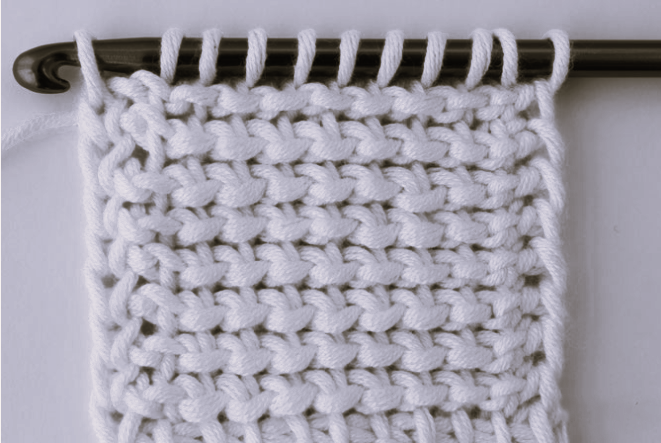 |
The reverse stitch is worked through the back of the stitches. Here you can see what the stitch pattern looks like. |
|
 |
Tilt your work slightly forward to access the back of the stitches. Insert the crochet hook from right to left through the vertical loop at the back of the stitch. The working yarn should be behind the hook. |
|
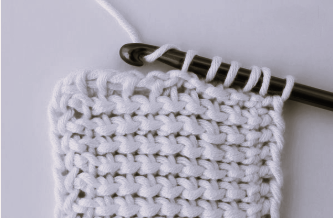 |
Yarn over and pull the yarn through the stitch. Leave the resulting loop on the crochet hook. |
|
The Return Pass is worked as usual, just like in almost all Tunisian crochet patterns:
Pro Tips for Perfect Results - Tension: Don't work the reverse stitch too tightly. If your tension is too tight, it will be difficult to insert the hook into the back vertical bars on the following row. |
|
Crochet Chart: (Shows the first 16 rows of the shawl)
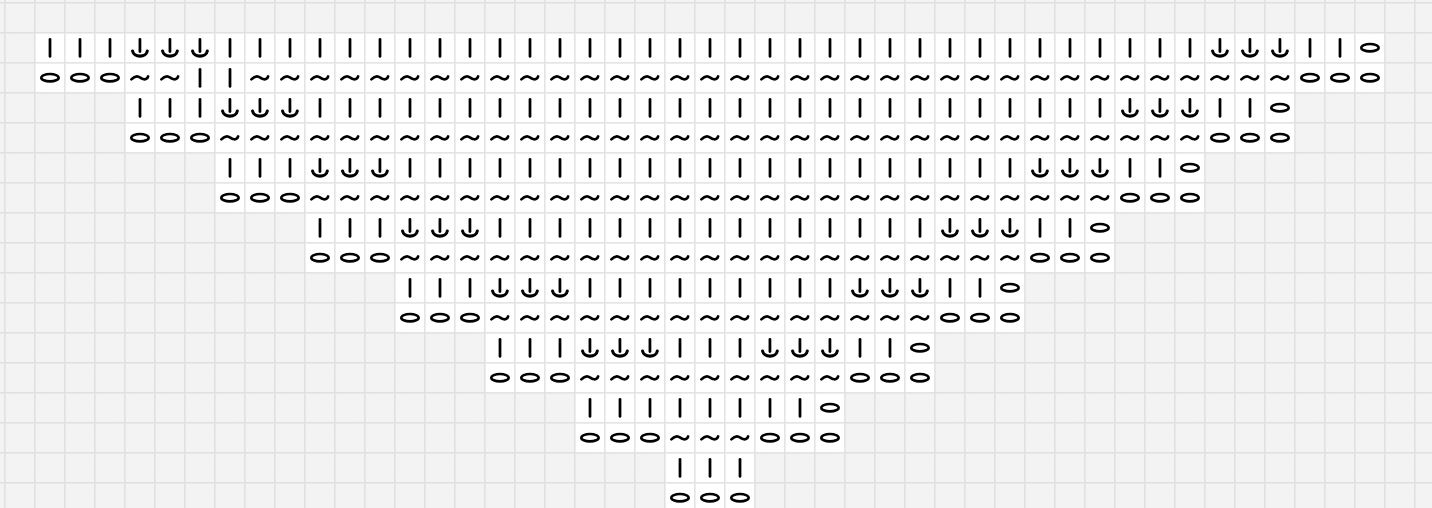
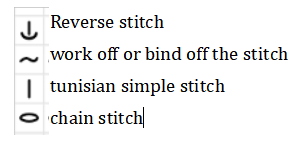
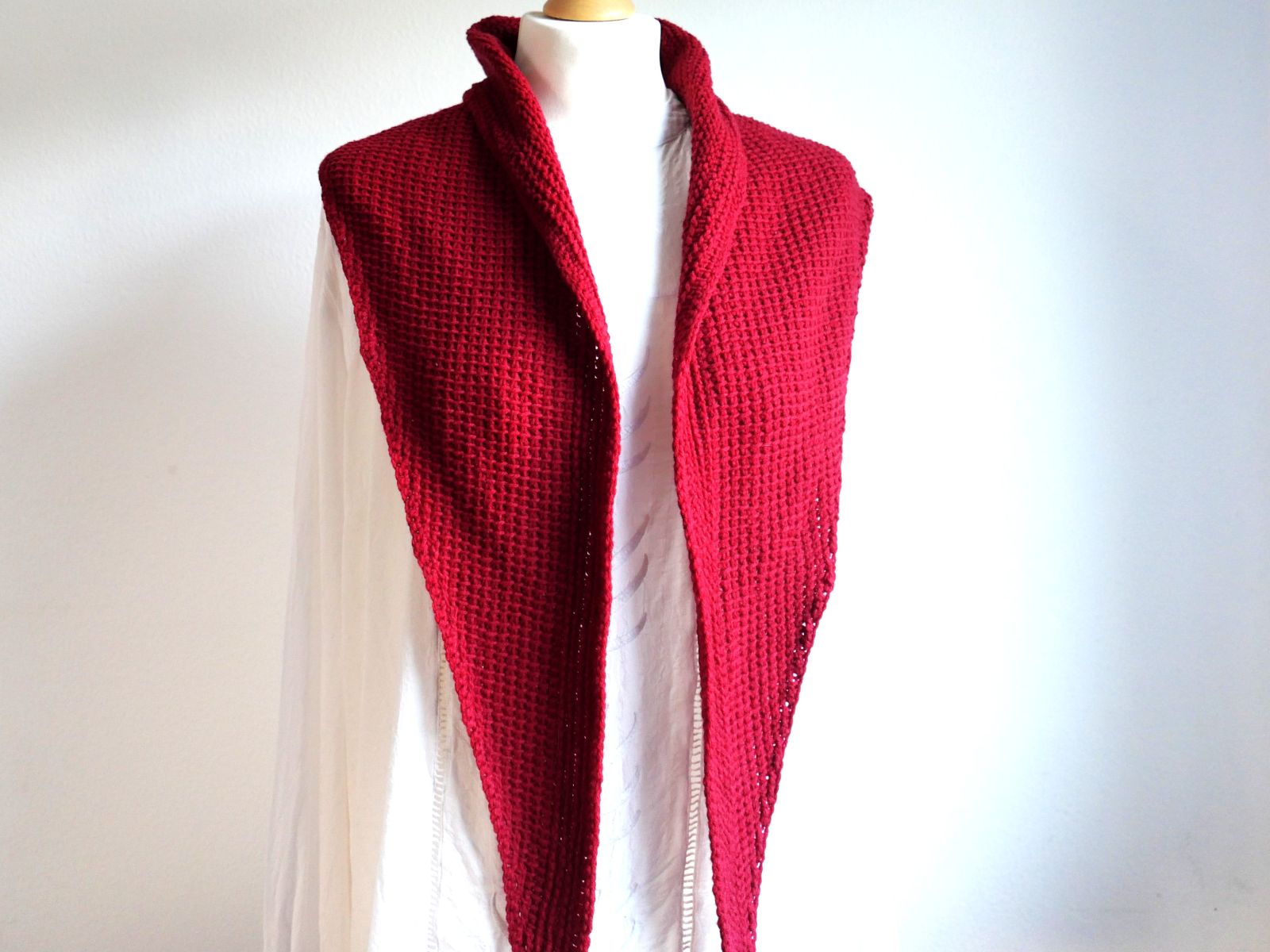
I wish you lots of fun crocheting and much joy wearing your triangular shawl “Not for the Feet”.
Copyright and Sharing
The pattern for the triangular shawl “Not for the Feet” by Blickfang-Design is protected by copyright and intended for personal use only. Copying, distributing, selling or using the pattern for commercial purposes is not permitted.
You are very welcome to share and recommend this blog post. Simply link to the original article so that others can also find the free pattern.


