
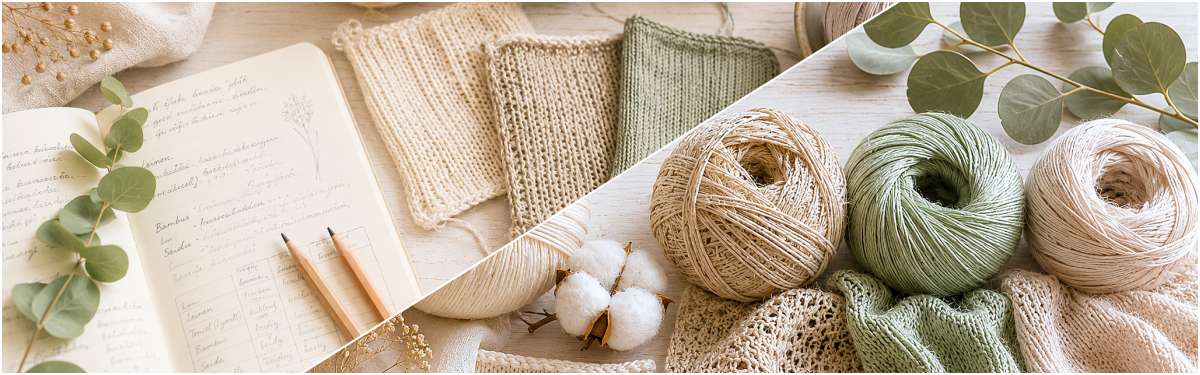
Sometimes you simply have to do something long enough before you realise you’ve actually been ready for something new for quite a while.
For me, that moment eventually came with cotton.
Don’t get me wrong – I have absolutely nothing against cotton. Quite the opposite. Over the years, I’ve worked countless custom orders, summer tops, accessories and lightweight projects using it.
To me, cotton automatically was the summer yarn. Period.
And maybe you know that feeling too.
Summer?
Then cotton.
But at some point, I honestly reached a stage where I simply couldn’t stand looking at it anymore. 😄
Especially when you spend weeks working with the same materials over and over again in the middle of summer. Some cotton yarns became heavy, some took forever to dry after washing, some stretched out – and some projects just didn’t have that airy, flowing look I had originally imagined.
And that was exactly when my little textile “crisis” began – or rather:
my journey into fibre knowledge.
Because suddenly I realised:
Yarn is not just yarn.
There are fibres that feel cool to the touch.
Fibres that absorb moisture completely differently.
Fibres that drape softly or create beautiful texture.
And fibres that only reveal their true beauty after blocking.
From that point on, I was honestly lost. 😂
Because once you really start paying attention to materials, an entirely new world suddenly opens up – full of fibre properties, blends, textures and tiny textile peculiarities. And at some point, you find yourself voluntarily reading about moisture absorption, drape and yarn construction as if you were secretly preparing for some kind of hidden yarn exam.
And honestly?
I love that now.
Not just the finished project – but also the question:
Which material actually suits this design best?
And that’s exactly why today I want to show you seven exciting summer alternatives to cotton that might just change the way you think about summer yarns.
Why We Automatically Reach for Cotton in Summer
Cotton has absolutely earned its reputation as a classic summer yarn.
It is
- comfortable on the skin,
- relatively easy to care for,
- durable,
- widely available
- and beginner-friendly for many knitters and crocheters.
Especially for:
- summer tops,
- children’s clothing,
- accessories
- or home décor,
cotton almost automatically ends up in the shopping basket.
But:
cotton is not automatically the perfect choice for every summer project.
Depending on the yarn construction and fibre blend, cotton can:
- become relatively heavy,
- retain moisture for a long time,
- have very little elasticity
- or stretch out in larger garments.
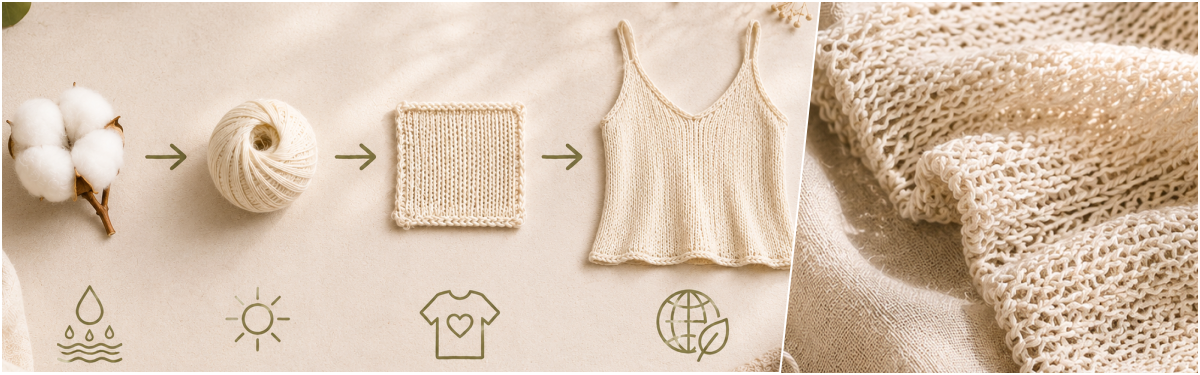
Especially with loose summer tops or airy crochet pieces, you often only realise after wearing them how strongly the material actually influences the finished project.
And this is exactly where things start to become interesting.
Because once you begin looking more closely at summer yarns, you quickly realise:
not every fibre behaves the same way.
Some feel cooler.
Others drape more softly, feel lighter or appear much airier.
And some completely change the overall character of a project.
And that’s exactly why it can be worth looking beyond cotton once in a while.
1. Linen – the Elegant Summer Diva
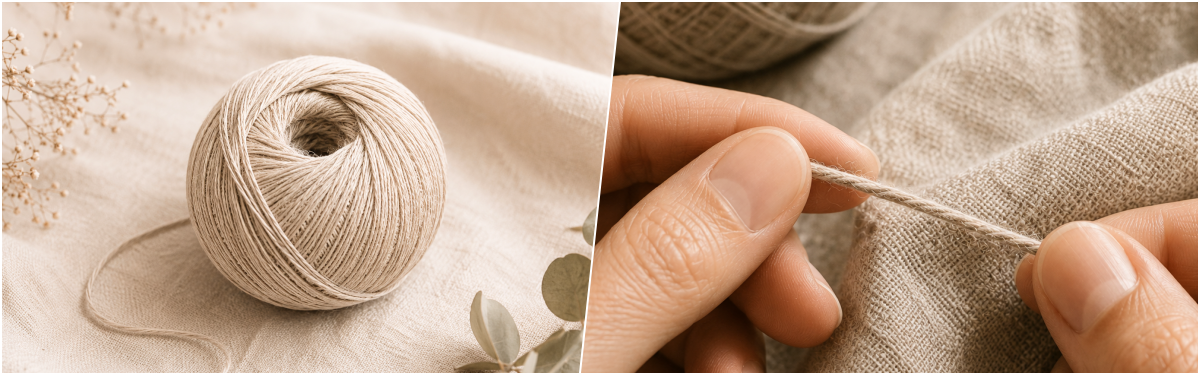
Linen is honestly one of the most fascinating summer fibres to me.
Many people are hesitant to try it at first because linen can feel slightly dry or even a little stubborn while working with it. Some yarns almost feel “hard” in the beginning.
But that is exactly where the magic lies.
Because linen changes enormously over time:
- it becomes softer,
- more supple,
- more alive
- and develops a beautifully natural drape.
Linen also feels pleasantly cool on the skin and works perfectly for:
- summer tops,
- tunics,
- lightweight jackets,
- shawls
- or modern oversized projects.
What I personally find especially fascinating is how sophisticated stitch patterns can suddenly look when worked in linen. Even very simple designs often gain that calm, modern minimalist look you would usually expect from high-end summer collections.
Drawbacks?
Yes – linen does not forgive uneven tension particularly well. 😄
But in return, it rewards patience with an incredibly elegant result.
⭐ My Personal Impression
Linen was honestly one of those yarns where I first had to learn to trust the material itself.
While working with it, I often thought:
“Hmm… this somehow feels a bit dry.”
But after washing and wearing it, that relaxed, high-quality summer look suddenly appeared – and that’s exactly what I love so much about linen today.
2. Bamboo – Soft, Flowing and Surprisingly Cool
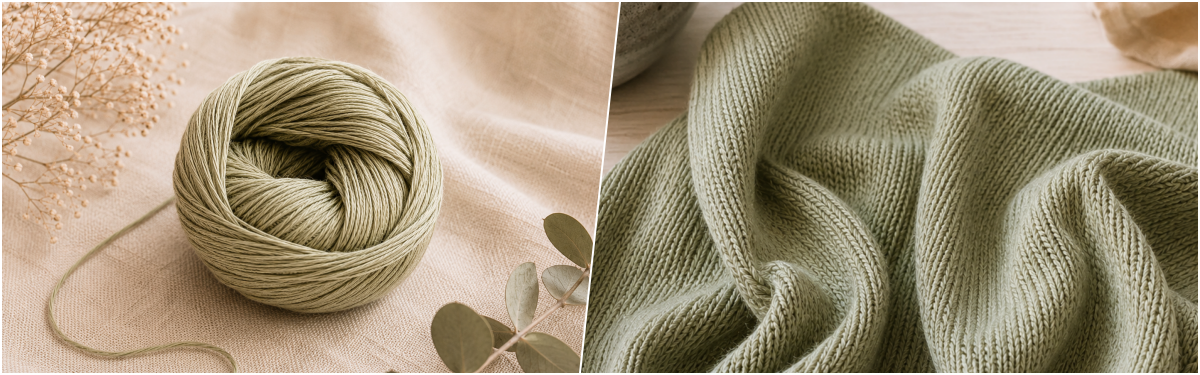
Bamboo yarn was honestly a real surprise to me back then.
Many bamboo yarns feel incredibly soft and often have that subtle, delicate sheen that instantly gives finished projects a more elegant appearance.
Especially for:
- summer tops,
- shawls,
- baby garments
- or sensitive skin,
bamboo can feel wonderfully comfortable.
One thing that’s important to know, though:
many so-called “bamboo yarns” are technically made from bamboo viscose, meaning the plant fibres are chemically processed.
That does not automatically make bamboo a bad fibre – but it’s good to understand the difference.
What I personally love most is the drape:
Bamboo often flows beautifully and feels noticeably lighter than many traditional cotton yarns.
Especially in loose summer garments, this quickly creates that calm, almost spa-like aesthetic that so many people love about bamboo fibres.
Depending on the blend, bamboo can also be relatively slippery at times – something you especially notice while knitting.
⭐ Especially Beautiful For …
- flowing summer tops,
- modern minimalist looks,
- elegant lightweight cardigans,
- softly draping shawls
- and layered summer outfits.
3. Tencel / Lyocell – Modern Summer Yarn with a Luxury Feel
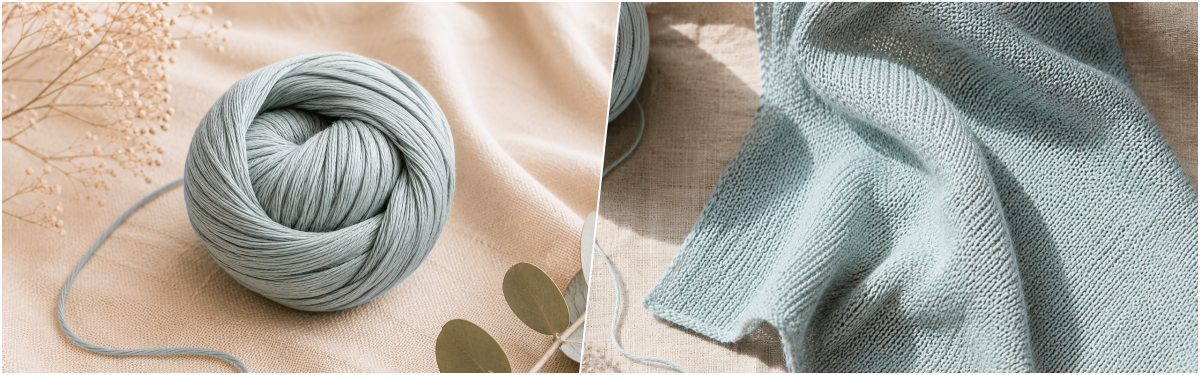
Tencel, or Lyocell, is honestly one of the most interesting modern fibres to me.
The fibre is usually made from wood pulp and offers:
- a beautiful fluid drape,
- smooth stitch definition,
- excellent moisture absorption
- and an incredibly pleasant feel against the skin.
Many projects instantly look more refined when worked in Tencel.
You know those tops that almost move like fabric?
That is exactly where Tencel truly shines.
Especially in modern summer garments, I love:
- the movement,
- the lightness
- and that elegant, almost liquid-looking surface.
The downside?
Tencel shows every stitch very clearly. Uneven tension? Unfortunately, this yarn will absolutely remember it. 😄
But when worked neatly, projects made with Tencel can look incredibly sophisticated.
⭐ Why Tencel Feels So Modern
To me, Tencel or Lyocell belongs to those materials that instantly make projects feel calmer, more refined and just a little more fashion-oriented.
The fluid drape, smooth surface and subtle movement often feel more like contemporary fabric design than traditional yarn.
Especially in minimalist summer tops or clean silhouettes, Tencel quickly creates that elegant slow-fashion aesthetic so many people love about it.
4. Hemp – Underrated and Surprisingly Modern
.png)
Hemp is absolutely experiencing a well-deserved comeback right now.
For a long time, hemp had the reputation of being scratchy, rough and overly rustic.
But modern hemp yarns can actually feel surprisingly soft and pleasant today – especially in high-quality blends.
Hemp stands out particularly because of its:
- durability,
- excellent temperature regulation,
- longevity
- and rather dry, natural texture.
Especially for:
- summer bags,
- lightweight jackets,
- home décor
- or textured tops,
hemp can be incredibly exciting to work with.
And visually?
Hemp often has that slightly matte, natural texture that instantly makes projects feel modern, calm and just a little bit organic.
Even very simple designs quickly gain a refined, almost atelier-like aesthetic when worked in hemp.
⭐ Probably Not Ideal For …
… people expecting absolute perfection on the very first try.
Hemp often draws its beauty precisely from that slightly imperfect, natural texture – and that is exactly what makes so many hemp projects feel so modern and full of character later on.
5. Silk – Luxury for Hot Summer Days
.png)
Many people automatically associate silk with winter or elegant shawls.
But silk can actually be absolutely wonderful in summer.
Because silk feels:
- temperature-regulating,
- lightweight,
- pleasantly cool
- and incredibly luxurious against the skin.
I especially love silk blends for:
- delicate summer tops,
- light lace projects
- or elegant summer accessories.
That said, silk sometimes requires a little patience.
It can be slippery, show stitches very clearly and be slightly more delicate when it comes to care.
But that feeling of lightweight, flowing summer knitting?
That is where silk becomes truly beautiful.
⭐ This Yarn Feels Different
To me, silk is one of those materials you do not simply work with – you somehow experience it.
Even small movements suddenly appear softer, more fluid and just a little more elegant.
And that is exactly why silk yarns often change not only the finished project, but also the entire mood surrounding it.
Some materials simply feel more like slow fashion than traditional crafting yarns – and silk definitely belongs in that category for me.
6. Viscose Blends – Often Underrated
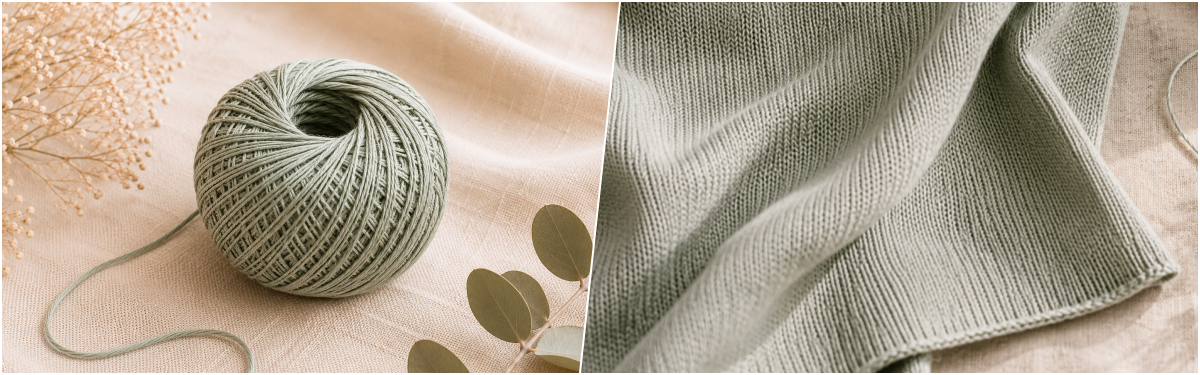
Viscose sometimes has a slightly unfair reputation.
And yet, good viscose blends can work beautifully for summer garments.
Why?
Because they often:
- drape softly,
- feel pleasantly cool
- and give airy projects that light, flowing movement that makes summer clothing feel truly alive.
Especially when combined with:
- cotton,
- linen,
- bamboo
- or Tencel,
viscose often creates incredibly beautiful summer yarns.
One important thing to keep in mind, though:
depending on the yarn weight and project size, viscose can feel relatively heavy and may stretch out more easily because of its fluid drape.
That is why making a gauge swatch is always worth it – especially for larger garments.
Yes, I know.
Gauge swatches.
At some point, this topic follows you everywhere. 😊
But especially with summer yarns, this is often where you truly begin to notice how differently fibres actually behave.
⭐ A Small Summer Yarn Tip
If you are unsure about a yarn, try working up a small swatch first and actually wear it briefly against your skin or hold it in your hands during warm weather.
Some fibres feel completely different in the skein than they do in the finished project.
And that is exactly why it can be so worthwhile to experience materials not only visually, but truly through touch as well.
7. Paper Yarn & Plant-Based Specialty Fibres – Unusual and Modern
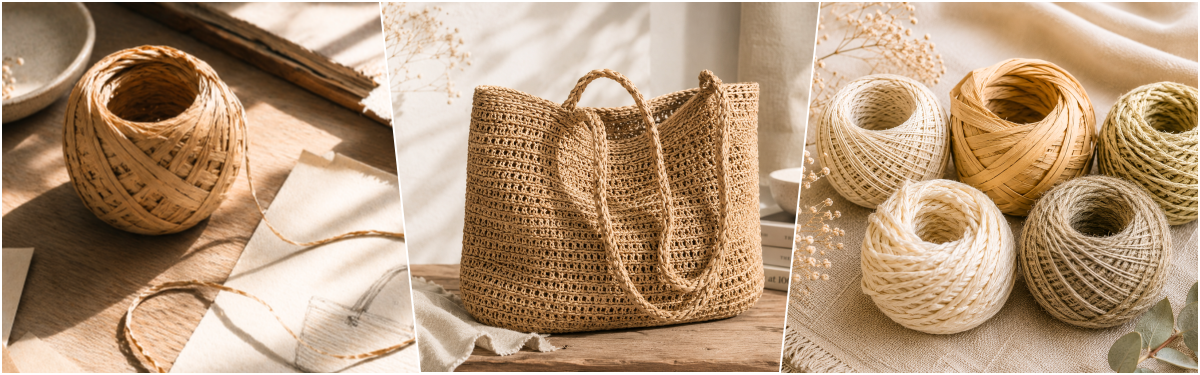
Now things start to get interesting.
Because beyond the classic summer fibres, there are now so many unusual materials available:
- paper yarn,
- raffia,
- corn fibre,
- soy fibre
- or blends containing unexpected plant-based components.
Of course, these yarns are not suitable for every project.
But especially for:
- summer bags,
- hats,
- home décor,
- belts
- or modern accessories,
they can look incredibly stylish and contemporary.
Paper yarn and raffia in particular often create that modern, almost architectural summer aesthetic you would normally expect to see in design or interior magazines.
And honestly, materials like these are incredibly fun once you feel like experimenting with something completely different.
⭐ Why I Love Material Experiments
Not long ago, I made a glasses case from paper yarn – simply out of curiosity to see how the material would actually behave.
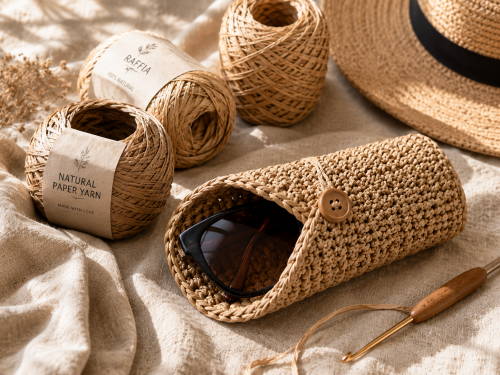
And honestly?
Experiments like this are so much fun because you suddenly discover completely new surfaces, textures and creative possibilities.
You automatically begin to see yarn not just as a material anymore, but almost as a design element in its own right.
The Same Top – Completely Different Results
One of the most fascinating things I’ve learned about fibre knowledge over the years is this:
the exact same pattern can look completely different – simply because of the yarn you choose.
A summer top made from:
💫 Cotton
often feels more structured and compact.
The same top worked in:
💫 Tencel
suddenly becomes soft and fluid.
With:
💫 Linen
it gains texture, calmness and an almost natural elegance.
And:
💫 Bamboo
gives many projects that subtle sheen and softer movement.
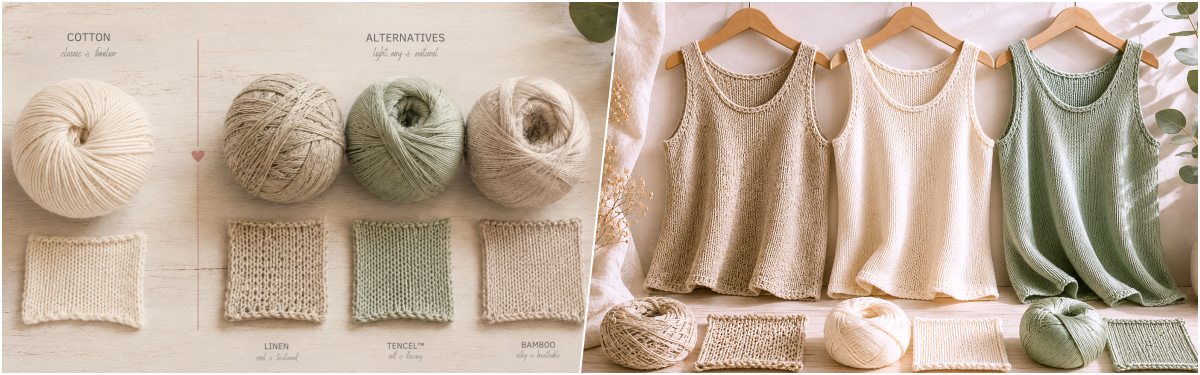
All of this changes:
- the drape,
- the movement,
- the weight,
- the airiness
- and often even the entire mood of a garment.
And that is exactly why it can be so worthwhile to choose summer yarns not only by colour – but also by how the material actually feels.
Because sometimes it is not the pattern that changes a project.
It is the fibre it is made from.
Yarn Substitution – A Whole Topic of Its Own
At this point, you almost automatically end up diving into the topic of yarn substitution.
Because once you begin choosing materials more consciously, at some point you inevitably ask yourself:
“Can I replace this yarn with a different one?”
And the answer is:
yes – but not simply based on yardage and needle size alone.
.png)
What also matters is:
- weight,
- drape,
- elasticity,
- moisture behaviour,
- fibre structure
- and of course gauge.
Honestly, you could probably write an entire long article about this topic alone. 😅
Because this is exactly where the real fibre knowledge suddenly begins:
Why does one yarn drape softly?
Why does another look more structured?
And why can the exact same pattern suddenly take on a completely different character?
The same is true when it comes to blocking.
Especially with linen, silk, bamboo or Tencel, blocking can completely transform the stitch definition.
Some yarns appear almost unremarkable beforehand – and only reveal their true beauty after washing and blocking.
But that is probably a topic for another day.
#FunFact – Yarn Made from Milk, Lotus & Nettle Fibres?
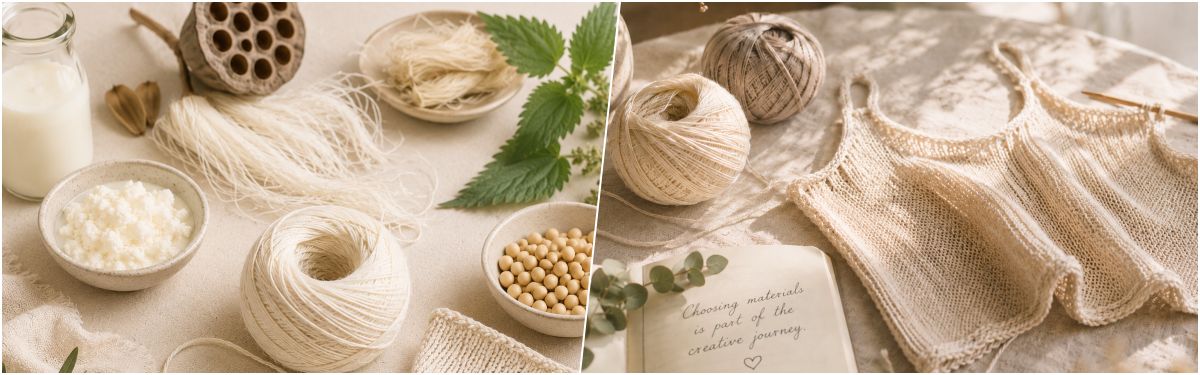
Yes – fibres like these really do exist.
What I find especially fascinating is that yarns are now even being developed from:
- milk protein,
- lotus fibres,
- nettles
- or soy-based components.
Some of these remain highly specialised niche products.
Others are already appearing regularly in modern yarn blends.
Materials like these beautifully show just how creative and experimental the textile world has become.
Because suddenly, yarn is no longer just “wool or cotton” – it becomes a combination of ideas, plants, technologies and entirely new material concepts.
And that is exactly what makes fibre knowledge so fascinating after a while:
the world of yarn is far bigger than most of us realise at first.
Feel, Summer Heat & Sensitive Skin
Especially in summer, the way a garment feels against the skin suddenly becomes much more important.
Because some fibres:
- retain heat more strongly,
- while others feel pleasantly cool,
- some dry quickly
- and others stay damp for a long time.
.png)
And that often changes the overall wearing experience far more than people initially expect.
Sensitive skin also tends to react very differently to certain materials.
While some people love pure cotton, others find bamboo, Tencel, silk or specific fibre blends much more comfortable against the skin.
Especially when it comes to summer clothing, it is often worth paying attention not only to how a material looks – but also to how it actually feels when worn.
And that is exactly why it is worth taking the time to experiment consciously – even if you have been using the same type of yarn for years.
Conclusion
Cotton will probably always have its well-deserved place in the world of summer yarns.
But sometimes the most exciting creative journeys begin exactly where you dare to try something new.
Maybe linen suddenly becomes your new favourite fibre.
Maybe you fall in love with the flowing elegance of Tencel.
Or maybe you unexpectedly discover a yarn you would never have considered before.
Because in the end, it is not only the pattern that changes a project.
Sometimes, the yarn itself changes:
- the drape,
- the movement,
- the feeling against the skin,
- the overall mood
- and sometimes even the entire story behind a garment.
And that is exactly what makes the world of summer yarns so fascinating.
Some yarns carry more than just stitches – they carry entire ideas of natural living, lightness and a slower, more mindful way of creating.
🧶 What are your thoughts on this topic?
Have you ever consciously worked with summer fibres other than cotton?
Maybe you’ve even discovered a favourite yarn that completely surprised you? – I’d truly love to hear your experiences, ideas and opinions in the comments.
📸 Maybe this article has inspired you to try something new for your next summer project?
If so, definitely tell me about it or show me your finished piece – I always love seeing how differently the same materials and ideas can turn out in the end.
✨ And if you enjoy my articles, I’d of course be very happy if you followed me here on CrazyPatterns so you don’t miss any new posts, ideas or patterns.
.png)
🧡 Maybe you’ll also discover more articles in my CrazyPatterns blog or find a pattern you love in my shop.
With love,
Kathrin mit Emma & Muki
Photos, designs & content © Kathrin | stricken-im-trend.com


