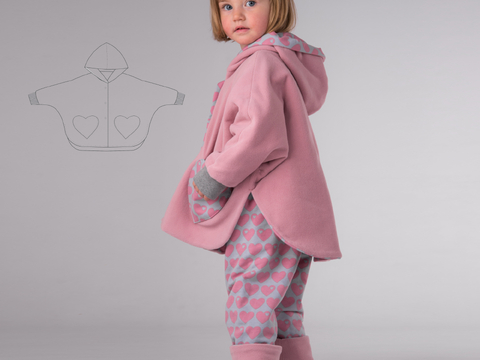
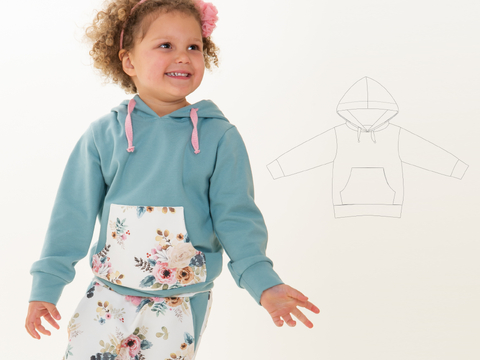
With clear step-by-step pattern steps, size charts, and pattern markings, you can sew baby sweaters with confidence. Show more
With clear step-by-step pattern steps, size charts, and pattern markings, you can sew baby sweaters with confidence. Many PDF patterns show you how to finish cuffs, hems, and stretchy seams so you get clean results even without a serger. Browse designs from classic pullovers to cozy hoodies, and start with the pattern that matches your skill level.
Sewing baby sweaters: Comfortable garments for every season
A handmade baby sweater fits comfortably, allows freedom of movement, and looks truly professional with neatly finished bands and hems. Options range from simple sweatshirts to raglan tops and hoodies, depending on the pattern style, recommended fabric, and details such as a hood, button placket, or pockets.
Quick choice
✓Pattern style: A hoodie, sweatshirt, or raglan top determines the look and the amount of sewing involved, especially when it comes to hoods, facings, and bands.
✓Age vs. measurements: Choose by chest circumference and length rather than age alone to leave enough room for movement.
✓Finding your way: For a quick decision, sort by Best rating and take a look at the community reviews.
✓Budget: If needed, use the “Prices” filter to narrow down suitable patterns more quickly.
What to look out for
Recommended fabric: For stretchy fabrics such as jersey, French terry, or sweatshirt fleece, clearly explained band and hem construction is essential.
Stretch seams: Check whether the instructions explain how to finish the seams or sew them with a stretch stitch (important for stretchy fabrics).
Sewing machine vs. serger: A serger is sometimes recommended; what matters is that you can clearly follow the seam construction and order of steps with your machine too.
Using a shirt pattern as a sweater: If you want to use a shirt pattern for a sweater, the instructions should explicitly offer a variation with a suitable length and width and explain the changes.
Common pitfalls
Stretched-out necklines: These occur when bands are stretched unevenly during sewing. Mark the quarter points and distribute the stretch evenly.
Wavy hems: These can result from an unsuitable stitch, incorrect thread tension, or pulling the fabric. Sew without pulling and test the stitch on a scrap.
Crooked hoodie details: Hoods and pockets can end up misaligned if markings or notches are not matched precisely. Baste or clip them in place and check before sewing.
Finding your way: If you are still unsure how to navigate the site, Finding patterns made easy can help you sort and filter quickly.
Frequently Asked Questions
Only if the instructions include a longer or wider variation and clearly explain the corresponding measurements or changes.
No. Many patterns show you how to sew with a regular sewing machine and explain how to finish the seams.
Jersey, French terry, and sweatshirt fleece are commonly used. What matters is the stretch and fabric recommended in the instructions.
Use the pattern’s size chart and compare the chest circumference and length with a well-fitting garment; babies often fall between two sizes.
To enhance user experience, we use cookies, including for analysis, optimization, and advertising purposes, in accordance with our Privacy Policy and Cookie Policy. Google Ads uses cookies and your IP address to measure for us which ads lead to purchases (how Google uses data). Some of our partner services are located outside the EU. You can change your settings at any time. If you select "Decline", we will only use essential cookies.